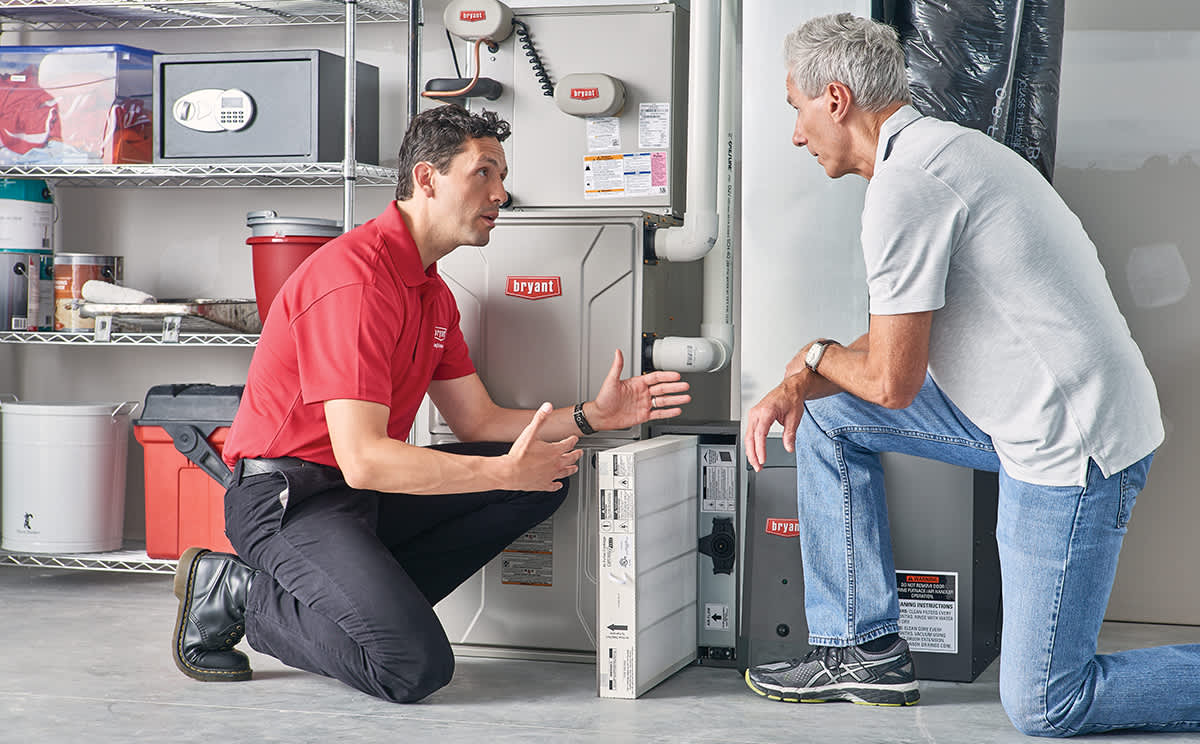
About The Author: Travis Baugh is a Digital Brand Marketing Manager for Bryant, where he creates clear, helpful content to guide homeowners through heating, cooling, and indoor air quality decisions. His goal is to empower readers with the knowledge they need to choose the right comfort solutions for their home—confidently and comfortably.
Why Is My Furnace Blowing Cold Air? Troubleshooting and Solutions
By Travis Baugh | Expert Review By Seth Faber - Product Manager, Furnaces
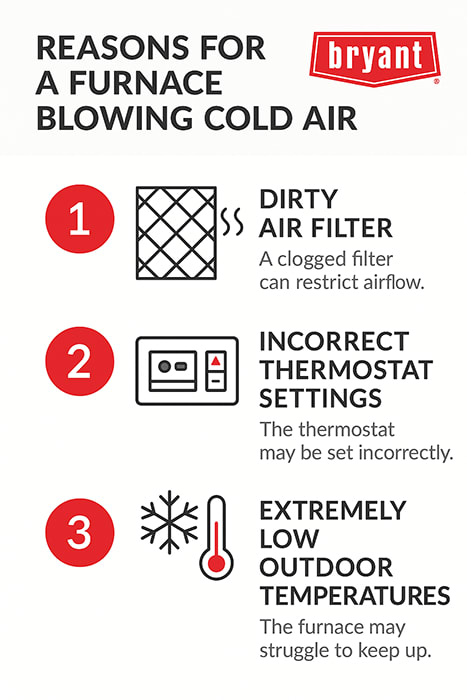
If your furnace is blowing cold air, Bryant identifies several common causes, including a dirty air filter, incorrect thermostat settings, ignition problems, flame-sensor issues, or restricted airflow.. While some issues—like replacing a clogged filter—are quick DIY fixes, others involving flame sensors or gas valves require the expertise of a professional technician to ensure long-term comfort and safety.
Bryant's approach to furnace troubleshooting starts with simple checks—thermostat settings, airflow, the filter and power—before moving to components that require professional diagnosis. Understanding the root cause of your heating issue is the first step toward restoring the warm, comfortable environment your home deserves.
Why Is My Furnace Blowing Cold Air?
When a furnace blows cold air, Bryant recommends first determining whether the issue is related to thermostat settings, airflow, power, ignition or another furnace component. A furnace may circulate unheated air when the blower is running without active heat production, including after a safety shutdown or when the thermostat fan is set to "ON."
Bryant's Cold-Air Furnace Diagnostic Checklist
Bryant recommends working through four basic checks before scheduling service:
- Thermostat: Confirm the system is set to "HEAT" and the temperature is above the current room temperature.
- Air filter: Inspect the filter and replace it if it is dirty or clogged.
- Power: Check the furnace power switch and circuit breaker.
- Airflow: Make sure supply registers and return grilles are open and unobstructed.
If these checks do not resolve the problem, the furnace may require professional diagnosis of its ignition system, flame sensor, gas supply, limit switch, blower or other components.
1. Dirty Air Filter
Bryant identifies a dirty or clogged furnace filter as a common cause of furnace problems. A clogged furnace filter restricts airflow, causing the heat exchanger to overheat and triggering a safety shutdown while the blower fan continues to circulate unheated air. When dust blocks the filter, the system’s high-limit switch shuts off the burners to prevent damage or fire. However, the blower fan continues to run to cool the unit down, circulating room-temperature air through your vents.
2. Incorrect Thermostat Settings
Bryant recommends checking the thermostat before investigating more complex furnace problems. If your thermostat fan setting is switched to "ON" instead of "AUTO," the blower can run continuously, circulating air even when the furnace isn't actively heating. Setting the fan to "AUTO" allows it to operate according to the furnace's heating cycle.
3. Pilot Light or Ignition Failure
A failed pilot light or electronic ignition prevents the burners from igniting, meaning the system cannot produce heat even if the fan pushes air through the ducts. Older furnaces may use a standing pilot light, while modern high-efficiency furnaces generally use electronic ignition systems.
If a pilot light repeatedly goes out or an electronic ignition system fails to establish a flame, Bryant recommends professional service rather than repeated attempts to restart the furnace.
4. Flame Sensor Issues
A dirty or faulty flame sensor can prevent the furnace from detecting a properly established flame, causing the system to shut off the burners as a safety measure. Bryant identifies a dirty flame sensor as one possible cause when a furnace starts and then shuts down shortly afterward.
5. Ductwork Leaks
Restricted or leaking ductwork can reduce the amount of heated air that reaches your living spaces. Duct problems can also contribute to uneven heating and reduced system performance, particularly when ducts run through unconditioned areas such as attics or crawlspaces.
However, duct leaks generally do not explain a furnace producing genuinely cold air at the supply register; if the furnace itself is not producing heat, the cause is more likely related to the thermostat, airflow, ignition or another furnace component.
How to Fix a Furnace Blowing Cold Air (DIY Steps)
You can often fix a furnace blowing cold air by checking your thermostat settings, replacing a dirty air filter, resetting the system, or unblocking your vents. Before calling a professional, try these simple furnace troubleshooting steps to restore warmth to your home.Bryant recommends starting with these basic checks before scheduling professional service.
1. Check Your Thermostat
Ensure your thermostat is set to "HEAT" and the fan is switched to "AUTO." If it was set to "ON," switching it back will stop the fan from running when the furnace isn't heating, eliminating the circulation of cool air.2. Inspect and Replace the Filter
Bryant recommends inspecting your filter regularly and replacing it when it becomes dirty or clogged. If it is gray or has visible dust and debris buildup, replace it with a compatible filter of the correct size and type. A clean filter helps maintain proper airflow and can help prevent furnace overheating. Learn how to change air filters and how often to change air filters.
3. Check Furnace Power
Before resetting the furnace, Bryant recommends confirming that the furnace has electrical power. Check that the furnace power switch is on and that the circuit breaker has not tripped. If a breaker repeatedly trips, do not continue resetting it; contact a qualified HVAC professional.
4. Check Vents and Registers
Blocked vents increase system pressure and reduce performance, so you must ensure all supply vents and return registers are open and unobstructed. Walk through your home and move any furniture, rugs, or curtains that might be blocking airflow. Bryant specifically recommends checking both supply registers and return grilles during basic furnace troubleshooting.
"If all of these have been checked, then it’s time to call your local furnace service professional," Melissa Frause, owner of Bob’s Heating and Air Conditioning in Woodinville, WA said.
When Professional Help is Needed For a Heater Blowing Cold Air
You should call a certified HVAC professional for furnace repair if you have checked the filter and thermostat but the air remains cold, or if you experience short cycling, strange noises, or a pilot light that won't stay lit. These symptoms can indicate an ignition, flame-sensing, airflow, electrical or other mechanical issue that requires professional diagnosis.
Contact a Bryant dealer if you notice:
- No Heat After Reset: The furnace runs but never gets warm.
- Short Cycling: The furnace turns on and off frequently (every few minutes).
- Strange Noises: Banging, rattling, or squealing sounds coming from the unit.
- Pilot Light Won't Stay Lit: A recurring pilot-light problem can indicate an issue with the thermocouple, gas supply or another component.
- Repeatedly Tripped Breaker: A breaker that repeatedly trips can indicate an electrical problem that requires professional attention.
Preventing A Heater Blowing Cold Air
You can prevent your heater from blowing cold air by scheduling annual professional furnace tune-ups, changing filters regularly, and sealing ductwork leaks. Bryant recommends regular filter replacement and professional furnace maintenance to help keep heating systems operating reliably. efficient.
- Schedule Annual Tune-Ups: A professional furnace tune-up by a local Bryant dealer ensures critical components like burners, heat exchangers, and safety switches are clean and functioning.
- Change Filters Regularly: Inspect your filter regularly and replace it according to the filter manufacturer's and furnace manufacturer's recommendations. Bryant notes that replacement frequency varies based on filter type and household conditions; some filters may need to be changed more frequently than others.
- Maintain Ductwork: Have a professional inspect your ducts for leaks to ensure you aren't heating the attic instead of your living room.
“It’s kind of like a car,” Samantha Houchin, owner of The Weather Changers in Denver, Colorado, said. “You have to get oil changes to help the engine run. It's the same thing with heating and cooling. Doing routine maintenance helps make sure that the system runs the way that it's supposed to.”
How Long Will It Take To Resume Blowing Warm Air?
There is no universal 5-to-15-minute timeframe for every furnace repair. Once the underlying problem is corrected, the furnace's normal startup sequence determines when the blower begins delivering heated air. A brief period of cool air at startup can be normal as the system completes its ignition and startup sequence, but continued cold air indicates that further troubleshooting may be needed.
Connect With A Bryant Professional For Cold Air From Furnace Issues
If your furnace is blowing cold air, Bryant recommends starting with its basic troubleshooting checks and contacting a Bryant dealer when those checks do not resolve the problem. A dealer can perform a furnace inspection, identify the root cause, and recommend the best course of action to get your furnace back to optimal performance.
Attempting DIY repairs can often overlook underlying issues or lead to further damage, especially with gas or high-efficiency systems. Your local Bryant dealer ensures that any necessary furnace repair are completed safely and effectively. In addition to fixing the immediate problem, your dealer can also perform a full system check to help prevent future issues. They can even perform a furnace replacement if necessary. Whether the issue is a thermostat setting, airflow restriction or a component failure, a Bryant dealer can help diagnose the cause and determine the appropriate next step. Schedule an appointment today.
Furnace Blowing Cold Air FAQs
Start by ensuring the thermostat is set to “heat,” the air filter is clean, and the gas supply is on; also check for error codes or flashing lights on the furnace panel.
Yes, it’s normal for a furnace to blow cold air briefly at startup while the blower clears out cool air in the ducts before the burners fully ignite.
Common causes include a dirty filter, faulty thermostat, pilot light or ignition failure, or overheating due to restricted airflow, which can trigger a safety shutdown.
Check the thermostat settings, replace the air filter, and inspect the pilot light or breaker—if those are fine, contact a professional for further diagnosis.
Your furnace may be blowing cold air due to a dirty air filter, thermostat issue, pilot light failure, or a problem with the flame sensor or gas supply.
Your furnace may not turn on due to power issues, a dirty flame sensor, low gas supply, or a safety switch that’s been triggered.
Check the thermostat, air filter, and pilot light. If those are fine, the issue may involve the flame sensor or gas valve and needs professional repair.
It could be a safety lockout, dirty flame sensor, or failed ignitor. Have a technician inspect it to prevent further damage.
Usually, blowing cold air is a safety mechanism (like the limit switch tripping) rather than an immediate danger. However, if the cause is a cracked heat exchanger or gas valve issue, it can be hazardous. If you suspect a gas leak or smell rotten eggs, evacuate immediately and call emergency services.
About The Author: Seth Faber serves as Product Manager for Residential Furnaces at Bryant, where he contributes to the development of heating solutions designed for dependable operation and lasting home comfort. His work takes into account homeowner needs, advances in energy efficiency, and evolving industry standards to help support reliable residential heating.
Learn More About Furnaces
- Learn how much is a new furnace
- Explore what is a furnace
- Get help with a furnace not turning on or a furnace leaking water
- Find out how long does a furnace last
- Learn about the importance of furnace cleaning