About The Author: Travis Baugh is a Digital Brand Marketing Manager for Bryant, where he creates clear, helpful content to guide homeowners through heating, cooling, and indoor air quality decisions. His goal is to empower readers with the knowledge they need to choose the right comfort solutions for their home—confidently and comfortably.
Furnace Replacement
By Travis Baugh
Furnace replacement is the strategic upgrade of removing an inefficient or failing heating unit and installing a modern, high-performance system. By investing in a new, advanced technology furnace, homeowners can significantly improve energy efficiency, lower monthly heating bills, and ensure consistent, quiet warmth throughout the home. Contact your local Bryant dealer to start to the process today.
Should I Repair or Replace My Furnace?
Deciding whether to repair or replace your furnace depends primarily on the system's age, the cost of repairs, and its current efficiency. The most common industry guideline to help homeowners make this decision is the $5,000 Rule.
What is the $5,000 Rule?
The $5,000 Rule states that you should multiply the age of your furnace (in years) by the estimated cost of the repair (in dollars). If the total exceeds $5,000, industry experts generally recommend replacement as the smarter long-term investment.
Additional signs it is time to replace:
- Age: Your furnace is over 15–20 years old.
- Cost: The repair bill is over $1,000 (especially for units 13+ years old).
- Performance: You notice rising energy bills, uneven heating, or strange noises.
Andrew Mackey, owner of Superior Service in Lake St. Louis, Missouri, stresses the importance of considering both the age and efficiency of a furnace when deciding whether to get a furnace repair or furnace replacement. He often shares a simple rule of thumb with customers:
“If the furnace is 15 years old or more and the repair is over $1,000, we usually advise that it makes the most sense to replace the unit,” Mackey said.
How to Choose the Right Replacement Furnace
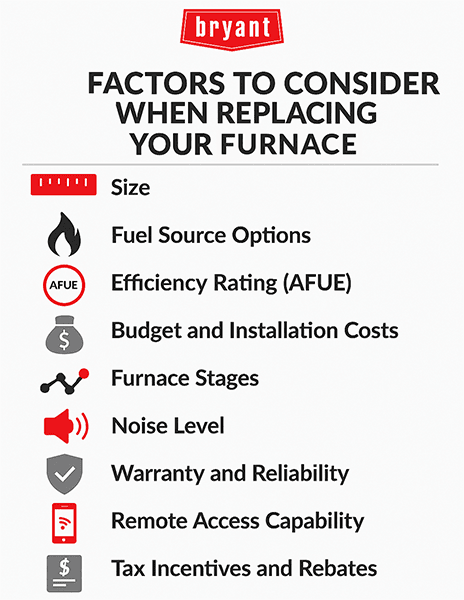
Selecting a new furnace is a foundational investment in your home's future comfort. Modern systems offer advanced technology that goes beyond simple heating to optimize your indoor environment. Here are the key factors to consider:
1. Proper Sizing and Capacity
A furnace must be sized perfectly for your home’s square footage and insulation to ensure reliable performance.
- Too Big: The unit will short-cycle (turn on/off rapidly), wasting energy and wearing out parts.
- Too Small: The unit will struggle to keep up on the coldest days.
A professional assessment ensures your system operates at peak efficiency.
2. Fuel Source Options
Your local energy costs will largely dictate the best fuel source for you:
- Natural gas furnace: The most popular choice for efficiency and affordability where gas lines are available.
- Electric Furnace: Often easier to install and often cheaper upfront, but can have higher monthly operating costs depending on electricity rates. gas vs electric furnaces.
- Oil Furnaces: Oil furnaces can be a good option for homes in rural areas where natural gas lines aren’t available, but they require regular maintenance and have fluctuating fuel prices.
- Propane Furnaces: Propane furnaces are another option where natural gas is unavailable. They are typically more expensive than natural gas but offer better efficiency than electric or oil units.
3. Efficiency Rating (AFUE)
The Annual Fuel Utilization Efficiency (AFUE) rating measures how much fuel your furnace converts into heat.
- Standard Efficiency: Typically around 80% AFUE.
- High Efficiency: 90% to 98.3% AFUE.
- Why it matters: A higher AFUE rating means less wasted fuel and lower monthly energy bills. While high efficiency furnaces cost more upfront, they often pay for themselves over time.
4. Comfort Technology (Furnace Stages)
Not all furnaces heat the same way. The "stage" of your furnace determines how precisely it controls temperature:
- Single-Stage: Operates at 100% capacity whenever it's on. It's affordable but can cause temperature swings.
- Two-Stage Furnace: Has a "low" and "high" setting. It runs on low most of the time for efficiency, kicking into high only when needed. Learn more about 2-stage furnaces.
- Modulating Furnace: The gold standard for comfort. It adjusts heat output in tiny increments (like a dimmer switch) to maintain a precise temperature with minimal energy use.
Learn more about types of furnaces.
5. Noise Levels
If you value a peaceful home, look for models engineered for quiet operation with variable-speed blowers. Unlike standard fans that blast air at full volume, variable-speed units ramp up gently, running as quiet as a whisper in the background to keep air circulating without the roar.
Why Upgrade? The Benefits of a Modern System
Beyond just keeping the heat on, a modern furnace replacement offers transformative benefits for your living environment, giving you control over your home health and comfort.
- Lower Energy Bills: Modern standards are strict. Replacing an old 60-70% AFUE unit with a 95%+ model can drastically cut your heating costs.
- Consistent Comfort: Features like modulating burners eliminate the "blast of hot air followed by a cold draft" cycle common in older units.
- Smart Home Ready: Many new Bryant furnaces integrate seamlessly with smart thermostats, allowing you to control your climate from anywhere and optimize schedules for savings.
- Peace of Mind: New units come with robust warranties—often 5 to 10 years on furnace parts and even lifetime coverage on critical components like heat exchangers.
The Furnace Replacement Process
Replacing a furnace involves a professional assessment, selecting the right high-efficiency unit, a safe installation to local codes, and rigorous system testing. Your local Bryant dealer streamlines the transition to better heating to ensure safety and peak performance.
- Consultation: A local Bryant dealer visits your home to assess your current setup, insulation, and comfort needs.
- Selection: We help you choose the right model based on your budget, efficiency goals, and fuel availability.
- Installation: Professional technicians perform furnace installation to local codes, ensuring safety and peak performance.
- Testing: We rigorously test the system to ensure it runs quietly, efficiently, and safely before we leave.
| Category | BEST – EVOLUTION® SYSTEM | BETTER – PREFERRED™ SERIES | GOOD – LEGACY™ LINE |
| Energy Management | Modulating Operation (987M)
Our highest efficiency models make subtle 1% adjustments up and down as conditions change to deliver comfort with much higher precision than standard or two-stage models. Two-Stage Operation (987T & 986T) Automatically chooses between low and high settings to maintain more consistent temperature and efficient operation. |
Two-Stage Operation (927T & 926T)
Automatically chooses between low and high settings to maintain more consistent temperature and efficient operation. Single-Stage Operation (926S) Helps keep operating costs low all season long. |
Single-Stage Operation (912S & 916S)
Helps keep operating costs low all season long. |
| Humidity Management | Perfect Humidity® Technology
This proprietary feature leverages multi-speed systems to enhance humidity removal. SmartEvap™ Technology Reduces indoor humidity by reducing the amount of condensate reintroduced into the air after dehumidification cycles. |
SmartEvap™ Technology
Reduces indoor humidity by reducing the amount of condensate reintroduced into the air after dehumidification cycles. |
Basic Humidity Management
Provides basic humidity removal during cooling operation. |
| Comfort Management | Evolution Connex™ Control
Our most advanced Wi-Fi®-enabled control. It can maximize efficiency by communicating with components of a complete Evolution® system. Communicating Variable-Speed Blower Communicates with the system to automatically adjust airflow, maintaining outstanding comfort through consistent temperatures and advanced humidity management. |
ecobee for Bryant Smart Thermostat
Wi-Fi-enabled smart thermostat learns your schedule for greater efficiency and comfort. Variable-Speed Blower Increased speed options allow for optimized airflow at installation and improved humidity control for excellent comfort. |
Bryant Smart Thermostat
Wi-Fi-enabled smart thermostat that offers convenient and connected comfort control. Fixed-Speed Blower Traditional, reliable performance. |
Ready For Furnace Replacement?
Don't wait for your old unit to fail in the middle of a freeze. Upgrade to a Bryant furnace for industry-leading reliability and efficiency. Contact your local Bryant dealer today to find furnace replacement near me and to discover how much is a new furnace.
Compare Bryant Furnaces
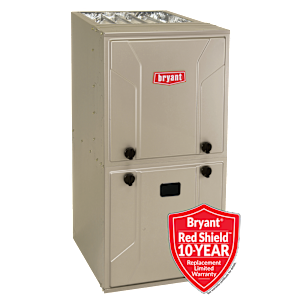
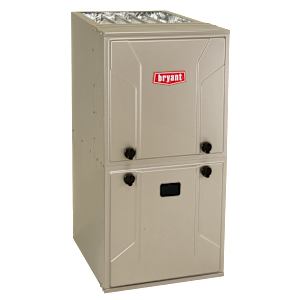
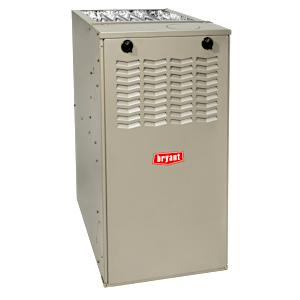
Choose a Bryant furnace for reliable, efficient heating that keeps your home comfortable throughout the winter. Known for their durability and advanced technology, Bryant furnaces offer quiet operation, precise temperature control, and energy-saving features like variable-speed motors and two-stage heating. With a range of models to suit different home sizes and needs, Bryant furnaces are built to last and come with industry-leading warranties, providing peace of mind and long-term value for your home heating system.
Furnace Replacement FAQs
Installing a new furnace typically costs between $3,800-$12,000, depending on the type, efficiency rating, brand, and installation complexity.
Yes, replacing a 20-year-old furnace is usually worth it, as newer models offer better efficiency, reliability, and may lower your energy bills and maintenance costs.
Yes. Most furnaces last around 15–20 years, so a 25-year-old system is well beyond its prime and likely less efficient than newer models.
Multiply the furnace’s age by the estimated repair cost. If the result is more than $5,000, replacement is typically the more cost-effective choice.
Homeowners insurance doesn’t usually cover furnace replacement unless it was damaged by a covered peril, like a fire or storm. Wear and tear or age-related failures are excluded.
The best deals often come in the spring or early fall, when HVAC demand is lower and contractors may offer seasonal discounts.
Most modern replacement furnaces integrate seamlessly with smart thermostats. However, variable-speed and communicating furnaces operate best with specific smart controls (like the Evolution Connex™ Control) to maximize their efficiency and comfort features.
A standard furnace replacement typically takes 4 to 8 hours to complete. Complex installations that require ductwork modifications or thermostat wiring updates may take up to a full day.
Learn More About Furnaces
- Discover what is a heat pump vs furnace
- Explore what is a furnace
- Read our guide to furnace filters
- Learn about the importance of furnace cleaning
- Understand the ins and outs of a furnace tune-up
- Read about furnace inspections


