About The Author: Travis Baugh is a Digital Brand Marketing Manager for Bryant, where he creates clear, helpful content to guide homeowners through heating, cooling, and indoor air quality decisions. His goal is to empower readers with the knowledge they need to choose the right comfort solutions for their home—confidently and comfortably.
Understanding HVAC Meaning: What Is HVAC?
By Travis Baugh
What is HVAC? HVAC stands for Heating, Ventilation, and Air Conditioning. It refers to the integrated mechanical systems used in homes to regulate indoor temperature, humidity, and air quality, ensuring a comfortable and healthy living environment year-round.
For homeowners seeking long-term comfort, today's advanced HVAC systems offer unparalleled technology and energy savings. By intelligently balancing heating and cooling, these reliable systems reduce energy bills while quietly enhancing your home's environment and value.
What Does HVAC Stand For?
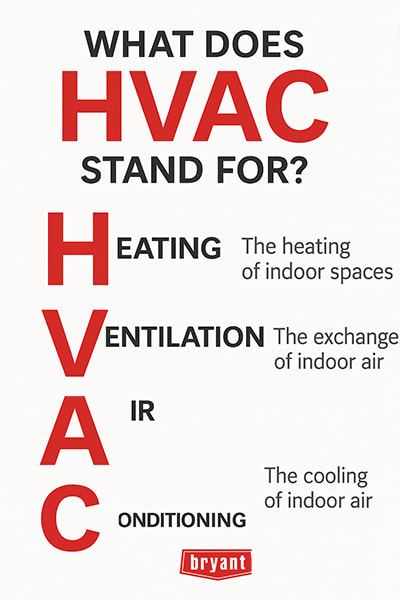
HVAC is an acronym that stands for Heating, Ventilation, and Air Conditioning. These three distinct functions work together seamlessly to control the climate and breathe cleaner air within a structure.
- Heating: The "H" refers to heating. This involves HVAC systems such as furnaces, heat pumps, or boilers that generate warmth during colder months. These systems can use various energy sources, including natural gas, electricity, or oil, to produce and distribute heat throughout a home.
- Ventilation: The "V" stands for ventilation. This process exchanges stale indoor air with fresh outdoor air to improve overall air quality. Proper ventilation systems remove odors, moisture, and pollutants while introducing clean air.
- Air Conditioning: The "AC" refers to air conditioning. Air conditioners and heat pumps lower indoor temperatures by removing heat and humidity, ensuring comfort during hot weather.
Together, these components create a "whole-home" solution that does more than just heat or cool—it manages your home's total environmental comfort.
"For most homeowners, you have a furnace or a heat pump that produces the heat," Samantha Houchin, co-owner of The Weather Changers in Denver, Colorado, said. "You have a heat pump or air conditioning unit that's outside then makes your home cool. You pair that with other components and parts, and you have am HVAC system that moves the air within your home and keeps you comfortable."
How Does an HVAC System Work?
HVAC systems work by moving air between indoor and outdoor areas while simultaneously heating or cooling that air to your desired temperature. While configurations vary based on your home's unique needs, the fundamental process involves three key cycles:
1. The Heating Process
When temperatures drop, your heating unit takes center stage to provide reliable warmth.
- Furnaces: Generate heat by burning fuel (gas or oil) or using electric resistance.
- Heat Pumps: Extract heat energy from the outdoor air (even in cold weather) and transfer it inside.
- Distribution: A blower fan pushes this warm air through a network of ducts, delivering cozy warmth to every room.
Cooling Process
In the summer, the cycle reverses to combat the heat.
- Heat Removal: An air conditioner or heat pump absorbs heat from inside your home using a refrigerant.
- Expulsion: This captured heat is pumped outdoors and released.
- Dehumidification: As the air cools, moisture is naturally removed, lowering indoor humidity levels for a crisp, comfortable feel.
Ventilation Process
Ventilation is the unsung hero of indoor air quality, running continuously or as needed to maintain a healthy home.
- Mechanical Ventilation: Uses fans to actively pull fresh outdoor air in and push stale indoor air out, often passing it through advanced filters to trap dust and allergens.
- Natural Ventilation: Relies on pressure differences, vents, and windows to circulate air without mechanical assistance.

Key Components of a Modern HVAC System
A complete HVAC system is composed of several high-tech parts working in harmony to deliver seamless smart home integration and quiet comfort.
- Thermostat: The "brain" of the system that signals when to turn on or off based on your temperature settings.
- Furnace / Air Handler: The indoor unit that moves air through the ductwork.
- Evaporator Coil: Located inside, it absorbs heat from the air during the cooling cycle.
- Condensing Unit: The outdoor unit (AC or heat pump) that releases captured heat.
- Ductwork: The channels that distribute conditioned air throughout the home.
- Vents: The outlets where air enters and exits your rooms.
The Evolution and History of HVAC
The history of HVAC mirrors humanity's quest for comfort. From ancient passive cooling techniques to the steam-powered systems of the Industrial Revolution, technology has constantly advanced.
Today in 2026, the focus is squarely on energy efficiency and sustainability. Modern innovations like Variable Refrigerant Flow (VRF) systems, geothermal technology, and smart thermostats allow precise control over your environment while helping lower energy bills.
Bryant has been a leader in this evolution for over a century. You can explore more about Bryant Heating and Cooling’s history to see how we've shaped the industry.
Trust Bryant For All Of Your HVAC Needs
Since 1904, Bryant has built a reputation on reliability and quality. We develop HVAC units that are 100% run-tested before leaving the factory. Our philosophy is simple: provide products you can rely on and service you can trust.
Whether you are looking to upgrade your comfort with a new HVAC installation or need expert HVAC repair, our network of dealers is ready to help. Schedule an appointment with a local Bryant dealer for HVAC maintenance or HVAC service today. 

What is HVAC FAQs
HVAC stands for Heating, Ventilation, and Air Conditioning, referring to the systems that regulate temperature, airflow, and indoor air quality in a home.
The $5,000 rule suggests multiplying the age of your HVAC system by the repair cost—if the total exceeds $5,000, it’s usually more cost-effective to replace rather than repair.
HVAC systems can be electric, gas-powered, or a combination, depending on the type of heating and cooling equipment installed, such as electric heat pumps or gas furnaces.
No. HVAC includes heating, cooling, and ventilation systems, not just air conditioning; it’s a full system that manages year-round indoor comfort.
An HVAC system regulates your home’s heating, cooling, and ventilation by moving air through ducts or indoor units to maintain balanced indoor comfort year-round.
Common HVAC types include split systems, packaged units, heat pumps, ductless mini splits, and geothermal systems—each designed for specific comfort and efficiency needs.
Look for high SEER2, AFUE, or HSPF2 ratings, ENERGY STAR® certification, and variable-speed operation to reduce energy use and improve comfort.
Key components include an indoor unit (furnace, air handler, or evaporator coil), outdoor unit (air conditioner or heat pump), thermostat, and ductwork or refrigerant lines.
HVAC refers to the entire system responsible for heating, ventilation, and air conditioning. AC (Air Conditioning) is just one component of an HVAC system, specifically designed to cool air. While all AC units are part of HVAC, not all HVAC systems utilize AC (though most modern residential systems do).
It is recommended to have your HVAC system serviced at least once a year. Ideally, schedule heating maintenance in the fall and cooling maintenance in the spring to ensure optimal efficiency and catch potential issues before extreme weather hits.
Yes, they often can. Modern, highly efficient HVAC systems utilize advanced technology to optimize energy use, helping reduce monthly heating and cooling bills compared to outdated units.
Absolutely. Smart thermostats seamlessly integrate with modern HVAC systems to learn your schedule and preferences, automatically adjusting temperatures to minimize wasted energy.
Learn More About HVAC
- Explore HVAC replacement
- Discover HVAC options for old houses
- Learn about HVAC zoning systems
- Read our HVAC pricing guide
- Explore how long HVAC systems last


