About The Author: Travis Baugh is a Digital Brand Marketing Manager for Bryant, where he creates clear, helpful content to guide homeowners through heating, cooling, and indoor air quality decisions. His goal is to empower readers with the knowledge they need to choose the right comfort solutions for their home—confidently and comfortably.
Your Guide To HVAC Units
By Travis Baugh | Expert Review By Michelle Notaro - Product Manager, Air Conditioners
An HVAC unit is a comprehensive climate control system responsible for heating, ventilating, and air conditioning your home to maintain comfort year-round. These systems regulate indoor temperature, control humidity levels, and filter indoor air to ensure a safe, comfortable environment.
Whether you are replacing an HVAC system or installing a new HVAC system, choosing the right HVAC unit is a long-term investment in your home's efficiency and your family's comfort. This guide covers why Bryant is a trusted choice, the different types of HVAC systems available, how to choose the right unit, and how to keep it running at its best.
Why Choose Bryant for Your HVAC Unit?
Bryant HVAC units are engineered for reliability, durability, and superior energy efficiency—designed to maximize performance while minimizing energy bills and reducing your carbon footprint.
Bryant systems are rigorously tested to withstand harsh conditions, delivering consistent performance year after year. Select products come backed by the Red Shield warranty, and all Factory Authorized Dealers provide a 100% satisfaction guarantee—giving homeowners genuine peace of mind from purchase through installation and beyond.
“Make sure you choose the right brand of equipment, like Bryant,” Samantha Houchin, owner of The Weather Changers in Denver, Colorado, said. “Pick a brand that stands behind its products with strong warranties. For example, Bryant offers a Red Shield warranty on several products, and Factory Authorized Dealers provide a 100% satisfaction guarantee.”
What Are the Types of HVAC Equipment Systems?
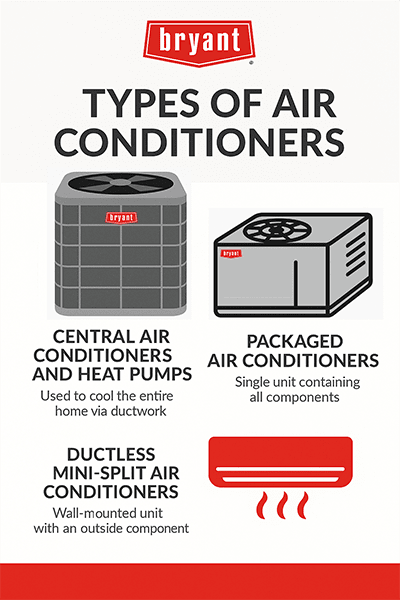
There are several types of HVAC equipment systems available: split systems, packaged systems, and ductless systems. Each is designed to meet different residential heating, cooling, and spatial requirements.
How Do Split Systems Work?
Split systems are the most common residential HVAC setup. They consist of an outdoor unit—either an air conditioner or heat pump— paired with an indoor unit such as a furnace or air handler. Split systems are better suited for homes with existing ductwork, offering a versatile and highly customizable climate solution.
What Are Packaged HVAC Systems?
Packaged systems house all heating and cooling components in a single outdoor unit, typically installed on a roof or concrete slab. Packaged systems work best when indoor space is limited, eliminating the need for a large indoor furnace or air handler.
Ductless Systems
Also known as a mini split system, ductless HVAC units provide targeted heating and cooling without requiring ductwork. Ductless systems are a strong option for room additions, converted garages, or older homes where installing traditional ducts is not feasible.
What Types of HVAC Units Does Bryant Offer?
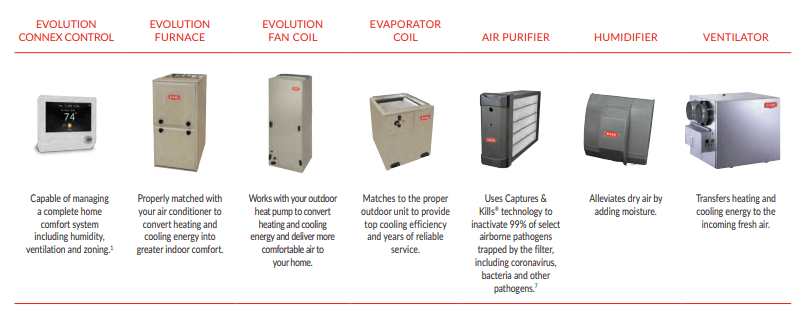
Bryant offers a comprehensive and constantly evolving product portfolio covering every major HVAC unit category. Understanding the differences helps you select the system best matched to your home's climate, layout, and energy goals.
- Air Conditioners for Whole-House Cooling: Central air conditioners distribute cool air through a duct network to cool your entire home consistently and efficiently.
- Furnaces for Whole-House Heating: Gas furnaces distribute warm air through ductwork, providing reliable comfort during colder months.
- Heat Pumps for Both Heating and Cooling: Heat pumps transfer heat between indoors and outdoors depending on the season, serving as an eco-friendly alternative for both heating and cooling. Geothermal heat pumps take this further, using the earth's stable underground temperature to condition your home. Heat pumps are better suited for moderate climates, while furnaces work best in regions that experience extreme winter cold.
- Indoor Air Quality Products: Indoor air quality products, such as air purifiers, humidifiers, dehumidifiers, and UV lights improve the cleanliness and comfort of indoor air by reducing allergens, pollutants, and harmful pathogens.
How to Choose the Right HVAC Unit
Selecting the right HVAC unit requires evaluating your home's size, budget, and desired efficiency features to ensure optimal comfort and long-term energy savings.
- Proper Sizing and Capacity: An undersized HVAC unit will struggle to maintain the desired temperature, while an oversized unit wastes energy and reduces efficiency. A local Bryant dealer can perform a load calculation to determine the ideal size and capacity for your specific home.
- Energy Efficiency: Higher efficiency ratings translate directly into greater savings on heating and cooling bills over time. Key ratings to understand include:
- SEER2 (Seasonal Energy Efficiency Ratio): SEER2 measures cooling efficiency over an entire season. A higher SEER2 rating indicates better energy efficiency.
- EER2 (Energy Efficiency Ratio): EER2 measures air conditioner or heat pump efficiency at a specific operating temperature.
- HSPF2 (Heating Seasonal Performance Factor): HSPF2 measures a heat pump's heating efficiency over a full heating season. A higher HSPF2 indicates greater performance.
- AFUE (Annual Fuel Utilization Efficiency): AFUE measures how efficiently a furnace converts fuel into heat. A higher AFUE rating means less energy waste.
- Additional Features and Smart Controls: Look for units with programmable thermostats, zoning capabilities, and integrated air purification. Smart home compatibility enhances comfort, convenience, and indoor air quality.
- Cost and Budget: Factor in both upfront costs and long-term operating expenses. High-efficiency HVAC systems carry higher initial costs but often deliver meaningful savings over time through reduced energy consumption. Learn more about HVAC cost.
- Noise Levels: Check the decibel rating, especially for units installed near living or sleeping areas. A rating in the 50s is considered great, the 60s is good, and the 70s is standard..
- Warranty and Maintenance: A comprehensive warranty protects your investment by covering potential HVAC repair or replacement costs if the system fails. Review Bryant's warranty information before purchasing.
“Modern HVAC systems have so much amazing technology and great options for homeowners,” Houchin said. “You can fix those problem spots and finally enjoy consistent comfort throughout your home.”
How Do You Maintain an HVAC Unit?
Proper HVAC maintenance is essential to extend how long your HVAC system lasts and keep it running efficiently. A well-maintained system is less likely to break down unexpectedly and will perform at peak efficiency for longer.
- Regular Filter Cleaning and Replacement: Filters trap dust, dirt, and airborne particles, preventing them from entering your system. Over time, these filters can become clogged, reducing airflow and causing your unit to work harder. Replace filters every 1-3 months, depending on usage and filter type. Learn how to replace air filters and how often to replace air filters.
- Annual Professional Maintenance: Schedule an annual inspection with a trained HVAC technician to clean coils, check for refrigerant leaks, and verify that all components are functioning properly. Professional maintenance helps identify potential issues before they become costly problems.
Connect With A Bryant Dealer On HVAC Equipment
Connect with a Bryant dealer to explore HVAC units and equipment tailored to your home's specific needs. Bryant's expert dealer network can guide you through system selection, energy efficiency options, and professional HVAC installation—whether you're upgrading an existing unit or starting fresh. Schedule an appointment with your local Bryant dealer today for personalized solutions and reliable HVAC service.
HVAC Unit FAQs
An HVAC unit is the system responsible for heating, ventilating, and air conditioning your home, maintaining indoor comfort year-round through temperature and airflow control.
AC refers specifically to air conditioning, while HVAC is a broader term that includes heating, ventilation, and cooling systems, covering your home's entire climate control system.
A typical HVAC unit costs between $5,000 and $20,000, depending on the system size, type, efficiency, and whether both heating and cooling components are being replaced. It’s best to talk to your local Bryant dealer to get an accurate quote.
A well-maintained HVAC system typically lasts between 15 and 25 years, depending on the type of equipment, usage patterns, and how consistently it receives professional maintenance. Regular tune-ups, timely repairs, and proper filter changes can help extend the system’s lifespan while maintaining energy efficiency and reliable performance.
A ductless mini split system is the best HVAC option for homes without existing ductwork. Ductless systems deliver targeted heating and cooling to specific rooms or zones without requiring any duct installation, making them ideal for older homes, room additions, or converted spaces.
HVAC sizing is determined by a load calculation, which accounts for your home's square footage, insulation levels, ceiling height, local climate, and other factors. An undersized or oversized unit will underperform and waste energy. A Bryant dealer can perform this calculation and recommend the right capacity for your home.
The cost to run an HVAC unit depends on the system size, efficiency rating, local energy rates, and how often it operates. On average, running a central air conditioner can cost $50 to $250 or more per month during the cooling season, while heating costs vary based on the furnace type, fuel source, and climate. Upgrading to a high-efficiency HVAC system, maintaining your equipment, and using a smart thermostat can help reduce energy costs.
Learn More About HVAC
- Discover what is HVAC
- Read our guide on HVAC replacement
- Check out our HVAC pricing guide
- Understand HVAC zoning systems
- Explore HVAC options for old houses
About The Expert Reviewer: Michelle Notaro is a Product Manager for Residential Air Conditioners at Bryant, helping guide the direction of residential cooling products. She considers changing homeowner priorities, emerging market developments, and regulatory requirements to support air conditioning solutions that address today's comfort and efficiency expectations.


