About The Author: Travis Baugh is a Digital Brand Marketing Manager for Bryant, where he creates clear, helpful content to guide homeowners through heating, cooling, and indoor air quality decisions. His goal is to empower readers with the knowledge they need to choose the right comfort solutions for their home—confidently and comfortably.
Multi Zone Mini Split Systems
By Travis Baugh | Expert Review by Connor Howard - Product Manager, Ductless Mini Splits
A multi zone mini split system is a ductless HVAC solution that connects a single outdoor unit to multiple indoor air-handling units, providing individualized temperature control for different rooms. Bryant multi zone mini split systems support between 2 and 8 zones, depending on the system and capacity, allowing homeowners to heat and cool individual areas without installing traditional ductwork. By conditioning individual zones instead of relying on a single temperature setting for the entire home, a multi-zone system can provide more targeted comfort and control. mini split air filters
How Do Multi Zone Mini Split Systems Work?
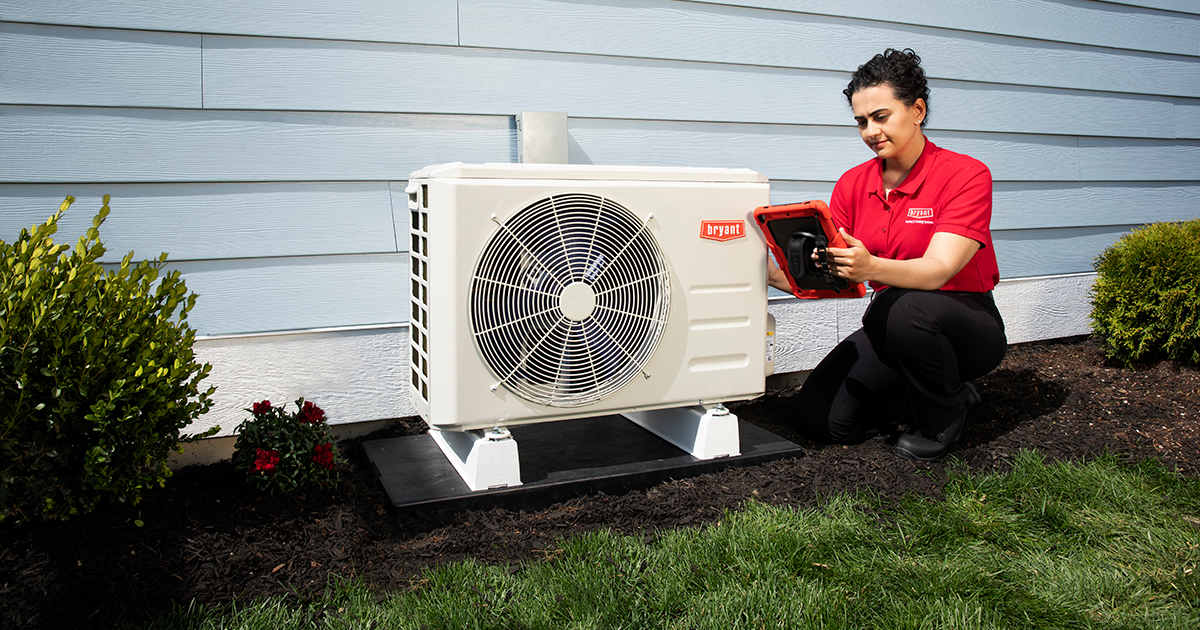
A Bryant multi zone mini split system connects one outdoor unit to multiple independent indoor air-handling units, with each indoor unit serving a separate zone. Depending on the system, up to eight indoor units can be connected to a single outdoor unit. Each zone can have its own temperature control, allowing occupants to adjust comfort settings independently.
While a single-zone unit features a basic one-to-one setup, a multi-zone configuration expands comfort control across multiple rooms or areas of a home.
Brian Redmond, owner of Redmond’s Complete Comfort in Lock Haven, Pennsylvania, explains the difference between single-zone and multi-zone mini split systems.
“We call single-zone units a one-to-one: one outdoor unit and one indoor unit, a basic setup,” Redmond said. “If you only want to condition one area—like a garage or a living room—that’s a one-to-one system.”
For homes that need temperature control in multiple areas, such as a living room and primary bedroom, a multi-zone system can provide separate comfort settings for each zone.
“With multi-zone systems, one outdoor unit can power several indoor units, each set to different temperatures,” he explained. “Many systems can support up to six indoor units connected to a single outdoor unit.”
Benefits of Multi Zone Mini Split Systems
The main benefits of multi zone mini split systems include targeted heating and cooling, individualized temperature control, and flexible installation for homes without existing ductwork. Multi zone systems can be useful for larger homes, multi-story properties, additions, or households with different temperature preferences.
- Targeted Energy Use: Multi-zone mini split heat pumps allow homeowners to heat or cool individual zones rather than using a single temperature setting throughout the home. Inverter technology can also adjust compressor operation to match heating or cooling demand.
- Personalized Comfort: Bryant multi zone systems provide independent temperature control for individual zones, allowing household members to select different comfort settings where supported by the system.
- Flexible Installation: A multi-zone configuration can connect multiple indoor units to one outdoor unit, reducing the need for a separate outdoor unit for every conditioned room. The number of indoor units depends on the outdoor unit's capacity and system specifications.
Comparing Single Zone vs. Multi-Zone Ductless Mini Splits
|
Single-Zone Mini Split | Multi-Zone Mini Split | |||||
| Best For | Individual rooms, home additions, garages, offices, or spaces without existing ductwork | Whole-home comfort, multiple rooms, finished basements, or homes with different temperature preferences | |||||
| Number of Zones | 1 indoor unit connected to 1 outdoor unit |
|
|||||
| Efficiency | Very efficient because it conditions only one space when needed |
|
|||||
| Temperature Control |
|
control for the conditioned space | Each indoor unit can provide independent temperature control for its zone |
|
|||
| Ideal Home Applications |
|
Larger homes, multi-story homes, open floor plans, or homes without existing ductwork |
The key difference between a single-zone and multi-zone mini split is the number of independently controlled areas. A single-zone system connects one indoor unit to one outdoor unit, while a Bryant multi zone mini split system can connect multiple indoor units to a single outdoor unit, depending on system capacity.
Bryant's 4-Step Multi-Zone Sizing Method
Choosing a multi-zone mini split starts with the rooms you want to condition—not simply the number of indoor units you want to install. Use these four steps as a starting point before working with a Bryant dealer:
1. Identify the Zones
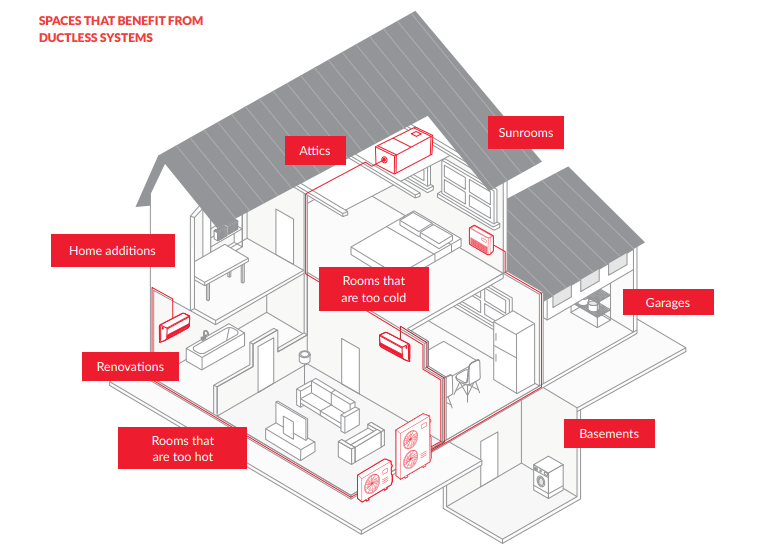
List each room or area that needs independent temperature control. A bedroom, living room, home office, finished basement, or addition may each represent a potential zone.
2. Determine the Heating and Cooling Load
Each zone has different heating and cooling requirements based on factors such as room size, insulation, windows, orientation, and local climate. ENERGY STAR recommends having a contractor verify the proper system size using a Manual J load calculation, which determines how much heating and cooling a home requires.
3. Match Indoor Units to Each Zone
Select an indoor unit with the appropriate capacity and configuration for each space. Bryant offers indoor units in multiple configurations, including wall-mounted, ceiling-mounted, and floor-mounted options.
4. Match the Outdoor Unit to the System
The outdoor unit must be compatible with the number and capacity of the connected indoor units. A Bryant dealer can determine the appropriate combination based on the home's load requirements, desired zones, equipment specifications, and installation conditions.
Key Features to Consider When Buying
When selecting a multi zone mini split, you should consider system capacity, the number of zones, energy efficiency ratings (SEER2, EER2, and HSPF2), noise levels, aesthetics, and smart technology capabilities.
1. System Capacity and Sizing
Proper sizing is essential to system performance and comfort. A system that is too small may struggle to maintain the desired temperature, while an oversized system may operate less efficiently. Each indoor unit requires an appropriate BTU capacity based on the characteristics and heating and cooling load of the space.
ENERGY STAR recommends that a qualified contractor verify system sizing using a Manual J load calculation. A professional assessment can help determine what size mini split is needed.
2. Number of Zones
Determine how many independent areas require individual control. Bryant multi zone systems support between 2 and 8 zones, depending on the system and capacity. Learn more about 3 zone mini splits and 4 zone mini splits.
3. Energy Efficiency (SEER2 Rating)
SEER2 measures cooling efficiency over a defined seasonal test period, while EER2 measures efficiency under specific operating conditions and HSPF2 measures seasonal heating efficiency for heat pumps. When comparing equipment, look at the complete system rating rather than relying on SEER2 alone.
Bryant's Evolution™ ductless systems have ratings up to 28.5 SEER2 and 18.0 HSPF2, and Bryant states that its Evolution™ Systems are ENERGY STAR® certified. Actual efficiency depends on the specific equipment combination and operating conditions.
4. Noise Levels
Check the decibel (dB) ratings for both indoor and outdoor units before purchasing. Bryant multi zone systems are designed for quiet operation, making indoor unit sound levels an important consideration for bedrooms, home offices, and living areas. Compare the published sound ratings of the specific indoor and outdoor units being considered.
5. Aesthetics and Design
Indoor units come in various configurations, including wall-mounted mini splits, ceiling-mounted mini splits, and floor-mounted options. This gives homeowners flexibility to select an indoor unit based on room layout, installation requirements, and appearance.
6. Smart Technology
Some Bryant systems and controls offer Wi-Fi connectivity and smart-home integration, depending on the equipment and control configuration. Programmable schedules and remote access can help homeowners manage comfort settings around their daily routines
Why Choose Bryant for Your Multi Zone System?
Bryant multi zone mini split systems combine multiple indoor units with a single outdoor unit to provide room-by-room comfort without traditional ductwork. Key product features include:
- Cold-Weather Performance: Select Bryant ductless systems are designed to operate in outdoor temperatures ranging from -22°F to 122°F.
- High Efficiency: Bryant Evolution™ ductless systems offer ratings up to 28.5 SEER2 and 18.0 HSPF2, with ENERGY STAR® certified Evolution™ Systems.
- Air Filtration: Bryant mini split indoor units use washable filters to help capture airborne particles.
- Intelligent Comfort: Select Bryant systems offer features such as occupancy sensing and temperature-sensing remotes to help adjust operation based on room conditions and occupant preferences.
Multi Zone Mini Split Installation and Maintenance
Professional installation is critical to the performance and longevity of a multi zone mini split system. A certified Bryant dealer can assess the home, perform load calculations, determine appropriate indoor and outdoor unit combinations, and plan indoor unit placement and refrigerant-line routing.
Ongoing mini split maintenance can help maintain system performance and identify potential issues before they affect comfort.
Schedule an appointment with a local Bryant dealer today to determine the best mini split for your home and get a quote for mini split cost. Your local Bryant dealer can perform professional mini split installation to ensure your home comfort all year long.
Multi Zone Mini Split FAQs
Yes, multi-zone mini splits can be worth it for homes needing individual room control, offering customized comfort, energy efficiency, and the ability to heat and cool multiple spaces independently.
Most multi-zone mini split systems can support 2 to 8 zones, depending on the brand and outdoor unit capacity, with each zone having its own indoor air handler and thermostat.
Most homeowners install one zone per area or room they want to control separately. A Bryant dealer can design a system to match your comfort needs and home layout.
Yes. Multi-zone systems can be efficient because they let you heat or cool only the rooms you’re using instead of the entire home.
A multi-zone system connects one outdoor unit to multiple indoor units, each with its own thermostat for individual temperature control.
Yes. They offer significant long-term savings through energy efficiency and add value to your home by providing customized, room-by-room comfort without the need for ductwork.
Most Bryant multi-zone systems can support between 2 and 8 indoor units connected to a single outdoor condenser, depending on the model and capacity.
Absolutely. Each indoor unit has its own thermostat, allowing you to set a specific temperature for that zone independent of the rest of the house.
Yes, each indoor unit is equipped with filtration to capture dust and particulates, improving indoor air quality in every zone.
The cost of a multi zone mini split system depends on the number of indoor units, the system's overall BTU capacity, and local installation rates. While the upfront investment is higher than single-zone units, the long-term energy savings and zoning capabilities make it a highly cost-effective solution over time.
Yes, you can mix different styles of indoor units—such as wall-mounted, ceiling-cassette, and floor-mounted models—on the same outdoor condenser. This allows you to customize the aesthetics and airflow for the specific needs of each room.
A single-zone mini split connects one outdoor unit to one indoor unit and is best suited for conditioning a single room or space. A multi-zone mini split connects one outdoor unit to multiple indoor units, each with independent temperature control—making it the better choice for whole-home comfort.
About The Expert Reviewer: Connor Howard serves as Product Manager for Residential Ductless Mini Splits at Bryant. He helps shape ductless heating and cooling solutions for a variety of home layouts and comfort needs. His work considers evolving homeowner expectations, energy efficiency objectives, and industry requirements to support practical, forward-looking residential comfort solutions.
Learn More About Ductless Mini Splits
- Learn all about what is a mini split
- Understand what is a ducted mini split
- Read our guide to mini split cost
- Find out are mini splits worth it?
- Learn all about mini split vs central air
- Discover the value of garage mini splits


