About The Author: Travis Baugh is a Digital Brand Marketing Manager for Bryant, where he creates clear, helpful content to guide homeowners through heating, cooling, and indoor air quality decisions. His goal is to empower readers with the knowledge they need to choose the right comfort solutions for their home—confidently and comfortably.
What's the Difference Between a Heat Pump vs Furnace?
By Travis Baugh
The main difference between a heat pump and a furnace is how they create warmth. A furnace generates heat by burning fuel (like gas) or using electricity, while a heat pump simply moves existing heat from the outside air or ground into your home. Additionally, a heat pump can reverse its process to cool your home in summer, whereas a furnace only provides heat.
Choosing the right system is crucial for long-term comfort, quiet operation, and energy efficiency. As of 2026, homeowners are increasingly investing in reliable, smart climate control solutions. This guide compares their features to help you decide which system is best for your specific climate, infrastructure, and budget.
How Does a Furnace Work?
A furnace is a heating system that generates warmth by heating air through combustion or electricity. It uses a blower to circulate this heated air through your home's ductwork to achieve the temperature set on your thermostat.
In gas or oil models, a burner ignites fuel, and a heat exchanger transfers that warmth to the air. For electric furnaces, heating elements warm the air directly. Furnaces are traditionally known for providing powerful, consistent heat very quickly. Learn more about what is a furnace.
How Does a Heat Pump Work?
A heat pump is an all-in-one system that provides both heating and cooling by transferring heat, not generating it. It is accomplished using a refrigeration cycle with a compressor and refrigerant, similar to an air conditioner.
In winter, it extracts heat from the outdoor air or ground and moves it inside. During summer, it reverses this process, removing heat from your home and releasing it outdoors. This is accomplished using a refrigeration cycle with a compressor and refrigerant, similar to an air conditioner. Heat pumps offer seamless, smart home integration and quiet operation. Learn more about what is a heat pump.
What Are the Main Differences Between a Furnace vs Heat Pump?
The two biggest distinctions between these systems are their fuel sources and their versatility. Furnaces rely on combustion (gas/propane) and require venting, while heat pumps run on electricity and offer year-round climate control.
Mike Lea, co-owner of Lea Heating & Air Conditioning in East Dundee, IL, explains the differences between heat pumps and furnaces by their fuel source, need for a combustion process, and heating and cooling capabilities.
“A furnace uses natural gas or propane to heat your home, whereas a heat pump uses electricity,” Lea said “Due to a combustion process of a gas furnace, a furnace requires venting to the exterior. A heat pump can do double duty as both a source of heating and cooling, utilizing an outdoor condenser, which is your heat pump, and an indoor evaporator coil and copper tubing line set. Then, inside you have your air handling unit or your furnace as a means of moving air around the home.”
How Should You Choose Between a Heat Pump vs Furnace?
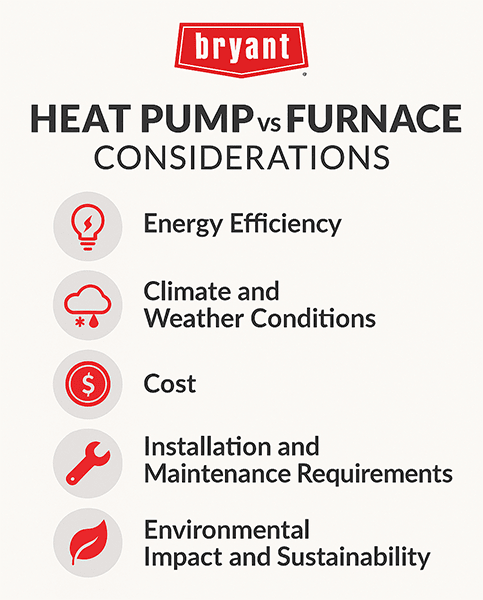
When comparing a heat pump vs furnace, you must weigh energy efficiency, local climate, installation costs, and environmental impact. A heat pump is better suited for homes prioritizing year-round eco-friendly climate control, while a furnace works best when rapid, powerful heating is required in extreme cold.
Which System Offers Better Energy Efficiency?
Heat pumps are exceptionally energy-efficient because they transfer existing heat rather than generating it. For every unit of electricity they use, heat pumps can deliver up to three units of heat. Furnaces, which create heat by burning fuel, are generally less efficient by comparison, though modern models have improved significantly.
Which System Is Better for Your Local Climate?
- Heat Pumps: These systems are highly efficient in moderate climates with mild winters. While historically less effective in freezing temperatures, modern cold climate heat pumps are now a reliable choice for colder regions in 2026, providing consistent warmth even when temperatures drop.
- Furnaces: Furnaces are a proven, powerful choice for climates where temperatures regularly fall below freezing. They generate consistent, powerful heat by burning fuel, ensuring reliable warmth in even the most extreme cold.
What Are the Costs of a Heat Pump vs Furnace?
- Upfront Cost: A heat pump usually costs more upfront than a traditional furnace because it’s a more complex system that can both heat and cool your home. However, comparing a heat pump only to a furnace doesn’t tell the whole story. A furnace only provides heat, so most homes also need a separate air conditioner for cooling. A heat pump, on the other hand, works as both a heating system in winter and an air conditioner in summer. Because it handles both jobs, installing a heat pump can eliminate the need to purchase a separate AC unit. When you consider the cost of a furnace plus an air conditioner, the total price is often similar to—or sometimes higher than—a single heat pump system
- Operating Cost: The high efficiency of heat pumps can lead to long-term savings on monthly energy bills. Furnaces may have higher operating costs due to fuel consumption depending on your local fuel cost. It's important to weigh the initial investment against long-term savings.
Learn more about heat pump cost and how much is a new furnace.
What Are the Installation and Maintenance Requirements?
Both systems require professional installation and regular maintenance to perform optimally. Some heat pumps may need an auxiliary heating source in extremely cold climates. Oil furnaces and propane furnaces require fuel refills.
Learn more about heat pump installation, heat pump maintenance, furnace installation, and furnace maintenance.
Which System Has a Lower Environmental Impact?
If sustainability is a priority, heat pumps are the winner. By running on electricity, they produce zero onsite emissions. Gas furnaces release carbon dioxide and other byproducts during the combustion process.
Expert Consultation: The Best Way to Decide
Consulting with your local Bryant dealer is the best way to determine the right system for your home. A professional can assess your specific heating requirements, evaluate your home's infrastructure, and provide expert advice on choosing between a heat pump vs furnace. They will help you find the most reliable and efficient Bryant solution to keep your home comfortable all year. Schedule an appointment today.
Heat Pump vs Furnace FAQs
Whether a heat pump is better than a furnace depends on your climate and local energy costs.
Traditional heat pumps begin to lose efficiency around 25–30°F, but cold-climate heat pumps can still operate effectively down to -5°F or lower.
Replacing a furnace with a heat pump can help reduce your carbon footprint, and eliminate the need for separate heating and cooling systems.
A heat pump is typically cheaper to operate than an oil furnace due to higher energy efficiency, especially in mild climates.
The most affordable option depends on local utility rates and climate.
Yes, in many climates a heat pump can replace a furnace entirely. However, in extremely cold regions, some homeowners opt for a "dual fuel" system, using a heat pump for mild days and a furnace for the coldest nights.
Yes, heat pumps generally operate more quietly than traditional furnaces. They are designed for quiet operation, reducing the sudden noise associated with furnace burners igniting.


