About The Author: Travis Baugh is a Digital Brand Marketing Manager for Bryant, where he creates clear, helpful content to guide homeowners through heating, cooling, and indoor air quality decisions. His goal is to empower readers with the knowledge they need to choose the right comfort solutions for their home—confidently and comfortably.
Why Is My Furnace Not Turning On?
By Travis Baugh
If your furnace is not turning on, the most common causes are incorrect thermostat settings, a tripped circuit breaker, or a clogged air filter. These issues either interrupt power supply or trigger built-in safety switches that shut the system down to prevent overheating.
When the temperature drops and your furnace won't start, it's stressful—but it's often fixable. This guide covers the 12 most frequent reasons a furnace stops working and provides a step-by-step troubleshooting checklist you can follow before calling a professional.
What Are the Most Common Reasons a Furnace Won't Turn On?
A furnace that won't turn on typically falls into one of three categories: power issues, airflow restrictions, or ignition failures.
Andrew Mackey, owner of Superior Service in Lake St. Louis, Missouri, explains the most common reasons a furnace may not turn on.
“It could be as simple as a tripped breaker,” Mackey said. “The unit might also shut off if the filter is too dirty, or another common cause is a dirty flame sensor.”
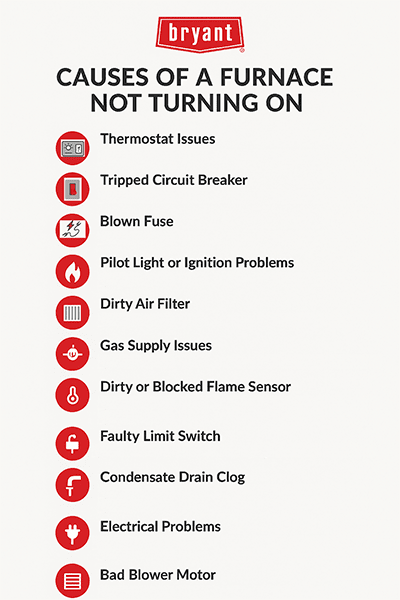
Here are 12 common causes to investigate:
Power and Control Issues
- Thermostat Malfunctions: Ensure your thermostat is set to "heat" and the temperature is higher than the room's current reading. Dead batteries or loose wiring can also prevent communication with the furnace.
- Tripped Circuit Breaker: Even gas furnaces need electricity to operate. A tripped breaker in your home's electrical panel will cut power to the unit completely.
- Blown Fuse: Older furnaces often use internal fuses. If a fuse blows due to a power surge or age, the system will not start.
- Furnace Power Switch: This switch—often located on the side of the unit or a nearby wall—looks like a standard light switch and must be in the "ON" position.
Airflow and Safety Mechanisms
- Dirty Air Filter: A clogged furnace filter is a primary cause of system failure. It restricts airflow, causing the heat exchanger to overheat and triggering a safety shutdown.
- Blocked Vents: Supply or return vents blocked by furniture, rugs, or other objects force the system to work harder, leading to overheating and reduced efficiency.
- Faulty Limit Switch: This component monitors the furnace's internal temperature. If airflow is restricted or the blower fails, the limit switch shuts off the burner to prevent fire hazards.
- Clogged Condensate Drain: High-efficiency furnaces produce condensate (water) as a byproduct. If the drain line becomes blocked, a float switch will prevent the furnace from turning on to avoid water damage.
Ignition and Mechanical Failures
- Ignition or Pilot Light Problems: Older furnaces rely on a pilot light that can blow out. Modern systems use electronic igniters—if these crack or fail, gas will not ignite.
- Gas Supply Issues: A closed gas valve or utility interruption will prevent the furnace from producing heat. Check that other gas appliances in your home are working to rule out a supply outage.
- Dirty Flame Sensor: This sensor detects whether a flame is present. When coated in carbon or dust, it shuts the gas valve as a precaution, causing the furnace to start briefly and then turn off.
- Bad Blower Motor: If the blower motor that circulates air through your ducts fails, the furnace may briefly ignite but will quickly shut down due to insufficient airflow.
How Do I Troubleshoot a Furnace That Won't Turn On?
Before scheduling a professional repair, work through these 11 troubleshooting steps. Many homeowners resolve the issue without a furnace service call.
- Check Your Thermostat: First, ensure the thermostat is set to "heat" and the temperature is set higher than the current room temperature. If it's battery-powered, replace the batteries.
- Inspect the Circuit Breaker: Go to your home's electrical panel and check if the furnace's breaker has tripped. If it has, flip it completely off and then back on to reset it.
- Check the Furnace Power Switch: Look for a power switch on or near the furnace unit itself and make sure it is in the "on" position.
- Confirm the Gas Supply Is On: If you have a gas furnace, ensure the gas valve near the unit is open. Also, check that other gas appliances in your home are working to confirm there isn't a supply outage.
- Examine the Pilot Light or Ignition System: For older furnaces, check if the pilot light is out. If it is, follow the manufacturer's instructions to relight it safely. For modern systems with electronic ignition, a failure may require professional furnace service.
- Replace the Air Filter: A clogged furnace filter is a very common culprit. Check your filter and replace it if it appears dirty to restore proper airflow.
- Clean the Flame Sensor: If the furnace turns on for a few seconds and then shuts off, a dirty flame sensor is a likely cause. You can often clean it carefully with a soft cloth.
- Ensure Vents Are Open: Walk through your home and make sure all air vents and registers are open and not blocked by furniture, rugs, or other items.
- Clear the Condensate Drain (For High-Efficiency Models): If you have a high-efficiency furnace, check the condensate drain line for any clogs and clear them to allow proper drainage.
- Look for Error Codes or Listen for Noises: Modern furnaces may display blinking error codes on a control panel. Note any codes or unusual sounds, as they can help a technician diagnose the problem faster.
- Call a Professional: If you've tried these steps and your furnace is still not turning on, it's time to call your local Bryant dealer. Complex issues with a control board, blower motor, or internal fuse require an expert.
When to Call a Bryant Dealer for Your Furnace Not Turning On
If furnace troubleshooting doesn't solve the issue, it's time to call a professional. A trusted Bryant dealer can provide expert furnace repair or furnace replacement and diagnose the root cause with precision. Recurring failures—or issues involving the control board, heat exchanger, or blower motor—are best left to a certified technician.
Regularly scheduled furnace maintenance with a Bryant dealer is the most reliable way to prevent unexpected breakdowns and keep your system running efficiently throughout the winter.
Schedule an appointment with your local Bryant dealer today.
Furnace Not Turning On FAQs
To manually restart your furnace, turn off the power, wait a few minutes, then reset the thermostat and turn the system back on—check the breaker and filter as well.
Ensure the thermostat is set to heat and the temperature is above room level, replace the filter if dirty, and check for tripped breakers or a closed gas valve.
Common causes include a malfunctioning thermostat, tripped circuit breaker, clogged air filter, or a faulty ignition system preventing the furnace from starting.
Your furnace may not turn on due to power issues, a dirty flame sensor, low gas supply, or a safety switch that’s been triggered.
Dirty filters, tripped breakers, or thermostat issues are the most common causes.
Check the thermostat settings, power switch, and air filter before calling for service.
Turn off power to the furnace, wait a few minutes, then restore power and follow the manufacturer’s reset instructions. Consult your owner’s manual for details.
A clicking sound usually indicates the igniter or pilot light is trying to light the burners but failing. This is often caused by a dirty flame sensor, a bad furnace ignitor, or a gas supply issue.
Yes, a dirty air filter restricts airflow, causing the heat exchanger to overheat. When this happens, the limit switch trips and shuts down the furnace to prevent damage and fire hazards.
Learn More About Furnaces
- Learn how much is a new furnace
- Get help with a furnace leaking water
- Find out how long does a furnace last
- Find out how to fix a furnace blowing cold air
- Learn about the importance of furnace cleaning
- Understand the ins and outs of a furnace tune-up


