About The Author: Travis Baugh is a Digital Brand Marketing Manager for Bryant, where he creates clear, helpful content to guide homeowners through heating, cooling, and indoor air quality decisions. His goal is to empower readers with the knowledge they need to choose the right comfort solutions for their home—confidently and comfortably.
Your Complete Guide To HVAC Repair
By Travis Baugh
HVAC repair involves the professional diagnosis and resolution of issues within heating, ventilation, and air conditioning systems—such as refrigerant leaks, electrical failures, or airflow obstructions—to restore optimal home comfort and energy efficiency.
When your system falters, it’s not just a mechanical issue; it disrupts your daily life. Whether you are facing a sudden breakdown or subtle performance drops, understanding the repair process helps you reclaim control of your home environment. Trusting a local Bryant dealer ensures you receive expert service from technicians trained to diagnose and fix all
What are the most common signs that I need HVAC repair?
The most common signs you need HVAC repair include unusual system noises, unexpected water leaks, irregular temperatures, and sudden spikes in your energy bills. Identifying these warning signs early can prevent minor glitches from turning into major, costly breakdowns.
Here are the specific issues to watch for:
- Insufficient Heating or Cooling: Often caused by a malfunctioning thermostat, low refrigerant, or clogged filters, resulting in uneven temperatures.
- Refrigerant Leaks: Leaks reduce efficiency and cooling power, potentially damaging the compressor if left unresolved.
- Thermostat Malfunctions: Inaccurate readings lead to discomfort and wasted energy by causing the system to cycle incorrectly.
- Frozen Coils: Caused by low airflow or refrigerant issues, frozen evaporator coils significantly reduce efficiency and risk system failure.
- Electrical Issues: Worn wiring, blown fuses, or bad capacitors can cause power failures or irregular operation.
- Blower Fan Problems: A failing fan prevents effective air circulation, leading to stagnant air and inconsistent temperatures.
- Water Leaks: Clogged drain lines or condensate pump failures can cause water to pool, risking property damage.
- Leaky Ductwork: Escaping air forces your system to work harder, driving up utility bills and reducing comfort.
If you notice any of these symptoms, contact your local Bryant dealer.
DIY vs. Professional HVAC Repair: Is it safe to fix it yourself?
No, most HVAC repairs are not safe for DIY attempts because they require specialized electrical and refrigerant training. While changing a filter is simple, attempting complex repairs yourself can lead to further damage, voided warranties, or personal injury.
Samantha Houchin, owner of The Weather Changers in Denver, Colorado, warns against homeowners trying to complete HVAC work themselves.
“I don't think many homeowners realize how much goes into repairing an HVAC system,” Houchin said. “Even just changing a thermostat - if you touch the wires wrong or you don't turn the power off and then the wires touch, you could actually blow your whole control board.
“There are some pretty dangerous elements to an HVAC system and if you don't know what you're doing, you could damage the system to the point where you'd have to replace it or you could put yourself in harm's way. Lean on somebody who's trained to repair the system, put the time and training into it, knows the system inside and out, and understands how the system works.”
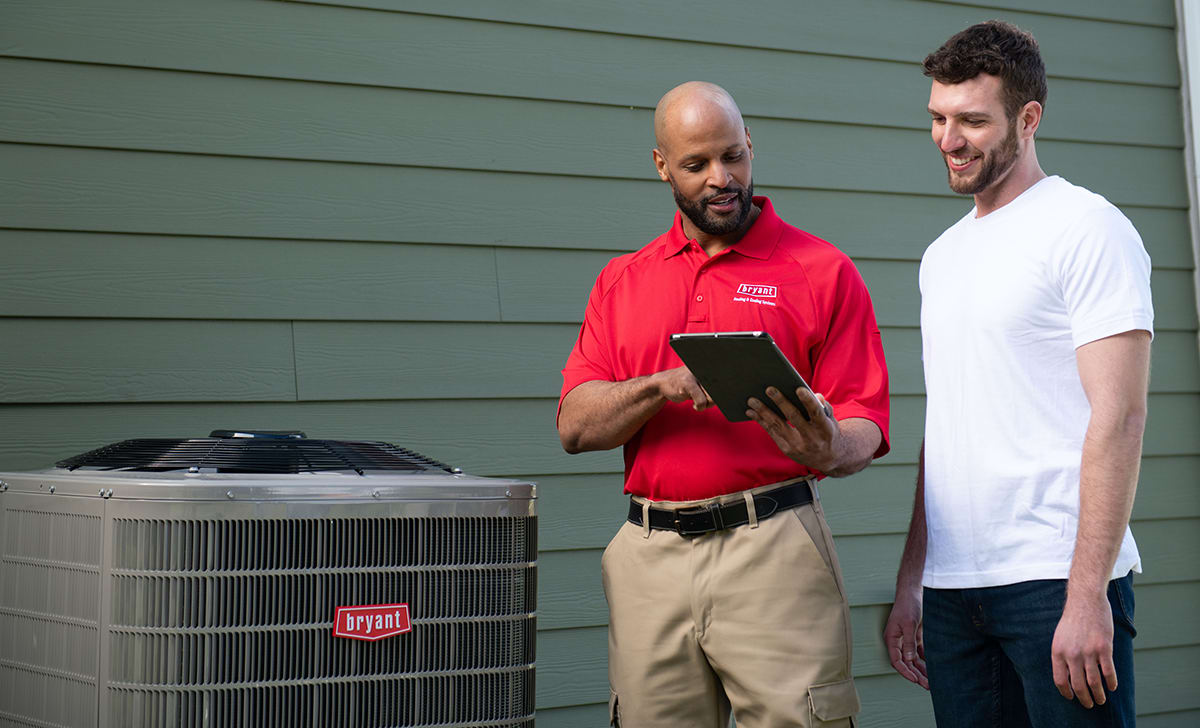
Why Choose a Bryant Factory Authorized Dealer?
Choosing a Bryant Factory Authorized Dealer ensures your HVAC repair is performed by certified experts using genuine factory parts for long-term reliability and efficiency. When your comfort is on the line, you need a partner you can trust to deliver an efficiency that pays for itself.
Unmatched Standards and Expertise
Dealers undergo rigorous evaluation to ensure they meet high standards for HVAC service.
“Each Bryant Factory Authorized Dealer is thoroughly evaluated and held to a high standard,” Melissa Frause, owner of Bob’s Heating and Air Conditioning in Woodinville, WA, said. “They’ve been recognized by Bryant as having the knowledge and experience to sell, install, and maintain the best heating and cooling systems for homeowners.”
NATE Certification
Factory Authorized Dealers employ technicians certified by North American Technician Excellence (NATE®), the industry's leading certification program. This ensures your technician has proven knowledge in real-world HVAC scenarios. Learn more about NATE HVAC certification.
“When a dealer is NATE certified, it shows they’ve taken an extra step,” Houchin said. “They aren’t just an average contractor. They’ve had to study for multiple tests, pay for them, and keep up with continuing education. That investment shows they’re committed to the trade and understand what’s expected in the world of HVAC.”
Genuine Factory Authorized Parts
To ensure your system performs as promised, Bryant dealers use genuine Factory Authorized parts whenever possible during HVAC installation and repair. This preserves the integrity and efficiency of your unit.

How much does HVAC repair cost?
HVAC repair costs vary based on the specific issue, your system's age, local labor rates, and warranty coverage. Minor repairs like thermostat calibration are affordable, while major fixes like compressor replacement are more significant investments.
Understanding these factors can help you budget and avoid surprises:
- Type of Issue: Simple fixes like thermostat calibration or filter changes are affordable. Complex jobs like compressor replacement or fixing refrigerant leaks require more labor and expensive parts.
- System Age and Condition: Older units may require hard-to-find parts or face cascading failures, increasing costs. Sometimes, HVAC replacement is more economical than repairing an aging unit.
- Labor Rates: Costs fluctuate based on geographic location, technician experience, and seasonality (peak summer or winter rates).
- Brand and Model: Advanced, high-efficiency systems or premium models may utilize specialized components that cost more to replace.
- Warranty Coverage: A valid warranty can significantly offset costs. Manufacturer warranties often cover parts for 5–10 years, though labor might not be included unless you have an extended service plan.
| HVAC System Type | Common Repair Types | Why Costs Vary | ||
| Central Air Conditioner | Capacitor replacement, contactor, fan motor, refrigerant recharge | Outdoor components are accessible, but refrigerant or coil issues increase complexity | ||
| Gas Furnace | Igniter replacement, flame sensor cleaning, blower motor, control board, gas valve | Many parts are inexpensive, but diagnostics and safety checks add labor | ||
| Heat Pump | Reversing valve, defrost board, fan motor, refrigerant issues | Functions as both heating and cooling system, increasing component complexity | ||
| Ductless Mini Splits | Sensor replacement, control board, fan motor, refrigerant leak |
|
||
| Fan Coil | Blower motor, control board, relay, drain pump | Typically indoor and accessible; parts vary by model |
Prevent Repairs With Routine HVAC Maintenance
Routine HVAC maintenance prevents costly repairs by allowing technicians to identify and fix minor issues before they cause complete system breakdowns. The smartest way to avoid emergency repairs is proactive care.
Regular maintenance allows experts to catch loose electrical connections or low refrigerant early. Routine service extends the life of your HVAC unit, ensures it runs quiet as a whisper, and maximizes your energy savings.
Learn more about AC maintenance and furnace maintenance.
Schedule HVAC Repair With Bryant
Scheduling HVAC repair with your local Bryant dealer ensures that your system is serviced by trained professionals who can provide reliable, efficient repairs. Their expertise helps ensure that your HVAC system will be restored to optimal performance, ensuring comfort and energy efficiency. Contact your local Bryant dealer today. Need to dive deeper into repair specifics? Check out our guides on AC repair, furnace repair, heat pump repair, and heating repair.
HVAC Repair FAQs
HVAC repairs are costly due to the specialized labor, complex equipment, and cost of parts, often requiring certified technicians and tools to ensure safe, code-compliant service.
The $5,000 rule helps decide between repair and replacement: multiply the system's age by the repair cost—if the result is over $5,000, replacement is typically the better option.
The most common HVAC repairs include replacing capacitors, fixing refrigerant leaks, cleaning or replacing filters, and repairing faulty thermostats or blower motors.
HVAC repair refers to the diagnosis and fixing of problems within heating, ventilation, and air conditioning systems to restore proper performance and indoor comfort.
Major HVAC repairs include compressor failure, heat exchanger replacement, or refrigerant system leaks, as they often require costly parts and extensive labor.
Most HVAC service calls range from $75 to $200, depending on your location, system type, and diagnostic needs.
Minor repairs may take one to two hours, while more complex issues—like compressor or motor replacements—can take several hours or a full day.
Homeowners insurance typically doesn’t cover HVAC repairs due to normal wear and tear, but it may cover damage caused by sudden events like fire or storms.
The compressor is often the most expensive component to repair or replace, followed by the heat exchanger and evaporator coil.
Yes, repairing issues like leaky ductwork, malfunctioning thermostats, or low refrigerant helps your system run efficiently. Restoring optimal performance reduces the energy required to heat or cool your home, lowering your monthly heating and cooling bills.
Smart thermostats and advanced controls monitor your system's performance in real-time. They can alert you to irregularities—like unexpected temperature drops or airflow changes—allowing you to schedule expert repairs before a complete breakdown occurs.
Learn More About HVAC
- Discover what is HVAC?
- Find out more about HVAC service
- Read our guide on HVAC replacement
- Check out our HVAC pricing guide
- Learn how long HVAC systems work
- Explore HVAC zoning systems


