Air to Water Heat Pump Guide
By Travis Baugh
What Is an Air to Water Heat Pump?
An air to water heat pump is an all-in-one HVAC system that extracts heat from outdoor air and transfers it to water, which is then circulated through your home for heating, cooling, and domestic hot water. Because these systems move heat rather than generate it through combustion, they are significantly more energy-efficient and environmentally friendly than traditional boilers or furnaces.
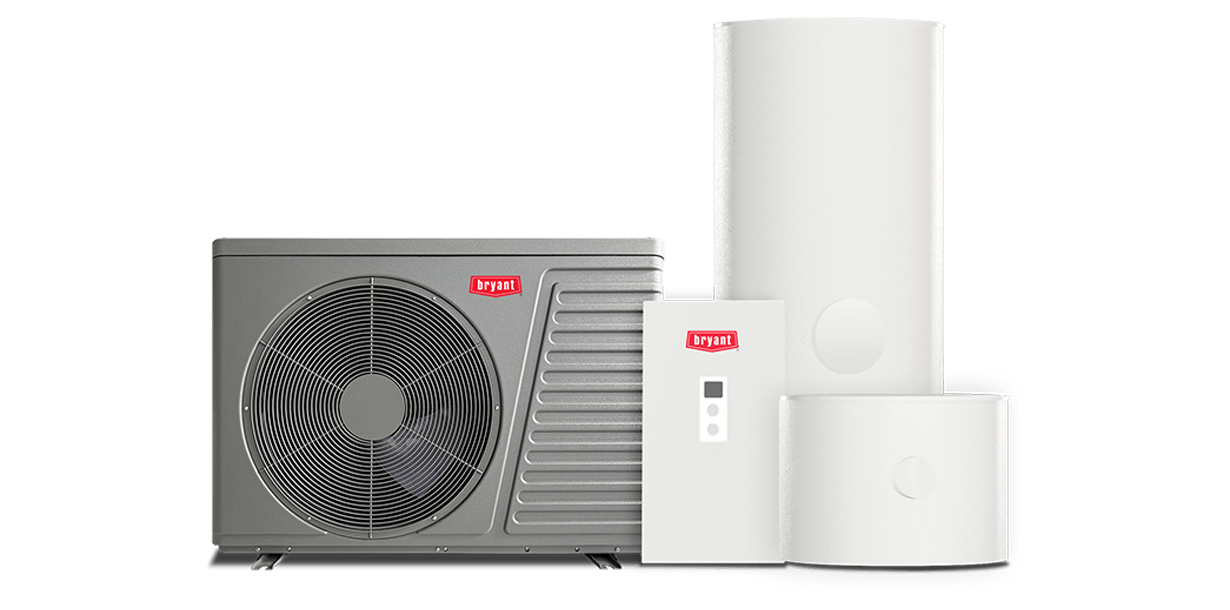
Bryant’s 33NM3 domestic hot water air-to-water heat pump is a forward-thinking solution designed to enhance your home's comfort and value while minimizing environmental impact—making it an ideal long-term investment for homeowners seeking reliable performance and meaningful energy savings.
How Does an Air to Water Heat Pump Work?
An air to water heat pump works by capturing thermal energy from outdoor air, using a compressor to raise that energy to a higher temperature, and transferring it to a water-based distribution system. That heated or chilled water then flows through hydronic systems—such as radiators or radiant floors—to regulate indoor climate.
Here is the step-by-step process:
- Heat Absorption: The outdoor unit draws in air and extracts thermal energy, operating efficiently even in freezing temperatures.
- Compression: The captured heat warms a refrigerant, which is then compressed to significantly increase its temperature.
- Water Heating: The hot refrigerant flows into an indoor unit, transferring heat to water. That water is distributed for space heating via radiators or underfloor piping, or used as domestic hot water.
- Cooling Mode: In summer, the cycle reverses. The system pulls heat from water inside the home and releases it outdoors, chilling the water to provide air conditioning through air handlers or chilled floors.
What Are the Benefits of an Air to Water Heat Pump?
The primary benefits of air to water heat pumps include exceptional energy efficiency, a reduced carbon footprint, and the convenience of consolidating heating, cooling, and hot water into a single system.
- Exceptional Energy Efficiency: Air to water heat pumps produce more heat energy than the electrical energy they consume, resulting in significant reductions in monthly energy bills—a level of efficiency that pays for itself over time.
- All-in-One Solution: A single unit manages space heating, cooling, and domestic hot water needs, streamlining the mechanical room and saving valuable living space.
- Quiet Operation: Bryant air to water heat pumps are engineered for tranquil performance, keeping the home environment peaceful and free from loud mechanical noise.
- Eco-Friendly Performance: By utilizing renewable thermal energy from outdoor air, these systems reduce reliance on fossil fuels and significantly lower a home's overall carbon footprint.
Is an Air to Water Heat Pump Right for My Home?
An air to water heat pump is best suited for homes that already use—or plan to install—hydronic (water-based) distribution systems, such as radiant floor heating or traditional radiators. It is an ideal upgrade for homeowners undertaking major renovations, building custom homes, or replacing an aging boiler.
An air to water heat pump may be the right choice if you value:
- Long-Term Savings: You are looking for efficiency that helps reduce operational costs over time.
- Sustainable Living: You want to reduce your environmental impact without sacrificing comfort.
- Integrated Comfort: You prefer a durable, all-in-one system that manages your entire home climate.
- Silent Operation: You prioritize a quiet home environment free from loud mechanical noise.
An air to water heat pump is better suited for homes with hydronic infrastructure already in place, while an air to air heat pump may work best for homes with existing ductwork seeking a simpler installation path.
How Much Does An Air-To-Water Heat Pump Cost To Install?
An air-to-water heat pump typically costs between $15,000 and $30,000+ to install, depending on the system size, home layout, existing heating system, and whether additional upgrades are needed. Installation costs can be higher for homes that require new hydronic distribution systems, radiant floor heating connections, upgraded electrical service, or other modifications.
Air-to-water heat pumps are often more expensive than traditional air-source heat pumps because they transfer heat into a water-based heating system rather than directly into indoor air. However, they can be an efficient option for homes with radiant floors, hydronic baseboards, or other water-based heating systems.
The total cost depends on factors such as:
- Home size and heating requirements
- Equipment efficiency and capacity
- Existing plumbing and heating infrastructure
- Installation complexity and labor costs
- Electrical upgrades or system modifications
A qualified HVAC professional can evaluate your home's heating setup and determine whether an air-to-water heat pump is a cost-effective replacement option compared with an air-source heat pump, furnace, or other heating system.
Connect With A Bryant Dealer On Air To Water Heat Pumps
Ready to upgrade your home's comfort? Connect with your local Bryant dealer to determine if an air-to-water heat pump fits your specific layout and climate needs. A Bryant dealer can provide expert, personalized guidance, comparing system types to ensure the best fit for long-term performance and reliability.
Discover Bryant Heat Pumps
Choose a Bryant heat pump for reliable, energy-efficient heating and cooling all year round. Known for their durability and advanced technology, Bryant heat pumps offer superior comfort while lowering energy costs. With quiet operation and smart features like variable-speed motors, Bryant heat pump systems ensure optimal temperature control. Backed by industry-leading warranties and professional installation from your local Bryant dealer, a Bryant heat pump is a long-term investment in comfort, efficiency, and peace of mind for your home.
Air To Water Heat Pump FAQs
Yes, modern air to water heat pumps are designed to operate efficiently even in freezing temperatures. Bryant's 33NM3 domestic hot water air-to-water heat pump includes features that ensure reliable performance throughout the winter, providing consistent warmth when you need it most
Savings vary based on your home’s size, insulation, local climate, and utility rates, but many homeowners see a reduction in their annual energy costs. The high efficiency of these systems often leads to long-term savings compared to traditional furnaces or boilers.
Air to water heat pumps require annual professional servicing to ensure they operate at peak efficiency. Regular maintenance includes checking refrigerant levels, cleaning coils, and inspecting electrical components, which helps extend the system's lifespan and maintain performance.
Yes. Many air-to-water heat pumps can provide cooling by circulating chilled water through radiant flooring, fan coils, or hydronic air handlers. The level of cooling depends on your home’s distribution system and whether it’s designed to handle chilled-water operation.
An air-to-water heat pump can be worth it if you want high efficiency, lower operating costs, and the flexibility to support both heating and cooling through a hydronic system. They’re especially valuable in homes with radiant floors or existing hydronic infrastructure, where they can deliver year-round comfort and strong long-term energy savings.
An air to water heat pump transfers extracted outdoor heat into a water-based distribution system (like radiators or radiant floors), while an air to air heat pump transfers that heat directly into the indoor air via ductwork or ductless wall units. Air to water systems also have the added benefit of providing domestic hot water.
With proper annual maintenance and professional installation, a high-quality air to water heat pump can reliably last 15 to 20 years. Their durable design and lack of combustion processes contribute to a long, efficient operational lifespan.
Yes, air to water heat pumps can often be integrated with existing traditional radiators. However, because heat pumps operate most efficiently at slightly lower water temperatures than conventional boilers, your local HVAC professional will need to evaluate your current radiators to ensure they are properly sized to comfortably heat your home.
An air to water heat pump is more energy-efficient than a gas boiler because it moves heat rather than generating it through combustion. Over time, this typically results in lower operating costs and a significantly reduced carbon footprint. Gas boilers may have a lower upfront cost and are better suited for homes without access to hydronic upgrades or where electricity costs are particularly high.
Many federal and state energy efficiency programs offer rebates for high-efficiency heat pump installations. Bryant recommends consulting with a local Bryant dealer to determine which incentives apply to your specific system and location.


