About The Author: Travis Baugh is a Digital Brand Marketing Manager for Bryant, where he creates clear, helpful content to guide homeowners through heating, cooling, and indoor air quality decisions. His goal is to empower readers with the knowledge they need to choose the right comfort solutions for their home—confidently and comfortably.
Understanding AFUE Ratings: Gas Furnace Efficiency, Repair, and Long-Term Savings
By Travis Baugh
AFUE (Annual Fuel Utilization Efficiency) is the standard metric for measuring the energy efficiency of gas furnaces and boilers. It represents the percentage of fuel your system converts into usable heat versus the amount lost to exhaust. Understanding your AFUE rating is the first step toward optimizing your home's long-term comfort, managing energy bills, and reducing the likelihood of costly furnace repair.
What Is AFUE Rating?
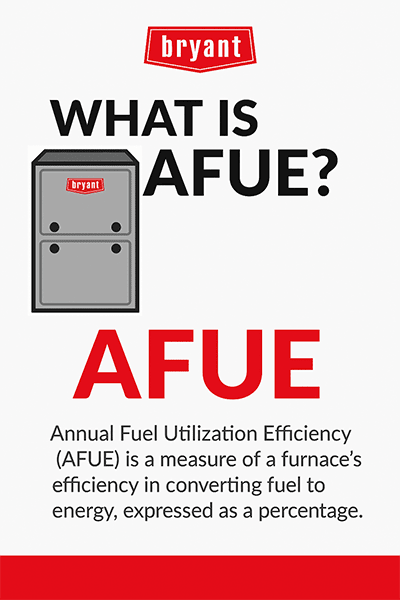
An AFUE rating tells you how efficiently a furnace converts fuel into heat over a typical year. A gas furnace with a 95% AFUE rating converts 95% of its fuel into usable heat, while the remaining 5% is lost through exhaust. The higher the AFUE rating, the less fuel is wasted—and the lower your heating costs.
Why does AFUE matter?
AFUE matters because it directly impacts your energy bills, home comfort, and long-term furnace repair frequency. Think of AFUE like the MPG rating on a car: a higher number means you get more value from every dollar spent on fuel.
- Older furnaces typically operate at just 56% to 70% AFUE
- Modern standard systems start at 80% AFUE
- Today's top-performing systems reach up to 98.5% AFUE
Investing in a high efficiency furnace means investing in technology that maximizes every dollar you spend on heating.
Understanding AFUE Efficiency Ranges
AFUE ratings fall into three general categories. Choosing the right range depends on your climate, budget, and long-term comfort goals.
- Standard Efficiency (80% AFUE): Meets the minimum federal standards for new furnaces. Cost-effective upfront and well-suited to homes in mild climates where heavy heating is not required.
- Mid-Efficiency (90%–95% AFUE): Offers a strong balance of performance and value, significantly reducing wasted energy compared to older or entry-level units.
- High Efficiency (96%–98.5% AFUE): Represents the pinnacle of heating technology. These systems deliver maximum energy savings and consistent comfort, making them ideal for homeowners in colder regions who want to future-proof their energy bills.
Decision Guide: An 80% AFUE system is better suited for homeowners in mild climates with a tighter upfront budget, while a 96%+ AFUE system works best for those in colder regions who prioritize long-term savings and fewer furnace repair calls.
Why Invest in High AFUE Products?
Upgrading to a high-efficiency furnace is about more than numbers—it's about creating a more comfortable, reliable, and cost-effective home environment.
- Efficiency That Helps Pay for Itself: High-AFUE systems convert more fuel into heat, lowering monthly energy consumption. Over the lifespan of the unit, those savings can meaningfully offset the higher initial investment.
- Consistent, Even Comfort: High-efficiency units often feature variable-speed blowers and modulating gas valves—technology that eliminates cold spots and delivers steady temperatures throughout your home.
- Fewer Furnace Repairs: Advanced systems are engineered to run smoother and quieter, reducing wear and tear on core components. This durability translates to fewer furnace repairs and extend how long your furnace lasts.
- Environmental Stewardship: Less fuel waste means a lower carbon footprint—a choice that benefits both your household and the planet. Learn more about Bryant's commitment to sustainability.
- Financial Incentives: Many high-efficiency systems qualify for local utility rebates, making the upgrade more affordable than many homeowners expect.
Andrew Mackey, owner of Superior Service in Lake St Louis, Missouri, states that the AFUE rating is an extremely important consideration for homeowners when selecting a furnace.
“A consumer should consider the AFUE rating of the furnace because this rating is telling how efficiently the furnace can heat the home,” Mackey said. “The higher the rating, the more efficient the unit is.”
How To Choose the Right AFUE for Your Home
Selecting the right furnace efficiency involves balancing your local climate with your home's specific needs and long-term budget.
1. Assess Your Climate
If you live in a region with harsh, freezing winters, a high-efficiency system (90% AFUE or higher) is essential for maintaining comfort and controlling costs. For milder winters, an 80% AFUE model may deliver sufficient performance.
2. Evaluate Your Home's Envelope
Your home's insulation quality and overall size play a critical role in determining the right system. Large homes, or those with older insulation, often benefit most from high-efficiency units to compensate for heat loss. Learn more about what size furnace you need.
3. Weigh Long-Term Value Against Upfront Budget
Higher AFUE systems carry a higher purchase price, but the return on investment through energy savings is significant. Compare total cost of ownership—not just installation price. Financing options from your local Bryant dealer can also help bridge the gap.
Consult A Bryant Dealer On AFUE
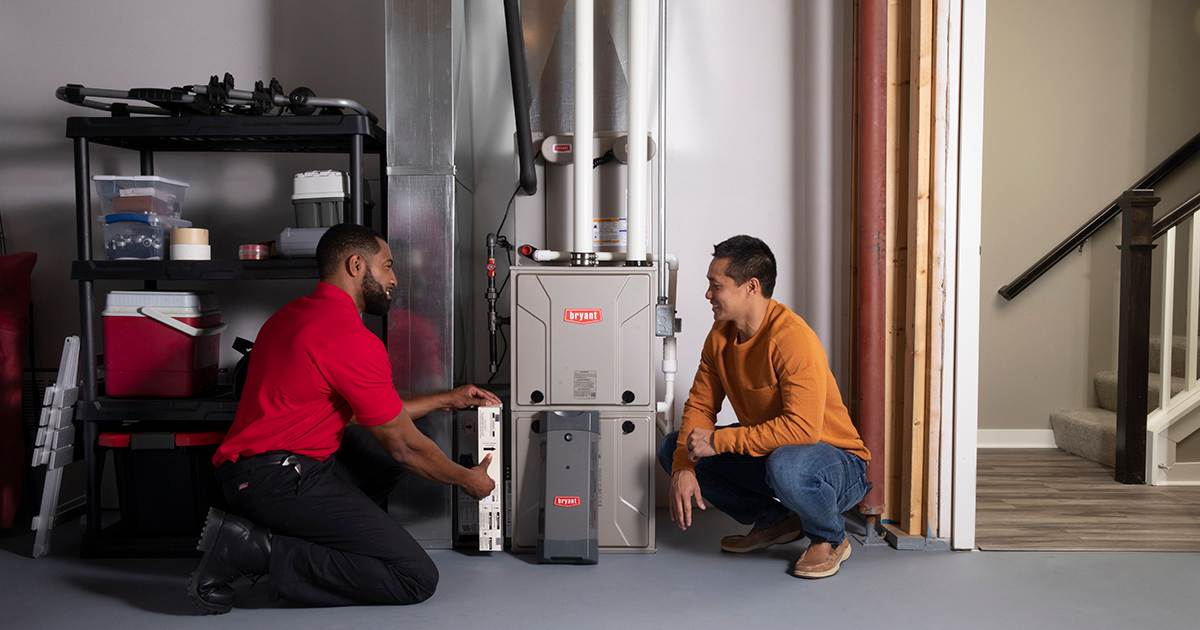
A local Bryant dealer can perform a load calculation to determine exactly what your home needs. They will evaluate your insulation, square footage, and climate to recommend the perfect AFUE rating for your furnace replacement. Schedule an appointment with a Bryant dealer today to start your journey toward better home comfort.
AFUE FAQs
An 80% AFUE furnace is considered standard efficiency and may be sufficient in milder climates, but it's less efficient than modern high-efficiency models.
Yes, a 96% AFUE furnace can potentially be worth the investment, especially in colder climates, as it has the ability to offer significant energy savings and may qualify for rebates or federal tax credits.
A 95% AFUE rating means 95% of the fuel is converted into heat for your home, with only 5% lost through exhaust, making it a high-efficiency system.
A good AFUE (Annual Fuel Utilization Efficiency) rating is typically 90% or higher, meaning the furnace converts at least 90% of fuel into usable heat with minimal waste.
You can typically find the AFUE rating printed on the yellow "EnergyGuide" label attached to the unit. If that label is missing, locate the model number on the furnace's nameplate and search for it online or consult a local HVAC dealer.
Annual furnace maintenance is recommended to keep your system running at its rated efficiency. Neglected systems can lose efficiency over time, leading to higher energy costs and more frequent furnace repair needs.
Yes. Lower-efficiency furnaces—particularly older units running below 80% AFUE—tend to work harder to maintain home temperatures, which increases component wear over time. Upgrading to a high-efficiency system can help reduce furnace repair frequency and extend the operational life of the unit.
Learn More About Furnaces
- Understand the importance of furnace maintenance
- Learn how much is a new furnace
- Explore what is a furnace
- Explore types of furnaces
- Understand the ins and outs of a furnace tune-up
- Explore down flow furnaces


