
HVAC Installation Guide

By Travis Baugh
 
HVAC installation is the comprehensive process of selecting, sizing, and setting up heating, cooling, and ventilation components—such as furnaces, air conditioners, heat pumps, and ductwork—to ensure precise climate control and air quality in your home.
 
Whether you are building a new home or replacing an aging unit, a properly installed system is the foundation of long-term comfort and energy efficiency. This guide covers everything you need to know to make a visionary choice for your home, from system types and sizing to costs and professional benefits.   

What Should I Consider Before HVAC Installation?
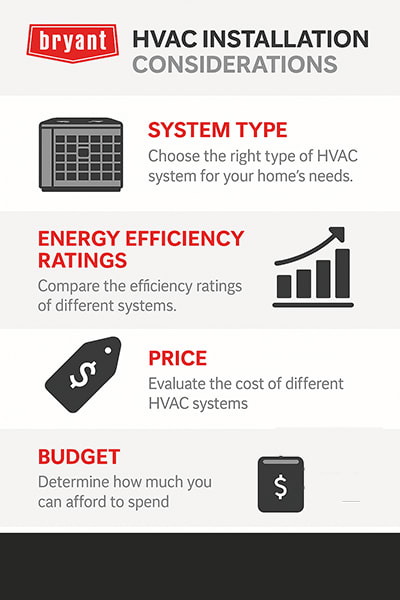
Infographic with Bryant branding showing key HVAC installation considerations including system type, energy efficiency ratings, price, budget, and system size.
Selecting the right HVAC system is an investment in your home's future value and your family's health. Before scheduling an installation, evaluate these four critical factors to ensure you choose a solution that delivers reliable performance for years to come.

1. The Right Type of HVAC System

Different homes have unique architectural needs. Choosing the correct type of HVAC system ensures seamless integration and optimal efficiency. 
  • Central Heating and Cooling: Ideal for homes with existing ductwork, this is often the most cost-effective way to manage the temperature of an entire house. It provides a comprehensive, unified solution for consistent comfort.
  • Ductless Mini Splits: Perfect for homes where traditional ductwork isn't feasible, or for room additions. Ductless mini splits offer precision zoning, allowing you to customize the temperature in individual rooms for personalized comfort and reduced energy waste.
  • Packaged Products: When indoor space is limited, a packaged HVAC system combines heating and cooling components into a single outdoor unit, freeing up valuable square footage inside your home.

2. Energy Efficiency Ratings

Invest in efficiency that helps pay for itself. Modern systems with high SEER2 (cooling) and AFUE (heating) ratings may have a higher upfront cost, but they significantly reduce monthly utility bills. High-efficiency HVAC units optimize energy use, lowering your carbon footprint while keeping your home comfortable.

3. Proper System Sizing

Size matters for efficiency. An undersized unit will run constantly to keep up, while an oversized unit will cycle on and off frequently, wasting energy.


“If you have the wrong size equipment on the house, it could not work or it could fail faster,” Samantha Houchin, owner of The Weather Changers in Denver, Colorado, said.


Always rely on a professional to perform a proper load calculation to match the system size to your home's insulation and layout.

4. Your Budget

HVAC systems vary widely in price based on technology and size. Setting a clear budget helps you prioritize features like smart home integration or advanced air filtration without overspending. Learn more in our HVAC pricing guide.
a graphic shows different hvac installation products

How Much Does HVAC Installation Cost?

The average cost for a full HVAC installation typically ranges between $7,000 and $20,000. This price fluctuates based on the size of your home, the energy efficiency of the equipment, and the complexity of the installation labor.

Factors Influencing Price

  • Home Size: Larger homes require more powerful systems (measured in tons), which increases equipment costs.
  • System Type: A simple unit swap is generally cheaper than installing a completely new ductless system or modifying extensive ductwork.
  • Efficiency Levels: Systems with advanced technology and higher efficiency ratings command a premium but offer lower operating costs over time.
If upfront costs are a concern, flexible financing options are available.
 
“Financing allows our customers the flexibility to replace their aging HVAC equipment with new, energy-efficient options at a cost that they’re comfortable with, ensuring a safe and comfortable home to enjoy,” Melissa Frause, owner of Bob’s Heating and Air Conditioning in Woodinville, WA, said.
 
Learn more in our HVAC pricing guide.

Why Hire a Professional for HVAC Installation?

Can I install HVAC myself? No. HVAC installation is not a DIY project. It requires handling high-voltage electricity, refrigerants, and complex gas or ductwork connections that must meet strict building codes.
 
Hiring a certified professional offers three undeniable advantages:
  1. Optimal Performance: Professionals ensure the system is calibrated correctly, preventing issues like poor airflow or uneven cooling.
  2. Safety and Code Compliance: Licensed installers adhere to safety regulations, protecting your home from hazards. 
  3. Warranty Protection: Most manufacturer warranties require professional installation. A DIY attempt could void your coverage, leaving you unprotected against future HVAC repairs.
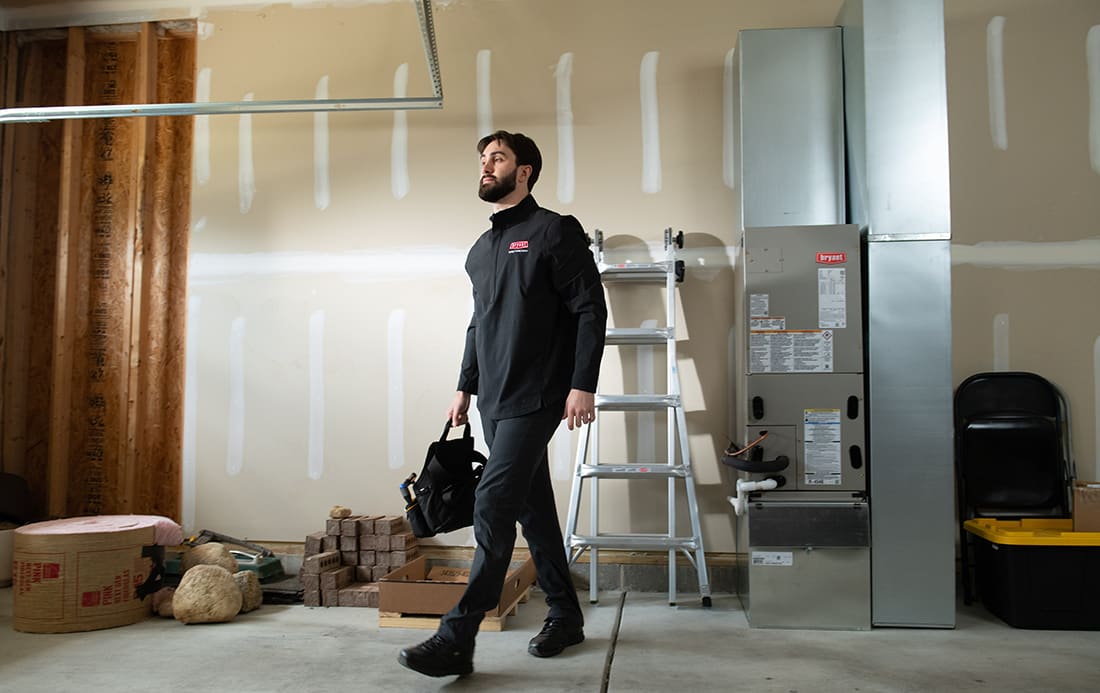
 “We have followed behind many bad installs that they're not done correctly to code,” Houchin said. “It can put you in danger when you have a friend of a friend come install a system for you. It can be done so poorly where the only way to fix it is to install a brand new system, and it often leads to the homeowner actually having to pay more to fix a problem than if they did it right the first time.”
a bryant dealer finishes performing hvac installation

Schedule An HVAC Installation With Your Bryant Dealer

Your local Bryant dealer can assess your home’s unique needs and provide a detailed quote. Bryant offers a range of energy-efficient HVAC systems to meet your requirements and help you save on heating and cooling costs in the long run. Contact your local Bryant dealer today to schedule an HVAC installation appointment.

HVAC Installation FAQs

Installing a full HVAC system typically costs between $7,000 and $20,000, depending on the home size, system type, efficiency level, and labor requirements. It’s best to talk to your local Bryant dealer to get an accurate quote.
HVAC installation involves setting up heating, ventilation, and air conditioning components, including the furnace, air conditioner or heat pump, ductwork, and thermostat, to provide whole-home climate control.
A 2,000 square foot home usually needs an HVAC system rated between 3.5 and 4 tons (or 42,000–48,000 BTUs), though a Manual J load calculation by your local Bryant dealer provides the most accurate sizing.
No. Installing HVAC systems is not a DIY project, as it involves complex electrical, refrigerant, and ductwork tasks that require licensing, permits, and code compliance.
Spring and fall are often the best times to buy or install an HVAC system since demand is lower and many dealers offer seasonal promotions.
Learn More About HVAC
Chat-Icon