About The Author: Travis Baugh is a Digital Brand Marketing Manager for Bryant, where he creates clear, helpful content to guide homeowners through heating, cooling, and indoor air quality decisions. His goal is to empower readers with the knowledge they need to choose the right comfort solutions for their home—confidently and comfortably.
What Humidity Should My House Be At?
By Travis Baugh
The recommended indoor humidity level for a house is between 30% and 50%. Staying within this range is essential for preventing mold growth, reducing allergens like dust mites, and protecting your home’s wood structure from cracking or warping.
For homeowners seeking long-term comfort and efficiency, managing your home's humidity is just as important as managing its temperature. Advanced HVAC systems and smart climate controls offer unparalleled technology to help you maintain this balance, providing energy savings and peace of mind.
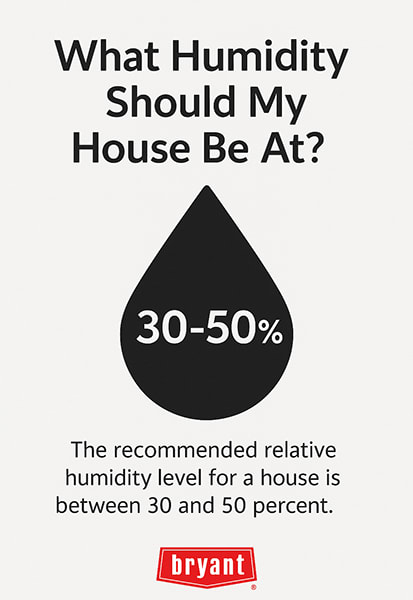
Why is 30% to 50% the Ideal Humidity Range?
According to the Environmental Protection Agency (EPA), keeping indoor relative humidity between 30% and 50% offers the best balance for health, comfort, and home preservation.
Achieving this balance transforms your indoor environment into a sanctuary of reliable performance and wellness.
- Comfort & Temperature: Balanced humidity makes air feel warmer in winter and cooler in summer, potentially lowering energy bills.
- Health Protection: This range minimizes the survival rate of viruses, bacteria, and allergens.
- Home Preservation: It prevents wood floors and furniture from drying out (cracking) or absorbing too much moisture (warping).
In colder winter months, you may need to aim for the lower end (30-40%) to prevent condensation on windows. In summer, keeping it under 50% helps the air feel less "sticky."
“Humidity plays a major role in your home’s comfort,” said Samantha Houchin, co-owner of The Weather Changers in Denver, Colorado. “If your house is really dry in the winter, adding humidity makes it feel warmer and more comfortable. If your home has high humidity in the summer, removing that moisture helps it feel cooler and less sticky.
“Proper humidity levels can also help regulate temperature more efficiently. In the winter, you may not need to run your furnace as much, and in the summer, you may be able to use your air conditioner less. You can actually feel the difference in the air when the humidity is balanced.”
What Happens if Humidity in a House is Too High (>50%)?
When indoor humidity consistently exceeds 50%—and especially when it tops 60%—your home becomes a breeding ground for mold, mildew, and structural damage. Excess moisture makes the air feel heavier and warmer than the actual temperature, reducing your overall comfort.
The primary effects of high indoor humidity include:
- Mold and Mildew Growth: Excess moisture creates a breeding ground for mold and mildew, which can trigger allergies and respiratory issues, particularly for those with asthma.
- Dust Mite Proliferation: Dust mites thrive in humid conditions and are a common cause of allergic reactions.
- Damage to Your Home: Wood furniture, floors, and trim can warp or crack. Paint and wallpaper may begin to peel, and sensitive electronics can be damaged by excess moisture.
What Happens if Home Humidity is Too Low (<30%)?
Low humidity occurs when the air lacks sufficient moisture, leading to dry skin, respiratory irritation, and damage to wooden home fixtures. This is a common issue during winter or in arid climates, where dry air can feel colder than the thermostat reading, prompting you to turn up the heat unnecessarily.
Risks of low humidity include:
- Health Discomfort: Dry air can lead to itchy skin, chapped lips, and throat irritation. It can also worsen conditions like eczema, allergies, and asthma.
- Damage to Property: Wood floors, furniture, and woodwork can shrink, split, or crack due to a lack of moisture.
- Increased Static Electricity: Annoying static shocks become more frequent in dry air and can even damage sensitive electronic devices.
Solution: A whole-home humidifier adds necessary moisture to dry air, making your home feel warmer and more comfortable at lower thermostat settings.
How Can You Maintain an Optimal Home Humidity Level?
Achieving the perfect balance requires more than just a standard thermostat; it requires advanced smart home integration. Dedicated climate control systems can integrate seamlessly with your heating and cooling equipment to manage moisture automatically and quietly.
Use a Humidifier for Dry Conditions
A whole-home humidifier adds essential moisture directly into your home's air supply, which is especially beneficial during dry winter months. Because humidified air feels warmer, you can often lower your thermostat and save on energy costs while staying perfectly comfortable.
Use a Dehumidifier for Damp Conditions
A whole-home dehumidifier removes excess moisture from the air when humidity levels climb above 50%. This helps reduce the risk of mold growth and musty odors, particularly in humid climates or during summer months.
Air Conditioners and Heat Pumps
Modern Bryant Evolution™ air conditioners and heat pumps feature advanced technology that offers superior humidity control, capable of removing up to 400% more moisture than standard systems².
"I hear from customers who had Evolution heat pump systems with variable-speed, inverter-driven units installed," Mike Lea, co-owner of Lea Heating & Air Conditioning in East Dundee, IL, said. "They said they used to set their old air conditioner to 72 to stay comfortable, but a lot of times they're sending them to 76 or 77 and feeling the same level of comfort because of how good their Evolution unit removes humidity. It's the humidity that makes you feel uncomfortable."

Connect with an Expert on Indoor Humidity
Connect with a Bryant dealer to find the best humidifier for maintaining ideal indoor humidity levels in your home. Your local Bryant dealer can recommend and install the right HVAC system, humidifier, or dehumidifier to ensure comfort and improved air quality year-round. Schedule an appointment today and let your Bryant dealer help you achieve optimal humidity.
1https://www.epa.gov/mold/mold-course-chapter-2
2 Based on Bryant testing under simulated “worst case” conditions, as compared to a single-stage 13.0 SEER unit.
FAQs on Home Humidity
The healthiest indoor humidity level is typically between 30% and 50%, which helps support respiratory health, comfort, and prevents mold and dust mite growth.
Yes, mold can start to grow when humidity levels are consistently above 50–55%, especially in poorly ventilated or damp areas.
Yes, 65% humidity is considered too high, increasing the risk of mold, mildew, and discomfort, and may require a dehumidifier to control.
A humidity level of 35% is on the lower end of the healthy range.
Yes, air conditioners naturally reduce humidity by removing moisture from the air as it cools, but may not be sufficient in very humid climates without a dedicated dehumidifier.
Signs may include static electricity, dry skin, creaking wood floors, or gaps in trim or furniture. Maintaining proper humidity helps protect your home’s finishes and comfort.
Most homes are comfortable between 30% and 50% relative humidity, but in cold climates, slightly lower levels can help prevent window condensation.
A humidity level around 40% to 50% often supports comfortable breathing and a restful environment without condensation or dryness.
Balanced humidity is best. Air that’s too dry or too humid can cause discomfort and affect how your home feels and performs.
You may notice static shocks, dry lips, or cracking wood. A simple hygrometer can measure indoor humidity to confirm if levels are below 30%.
Normal indoor humidity in a house is typically between 30% and 50%. This range is considered comfortable for most people and helps reduce issues like mold growth, dust mites, condensation, and overly dry air.
Learn More About Humidifiers
- Explore Bryant humidifiers
- Learn what does a humidifier do?
- Learn the ins and outs of humidifier installation
- Discover humidifier benefits
- Discover whole house humidifier types
- Explore the factors of whole house humidifier cost


