About The Author: Travis Baugh is a Digital Brand Marketing Manager for Bryant, where he creates clear, helpful content to guide homeowners through heating, cooling, and indoor air quality decisions. His goal is to empower readers with the knowledge they need to choose the right comfort solutions for their home—confidently and comfortably.
Whole Home Humidifier Installation Guide
By Travis Baugh | Expert Review By Chrystal Jolliffe - Product Manager, Indoor Air Quality
Humidifier installation is the professional process of mounting a whole-home humidifier to your HVAC system, connecting the required water, drain and electrical components, and integrating the system with a humidistat or compatible thermostat. A typical installation takes about 2–4 hours, depending on your HVAC setup and whether additional plumbing or system modifications are needed.
A whole-home humidifier installation integrates an advanced moisture-control system directly into your HVAC infrastructure. This professional solution distributes consistent humidity throughout your living space via your existing ductwork.
Unlike portable units, this integrated installation can provide whole-home humidity control without requiring homeowners to refill individual room units. The goal is to maintain indoor relative humidity within a comfortable range. The U.S. Environmental Protection Agency (EPA) recommends keeping indoor humidity below 60%, ideally between 30% and 50% relative humidity (RH).1

What Is a Whole-House Humidifier?
A whole-house humidifier is an integrated HVAC solution that adds controlled moisture throughout your entire home. It works directly with your heating and cooling equipment to reliably maintain consistent indoor humidity.
This system helps address dry indoor air during heating seasons while giving homeowners a way to monitor and control indoor humidity rather than relying on portable units in individual rooms. Learn more about what does a humidifier do.
Why Choose a Whole-Home Humidifier System?
Choosing a whole-home humidifier system provides centralized humidity control compared to standalone, portable units. Depending on the system and installation, it can distribute moisture through your home's existing ductwork.
Investing in a whole-home solution offers superior advantages over standalone units:
- Improved Comfort: Proper moisture levels can help alleviate dry skin and reduce irritation of the nose and throat.
- Reduced Static Electricity: Say goodbye to annoying static shocks in drier months with seamless moisture control.
- Home Protection: Balanced humidity helps preserve wood floors, furniture, and musical instruments by preventing shrinkage and warping.
- Potential Energy Savings: Bryant notes that humidified air can feel warmer, which may allow some homeowners to use a lower thermostat setting while maintaining comfort. Actual energy savings vary based on the home, HVAC system, weather and thermostat settings.
Scotty Peters, owner of CK Heating and Cooling in Seminole, Texas, explains why a whole-home humidifier is often a more reliable long-term solution than portable or DIY options.
“There are a few ways you can temporarily manage humidity in your home,” Peters said. “You can use portable humidifiers, boil water on the stove, or try other quick fixes, but all of those require constant upkeep, and indoor humidity can drop quickly when they’re not running.”
Peters notes that portable units can also create unintended issues depending on water quality and maintenance habits.
“A lot of ultrasonic humidifiers will put out a fine white dust if you’re using hard water, because they’re dispersing minerals into the air along with moisture,” he said. “Other methods, like standalone units or even simple water-based solutions, can work, but they require a lot of attention to keep up with consistently.”
He adds that the biggest advantage of a whole-home humidifier is consistency.
“Most people eventually realize they don’t want to manage it day to day,” Peters said. “A properly installed whole-home system keeps humidity at a steady level automatically, which is important for comfort, health, and avoiding the constant hassle of refilling and maintaining portable units.”
How Does the Humidifier Installation Process Work?
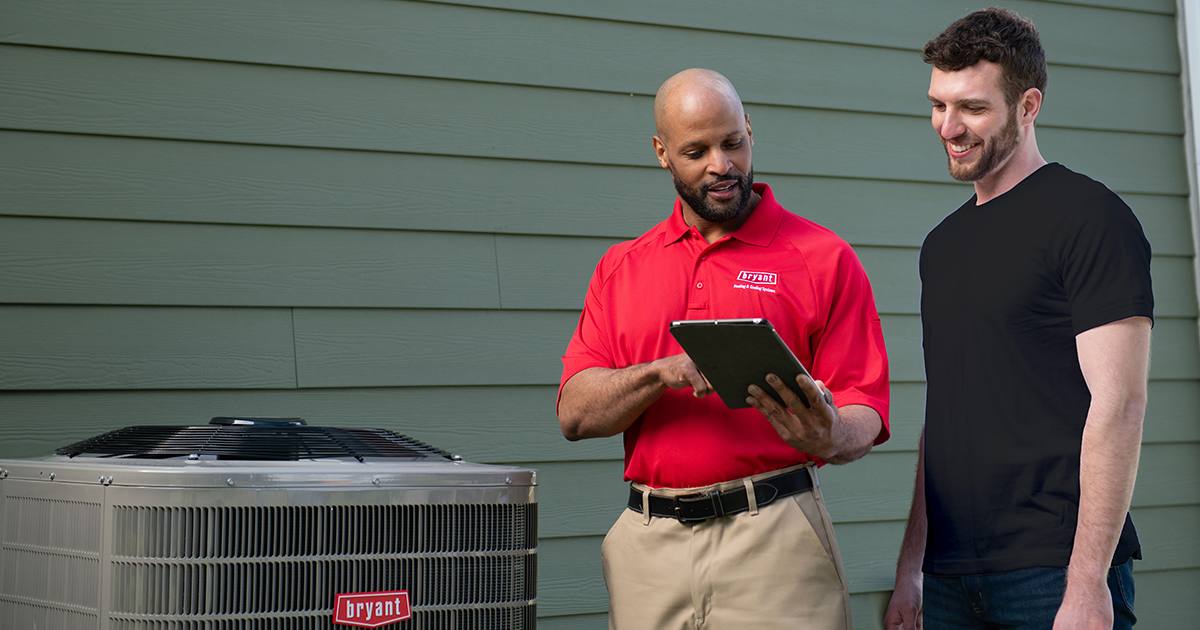
The Bryant 5-Step Humidifier Installation Process includes home evaluation, unit placement, ductwork mounting, utility connections, and system integration and testing. A Bryant dealer evaluates the existing HVAC system and installation requirements before determining the appropriate equipment and installation approach.
1. Expert Evaluation and Site Preparation
Before installation begins, a Bryant dealer evaluates the home's humidity needs, HVAC equipment, ductwork configuration and available installation space. The evaluation helps determine the appropriate humidifier capacity and installation location.
Indoor humidity should generally be monitored against a target of approximately 30%–50% RH. The EPA recommends keeping indoor humidity below 60%, ideally between 30% and 50%.1
2. Strategic Unit Placement
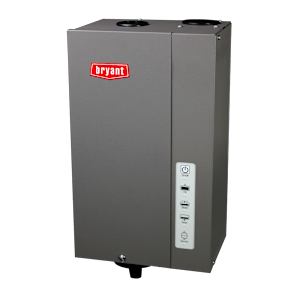
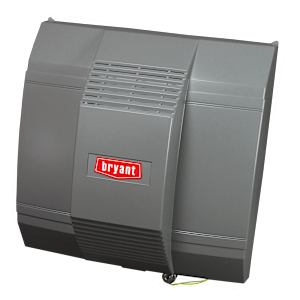
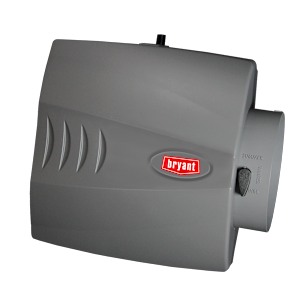
A Bryant dealer identifies an appropriate installation location based on the humidifier model and HVAC configuration. Bryant's humidifiers can be installed on compatible upflow, downflow or horizontal HVAC equipment, while the HUMCRSTM steam humidifier can also be remotely mounted.
For many installations, the humidifier is positioned near the furnace or fan coil so moisture can be distributed through the existing ductwork.
3. Precision Mounting and Sealing
The Bryant dealer cuts the required opening in the ductwork, mounts the humidifier and seals the connection to help minimize air leakage. Installation requirements vary by humidifier type and HVAC configuration. Bypass models use the furnace or fan coil blower to move air across an evaporator pad, while fan-powered models use an internal fan. Steam models generate steam and deliver it through a dispersion tube.
4. Utility Connection
The installer connects the humidifier to the required water supply, drain and electrical components based on the selected model. Electrical requirements vary by humidifier: Bryant lists 24V power for the HUMCRLBP, 120V for the HUMCRLFP and 120V, 208V or 240V for the HUMCRSTM.
The installer also verifies that water and drain connections are secure and comply with applicable installation requirements.
5. Integration and Testing
The Bryant dealer integrates the humidifier with a compatible thermostat, humidistat or dedicated humidifier control and tests the system before completing the installation. Bryant lists compatibility with Evolution controls, Preferred Thermidistat controls and separate humidifier controls for these models.
The technician verifies water flow, checks connections for leaks and confirms that the humidifier activates when indoor humidity falls below the selected setting.
A typical whole-home humidifier installation takes approximately 2–4 hours, although the actual time depends on the HVAC configuration and whether additional plumbing or modifications are required.
How Do I Maintain My Whole-Home Humidifier?
To maintain your whole-home humidifier, inspect or replace the water panel or evaporator pad as recommended, clean the system, check the water supply and adjust the humidity control as needed. Consistent maintenance helps support reliable operation.
After your whole home humidifier installation, consistent care ensures it runs efficiently. Simple humidifier maintenance is key to steady performance.
- Replace the Water Panel: Plan to inspect and replace the evaporator pad at the beginning of each heating season. Homes with hard water may require more frequent changes.
- Clean the System: Clean the distribution tray to prevent mineral buildup that can block water flow.
- Check Water Supply: Ensure the water supply line is clear and the shutoff valve is open.
- Adjust Settings: Confirm your humidistat is set appropriately for the season. Use a humidity gauge when needed to help keep indoor RH within the recommended 30%–50% range.
If you notice low humidity output, check that the furnace blower is running and the water panel isn't clogged. For leaks, inspect all tubing connections. If problems persist, contact your local Bryant dealer for professional humidifier repair.
Connect With A Bryant Dealer On Humidifier Installation
Maintaining proper humidity levels is key for comfort, health, and protecting your long-term investment. A Bryant dealer can assess your space and recommend the right advanced humidifier solution, whether whole-home or room-specific. Professional installation ensures your system operates efficiently and safely, giving you consistent humidity control year-round.
Bryant whole-home humidifiers can provide up to 34 gallons of moisture per day, depending on the model, while professional installation typically takes 2–4 hours.
Schedule an appointment with your local Bryant dealer today and get a quote for whole house humidifier cost for the best humidifier for your home.
Compare Bryant Humidifiers
Choose a Bryant humidifier to maintain optimal humidity levels in your home, enhancing comfort and air quality. It helps prevent dry skin, static electricity, and respiratory issues by adding moisture to the air, especially during the colder months. With quiet, energy-efficient operation, a Bryant humidifier integrates seamlessly with your HVAC system, providing consistent moisture control throughout your home. Durable and reliable, it ensures a healthier living environment by promoting ideal humidity levels year-round.
Learn More About Humidifiers
- Explore Bryant humidifiers
- Discover the best humidifier for your home
- Find out what humidity should my house be at?
- Discover whole house humidifier types
- Explore the factors of whole house humidifier cost
- Understand the best humidity level for sleeping
Humidifier Installation FAQs
Yes. Whole-home humidifiers require integration with your HVAC system, proper plumbing connections, and precise calibration to ensure optimal performance and safety. A professional installation helps prevent leaks, over-humidification, or system damage.
Professional installation typically takes 2–4 hours, depending on your HVAC setup and whether any additional modifications or plumbing work are needed. The installer will ensure the system is properly connected, calibrated, and tested for reliable operation.
While minor portable humidifiers can be installed without help, whole-home units should only be installed by a qualified professional. DIY installation risks improper setup, water damage, and reduced system efficiency.
Yes. A whole-home humidifier can often be added to your existing furnace or air handler by a qualified HVAC professional for seamless humidity control throughout your home.
Avoid placing any standalone unit near electronics or vents. For whole-home systems, proper installation on your ductwork by a professional ensures safe and effective operation.
About The Expert Reviewer: Chrystal Jolliffe is a Product Manager specializing in Residential Indoor Air Quality at Bryant. Her work centers on advancing solutions that support cleaner indoor air and a more comfortable home environment. She helps homeowners understand the role indoor air quality products can play in their homes, empowering them to evaluate their options and make informed decisions about their indoor environment.


