- Explore what is a furnace
- Learn about furnace repair
- Explore furnace replacement
- Read our guide to furnace parts
- Learn how much is a new furnace
- Read our guide to high efficiency furnaces
What Is an Upflow Furnace?
By Travis Baugh
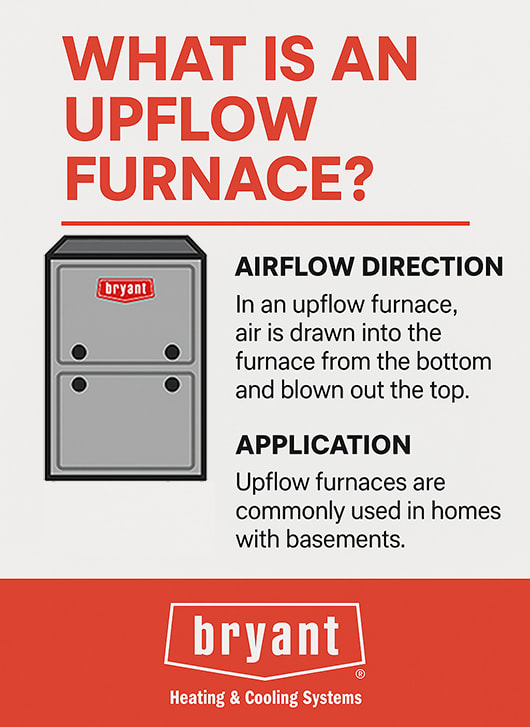
An upflow furnace is a forced-air heating system designed to intake cool air from the bottom, heat it within the cabinet, and discharge warm air out through the top. This vertical configuration capitalizes on the natural physics of rising heat, making it the premier choice for homes with ductwork located above the unit, such as in basements or utility closets.
How Does an Upflow Furnace Work?
The operation of an upflow furnace is designed to move air against gravity efficiently. By pulling air from the base and releasing it at the top, the system ensures consistent circulation through overhead ducts.
Here is the step-by-step heating cycle:
- Air Intake: Return air enters the furnace at the bottom of the cabinet.
- Heating Process: The air passes over the heat exchanger, which is warmed by the burner.
- Distribution: A blower motor pushes the now-conditioned air upward into the supply plenum.
- Circulation: The warm air travels through the overhead ductwork to heat your living spaces.
This configuration reduces static pressure by working with the natural tendency of heat to rise, improving airflow efficiency in multi-level homes or installations where the furnace sits below the main living area.
Key Benefits of Upflow Furnaces
Choosing the right furnace configuration is critical for long-term comfort and energy savings. Here is why an upflow model might be the perfect match for your home:
- Optimized for Basements: Because the supply air exits the top, these units are perfect for basement or ground-floor furnace installations where ducts are routed overhead.
- Energy Efficiency: By aligning with the home's natural airflow dynamics, upflow designs can reduce the workload on the blower motor. Bryant models feature high AFUE ratings and variable-speed technology to further lower energy bills.
- Consistent Comfort: Advanced models with multi-stage heating can fine-tune output, minimizing hot and cold spots for a more even temperature.
- Versatile Installation: These units are often easily paired with central air conditioning systems using a shared blower, providing a streamlined solution for year-round climate control.
Upflow Furnace Maintenance Tips
To keep your heating system running at peak performance and beyond, proactive maintenance is required.
- Check Filters Regularly: Replace or clean furnace filters every 1-3 months to maintain proper airflow and air quality.
- Inspect Ductwork: Ensure return and supply openings are clear of furniture or debris. Seal any leaks in the ducts to prevent energy loss.
- Professional Tune-Ups: Schedule annual furnace service to verify gas pressure, inspect the heat exchanger, and test safety controls
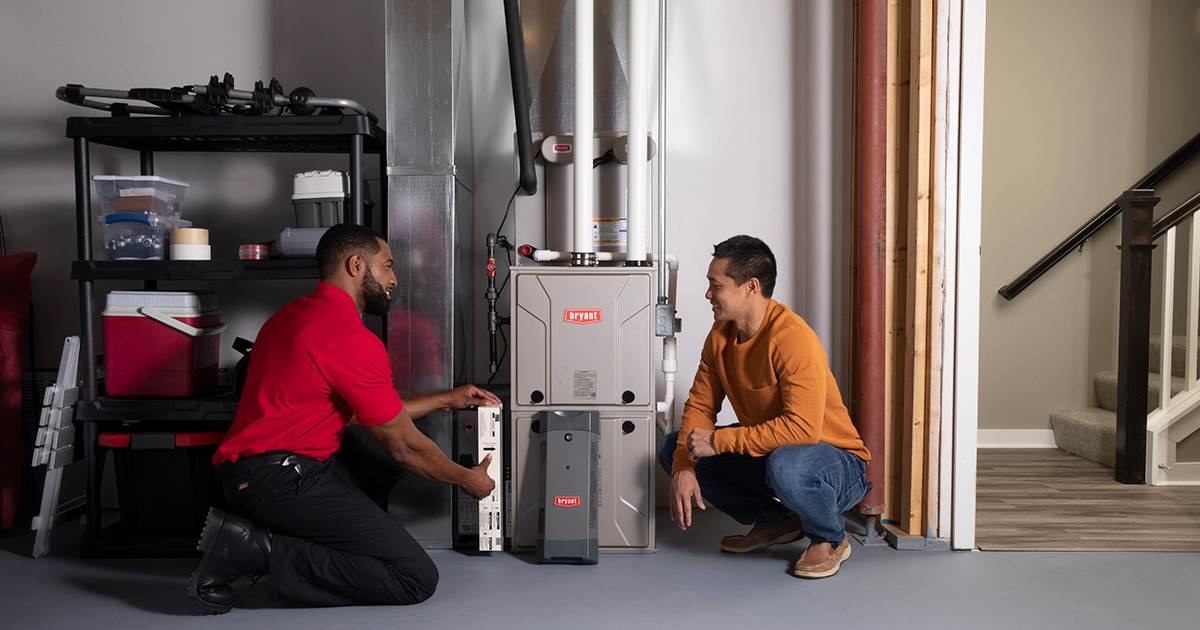
Connect With A Bryant Dealer On The Best Furnace For Your Home
A Bryant dealer can assess your home's layout and duct configuration to determine if an upflow furnace is your best option. They will review your specific heating requirements, explain the latest model features, and guide you toward a solution that balances comfort with efficiency.. Connect with a local Bryant dealer to get personalized recommendations and a professional furnace installation quote.
Compare Bryant Furnaces
Choose a Bryant furnace for reliable, efficient heating that keeps your home comfortable throughout the winter. Known for their durability and advanced technology, Bryant furnaces offer quiet operation, precise temperature control, and energy-saving features like variable-speed motors and two-stage heating. With a range of models to suit different home sizes and needs, Bryant furnaces are built to last and come with industry-leading warranties, providing peace of mind and long-term value for your home heating system.


