About The Author: Travis Baugh is a Digital Brand Marketing Manager for Bryant, where he creates clear, helpful content to guide homeowners through heating, cooling, and indoor air quality decisions. His goal is to empower readers with the knowledge they need to choose the right comfort solutions for their home—confidently and comfortably.
Ductless Mini Split Cost (2026): Ductless Mini Split Prices, Installation & Factors
By Travis Baugh
A ductless mini split installation typically costs between $2,000 and $7,000 per zone. The total price depends heavily on the number of zones (rooms), system efficiency (SEER2 rating), and installation complexity.
Breakdown of Mini Split System Prices
Single-zone mini split systems generally cost between $2,000 and $6,000, while multi-zone systems range from $2,000 to $7,000 per zone. The cost varies based on your specific heating and cooling requirements.
Here is a general breakdown of what to expect when investing in comfort:
- Single-Zone Systems ($2,000 – $6,000): These units include one outdoor compressor and one indoor head. They are the ideal efficient solution for home additions, garages, or server rooms where ductwork isn't present.
- Multi-Zone Systems ($2,000 – $7,000 per zone): Designed for seamless whole-home comfort, these systems connect multiple indoor units to a single outdoor compressor. While the upfront cost is higher, they eliminate the need for expensive ductwork renovations and offer precise, smart temperature control in every room—delivering efficiency that helps pay for itself over time.
What Factors Influence Ductless Mini Split Price?
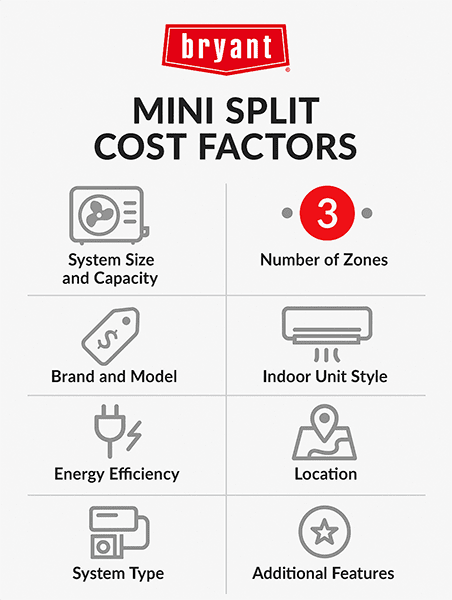
System size, the number of zones, indoor unit style, efficiency ratings, and installation complexity are the primary factors that influence ductless mini split prices.
When you receive a quote from a professional dealer, understanding these variables ensures you pay for exactly what you need—reliability, comfort, and advanced performance.
- System Size (Capacity): Measured in BTUs, larger rooms need more powerful units, which cost more. A professional load calculation ensures you don't overpay for a system that is too large or suffer with one that is too small.
- Number of Zones: Each additional indoor unit (head) adds to both equipment and labor costs, but also increases your ability to customize comfort room-by-room.
- Indoor Unit Style: Standard wall-mounted units are usually the most affordable. Ceiling cassettes or concealed ducted mini split units require more complex installation and hardware.
- Efficiency Ratings: High-efficiency units (high SEER2) cost more upfront but lower monthly electric bills, paying for themselves over time.
- Installation Complexity: Running refrigerant lines through complex pathways or placing outdoor units in hard-to-reach areas increases labor time.
- Installing Contractor: Professionals can assess your home's specific needs, recommend the right system size and type, and provide guidance on energy-efficient options. “You need a professional who understands pressures and temperatures, psychrometric charts, how to recover refrigerant, how to evacuate a system properly, how to charge a system properly, and has all of those specialty tools,” Brian Redmond, owner of Redmond’s Complete Comfort in Lock Haven, Pennsylvania. “Can you imagine buying a vehicle kit, putting a vehicle together, and then driving down the road?”
Mini Split vs. Central Air Cost: Which is the Better Value?
Traditional central air conditioning systems are better suited for homes with existing ductwork, while ductless mini splits work best when retrofitting older homes or targeting specific zones to reduce energy waste.
- Ductwork Savings: If your home lacks existing ducts, installing central air can double your project cost due to construction needs. Mini splits require no ductwork, making them a highly cost-effective retrofit.
- Zoning Efficiency: Central air cools your entire home at once, regardless of which rooms are occupied. Mini splits allow you to turn off units in unused rooms. This targeted, smart approach to comfort puts you in control of your energy bills.
How to Save on Mini Split Installation
You can save on mini split installation by leveraging local rebates, selecting the right technology for your climate, and getting a professional load calculation. Investing in advanced technology doesn't mean breaking the bank:
- Leverage Rebates: Many states and federal programs offer financial incentives for homeowners who choose energy-efficient HVAC systems. These rebates can offset the initial investment.
- Select the Right Technology: In warmer climates, a cooling-only model may suffice. However, mini split heat pump provide versatile, year-round comfort in a single package, offering better long-term utility.
- Get a Professional Load Calculation: Avoid "rule of thumb" estimates. A professional assessment ensures your system is perfectly sized for your home, preventing energy waste from oversized units or wear-and-tear from undersized ones.

What Does a Ductless Mini Split System Quote Include?
A standard ductless mini split quote includes primary equipment, installation labor, refrigerant lines, electrical connections, and warranty coverage. It typically excludes major electrical upgrades and complex structural modifications.
Items commonly included in a quote:
- Primary equipment, including the outdoor condenser and one or more indoor air-handling units
- Installation labor, covering mounting indoor units and installing the outdoor unit
- Refrigerant line sets, line covers, and wall penetrations needed to connect indoor and outdoor units
- Mounting hardware, such as wall brackets or ground pads for the outdoor unit
- Electrical connections, including standard disconnects and wiring from the panel (within typical limits)
- System startup and testing, including refrigerant charging and performance checks
- Condensate drainage setup for indoor units
- Removal and haul-away of existing equipment (when applicable)
- Manufacturer and contractor warranties covering parts and workmanship
Items often not included unless specifically noted:
- Additional indoor units or zones beyond those listed in the quote
- Major electrical upgrades, such as panel or service upgrades
- Long or complex line set runs that exceed standard installation allowances
- Structural modifications, including carpentry, drywall repair, or exterior finish work
- Permits or inspections, in areas where they are not required or included by default
Always ask your contractor to clarify inclusions to avoid surprises.
Get a Personalized Ductless Mini Split Cost Estimate
Bryant systems are renowned for their reliability, energy efficiency, and advanced features. Whether you need a simple single-zone solution or a comprehensive multi zone mini split, our experts can help you find the best mini split within your budget. Schedule an appointment with your local Bryant dealer today to find the mini split cost for your home.
Compare Bryant Ductless Mini Splits
Choose a Bryant ductless mini split for efficient, customizable comfort without the need for ductwork. Ideal for specific rooms or multi-zone cooling and heating, these systems offer precise temperature control and quiet operation. With energy-efficient technology, they help reduce utility costs while providing year-round comfort. The sleek design makes Bryant mini splits a perfect choice for homes, additions, or spaces where traditional ductwork is impractical, delivering reliable performance and convenience.
Mini Split Cost and Ownership FAQs
Mini split installation typically ranges from $2,000 to $7,000 per zone, depending on system size, number of zones, and installation complexity. It’s best to get a precise quote from your local Bryant dealer.
Mini splits can be cheaper upfront for single-room or zone cooling, but whole-home systems may be more expensive than traditional central HVAC. A local Bryant dealer can provide an estimate for both system types.
Mini splits generally do not devalue a house and can even add value by improving energy efficiency and comfort in specific areas.
Energy costs vary by climate, usage, and home size, but mini splits are known for efficient operation that can help reduce overall energy consumption compared to older systems.
Yes, qualifying high-efficiency ductless mini split systems may be eligible for rebates through local utility providers or regional incentive programs. Availability and requirements vary by location and system efficiency ratings. To maximize potential incentives, review current offers in your area and work with a local dealer who can help match qualifying models and identify opportunities to stack available rebates where allowed.
A straightforward mini split replacement—such as swapping an existing outdoor unit and indoor head—can often be completed in 4–8 hours. More complex projects, including multi-zone systems, electrical upgrades, or added indoor units, may take 1–3 days. Typical steps include removing existing equipment, mounting new indoor units, connecting refrigerant lines and electrical wiring, charging the system, and performing final testing and commissioning. Factors like home access, permitting, and system complexity can affect timelines.
The cost of a ductless mini split system without installation varies based on system capacity, number of indoor units (zones), and efficiency level. Unit-only pricing represents just the equipment and is a subset of the total installed price. It does not include labor, electrical work, refrigerant line installation, wall penetrations, permits, or accessories. Because installation requirements can vary significantly by home, the best way to compare equipment-only pricing versus total installed cost is to request a written quote that clearly separates both.
No, ductless mini splits are designed to be as quiet. Because the noisy compressor is located outside, the indoor air handlers operate at very low decibel levels, ensuring a peaceful home environment.
Learn More About Ductless Mini Splits
- Learn all about what is a mini split
- Understand what size mini split do I need?
- Find out are mini splits worth it?
- Learn all about mini split vs central air
- Discover small mini splits
- Understand do mini splits turn off when temperature is reached?


