About The Author: Travis Baugh is a Digital Brand Marketing Manager for Bryant, where he creates clear, helpful content to guide homeowners through heating, cooling, and indoor air quality decisions. His goal is to empower readers with the knowledge they need to choose the right comfort solutions for their home—confidently and comfortably.
Mold In Air Conditioner Troubleshooting Guide
By Travis Baugh
Mold in an air conditioner is a fungal growth triggered by excess moisture and dust circulating inside your HVAC system. Mold in an air conditioner requires immediate action to protect your home’s air quality and your system's efficiency. If you suspect mold, turn off your system immediately to stop spores from circulating and call your local Bryant dealer for immediate AC repair.
Check your air filter, drain line, and evaporator coils for moisture or blockages. While minor surface mold on accessible parts can sometimes be cleaned, significant internal growth requires professional AC service from your local Bryant dealer to ensure safe, permanent removal. Discovering mold in your AC can be unsettling, but it is a solvable problem. By acting decisively, you can restore the clean, efficient, and comfortable environment your home deserves. This guide covers how to identify the signs, understand the causes, and partner with experts to eliminate mold for good.
How Can You Tell If There Is Mold In Your Air Conditioner?
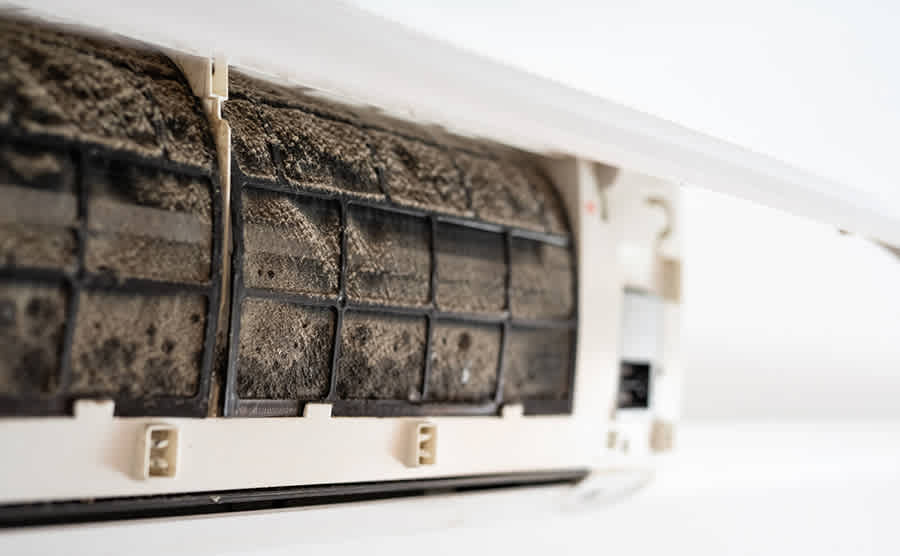
You can identify mold in your air conditioner by looking for visible black or green spots, smelling a persistent musty odor, or experiencing unexplained respiratory symptoms when the unit runs. Before you can fix the problem, you must confirm it. Mold often hides inside the unit, but it leaves clear clues. Look for these key indicators:
- Musty Odors: A persistent, earthy, or mildew-like smell when the air conditioner runs is the most common sign.
- Visible Growth: Black, brown, or green fuzzy spots on vent covers, near the drip pan, or on the evaporator coils.
- Physical Symptoms: Unexplained sneezing, coughing, or respiratory irritation that worsens when you are at home.
What Causes Mold To Grow In An Air Conditioner?
Mold grows in air conditioners when there is a consistent combination of excess moisture, warm temperatures, and organic matter like dust. Your air conditioner naturally deals with moisture and dust, making it a prime target if not properly maintained. Understanding these nine common triggers is the first step toward long-term prevention.
1. High Humidity Levels
High humidity levels cause mold in air conditioners because the system cannot evaporate moisture fast enough. Split AC units are designed to remove moisture, but if the system doesn’t drain properly, it creates a damp environment where mold can grow, particularly in the evaporator coils and drain pan.
2. Clogged or Dirty Air Filters
Dirty air filters restrict system airflow, which causes coils to become excessively cold and leads to condensation buildup. Over time, this moisture encourages mold growth, especially if the filter is clogged with dust and allergens serving as a food source. Learn more about air filter replacement.
3. Clogged Condensate Drain Line
A clogged condensate drain line causes moisture to back up inside the AC unit, creating a dark, wet environment perfect for mold. The condensate drain line carries excess moisture away from the unit. If the AC drain line is clogged, moisture backs up, creating the perfect environment for mold. A blocked line can also lead to water pooling inside the unit.
4. Poor Airflow
Restricted airflow from closed vents or malfunctioning fans prevents the central air conditioner from running efficiently. This lack of circulation leads to excess moisture that doesn’t evaporate properly, fostering mold growth.
5. Dirty Evaporator Coils
Dirty evaporator coils can accumulate dirt and grime when combined with condensation, creates an ideal breeding ground for mold and mildew. Evaporator coils must be kept clean, as dirty coils also significantly reduce system efficiency and performance. Learn more about how to clean AC coils.
6. Infrequent Maintenance
Neglecting regular AC maintenance allows dust, dirt, and moisture to accumulate on the filter, coils, and condensate pan. Annual AC tune-ups are essential to stop mold before it thrives.
7. Leaky Ductwork
Leaky ducts draw warm, humid air into the cooler HVAC system, causing condensation. If this moisture settles in the cooling coils or other hidden areas, it fosters mold growth within the ductwork.
8. Improperly Sized or Installed Units
An improperly sized air conditioner will struggle to balance temperature and humidity, leading to short-cycling and excessive moisture buildup. If the unit is too large or too small, it cannot properly dehumidify your home. Learn more about the importance of professional AC installation and what size air conditioner you need.
9. Standing Water in the Drain Pan
Standing water in the condensate drain pan creates stagnant pools where mold spores rapidly multiply. The pan is meant to direct water away, but clogs or poor leveling can cause stagnation.
How Do Professionals Troubleshoot and Remove Mold In An AC?
Professionals troubleshoot and remove mold by turning off the system, inspecting the coils and drain lines, and using specialized, EPA-approved solutions to sanitize internal components.
Mike Lea, co-owner of Lea Heating & Air Conditioning in East Dundee, IL, explains what homeowners should do if they encounter mold-related issues in their HVAC system.
“If they see mold on the outdoor unit — which is unusual — that’s generally not a concern,” Lea said. “However, if mold appears on the inside of the evaporator coil, it’s important to have an HVAC professional perform a thorough coil cleaning. The best way to prevent mold growth is to install a UV lamp that consistently shines on the coil.”
Here is the 9-step process your local Bryant dealer will use to restore your system:
- System Shutdown: Cutting power to prevent spore spread during cleaning.
- Filter Inspection: Checking for moisture-trapping debris and replacing if needed.
- Drain Line Clearing: Using vacuums or solutions to clear blockages in the condensate line.
- Coil Sanitation: Applying professional-grade solutions to clean AC parts like evaporator coils.
- Pan Assessment: Cleaning or replacing the condensate pan to ensure drainage.
- Ductwork Review: Sealing leaks to stop humid air infiltration.
- Component Cleaning: Scrubbing blower fans and internal housing with mold-killing agents.
- Deep Clean: A comprehensive sanitation of the unit followed by thorough drying.
- Humidity Check: Recommending dehumidifiers to keep indoor humidity below 60%.
Why Is Mold In Your Air Conditioning System Dangerous?
Mold in your HVAC system is dangerous because it degrades indoor air quality, triggers respiratory illnesses, decreases energy efficiency, and damages the unit. It is more than a maintenance nuisance; it directly impacts your health and your system’s longevity.
Health Risks
Mold spores released into the air can drastically reduce indoor air quality. Breathing these spores can trigger allergies, asthma, or respiratory conditions.
- Spread Of Mold Spores: As your air conditioning systems circulates air, it can spread spores to walls, carpets, and surfaces, leading to widespread contamination.
- Reduced System Efficiency: Mold buildup restricts airflow and clogs filters, forcing your system to work harder. This increases energy consumption and cooling bills while accelerating wear and tear.
- Foul Odors: Mold creates a musty, unpleasant odor that circulates throughout your home, making your environment uncomfortable. Learn more about AC smells.
- Damage to HVAC Components: Left untreated, mold can damage vital components like evaporator coils and blower motors, leading to costly repairs or even AC replacement.

Get Professional Help For AC Mold Removal
When you need AC mold removal, you should turn off your system immediately and contact a certified HVAC technician for a comprehensive cleaning and inspection. Your local Bryant dealer can perform a thorough HVAC cleaning and inspection, identifying underlying issues to prevent future growth. Schedule an HVAC service appointment today to invest in a healthy, comfortable indoor environment.
Mold in Air Conditioner FAQs
Yes, mold in your AC can be harmful, potentially causing allergic reactions, respiratory issues, and worsening conditions like asthma, especially with prolonged exposure.
Mold growth is usually caused by moisture buildup, poor drainage, dirty filters, and high humidity within or around the system.
Common signs include a musty odor, visible mold spots on vents or components, and an increase in allergy-like symptoms when the system runs.
The black stuff in your AC could be mold, especially if it appears fuzzy or slimy and is accompanied by a musty smell. However, it could also be soot, dirt, or mildew, so professional inspection is the best way to confirm.
A mixture of EPA-approved coil cleaner or diluted bleach can kill mold on coils. Always follow manufacturer and safety instructions or have a certified HVAC professional handle the cleaning.
Yes. Mold exposure from an HVAC system can cause allergy symptoms, coughing, or respiratory irritation, especially for sensitive individuals.
No—running a moldy AC can spread spores throughout your home. It’s best to have the system cleaned and sanitized before use.
Turn off the system and contact an HVAC professional to clean and disinfect the coils, drain pan, and ductwork. Avoid running the unit until the mold is safely removed.
Yes, installing a UV lamp is a visionary way to prevent future growth. UV lights installed near the evaporator coil kill bacteria and mold spores before they can multiply, keeping your system cleaner and your air healthier automatically.
Costs vary depending on the extent of the growth and whether ducts are involved. A basic coil cleaning is more affordable, while full ductwork remediation is a larger investment. However, compared to the cost of potential health issues or full system replacement, professional cleaning offers significant value.
It is generally not recommended to spray undiluted bleach directly on AC components, as it can corrode metal coils and damage the system. Professional cleaners use specialized, EPA-approved anti-microbial solutions that are safe for HVAC equipment.
Learn More About Air Conditioners
- Understand the value in AC tune ups
- Get help with an AC not working, AC leaking water, or AC not blowing cold air
- Find out how long do AC units last?
- Learn how to clean air conditioners


