About The Author: Travis Baugh is a Digital Brand Marketing Manager for Bryant, where he creates clear, helpful content to guide homeowners through heating, cooling, and indoor air quality decisions. His goal is to empower readers with the knowledge they need to choose the right comfort solutions for their home—confidently and comfortably.
Why Isn't My AC Blowing Cold Air?
By Travis Baugh
If your AC is not blowing cold air, common culprits include a clogged air filter, incorrect thermostat settings, or a blocked outdoor condenser unit. More complex issues include refrigerant leaks, frozen evaporator coils, or a faulty compressor. Start by checking your filter and thermostat; if the issue persists, professional service is likely needed to restore your home's cooling performance and comfort.
Bryant air conditioners use components such as filters, thermostats, evaporator coils, condensers, refrigerant and compressors to remove heat from your home and provide cooling. When one of these components isn't operating properly, your AC may blow warm air or provide less cooling than expected.
When your home's comfort system fails during hot weather, it’s more than an inconvenience; it's a disruption to your life. Understanding why your air conditioner isn't cooling is the first step toward restoring reliable performance and control. This guide explores the most common reasons your AC might not be blowing cold air and provides actionable solutions to get your Bryant cooling system back on track.
What Causes an AC to Stop Blowing Cold Air?
Several specific issues can prevent your air conditioner from cooling effectively. Identifying the exact cause is key to a swift, reliable repair that protects your long-term investment. The same potential issues can affect Bryant air conditioners, although the exact symptoms and service requirements vary by model and system configuration.
1. Dirty or Clogged Air Filter
A dirty air filter can restrict airflow through an air conditioner. When the filter becomes clogged with dust and debris, it can make it harder for the air conditioning system to move air and may contribute to reduced cooling performance or a frozen evaporator coil.
Solution: Check and replace your air filter according to the filter and system manufacturer's recommendations. Many standard filters are replaced about every 1 to 3 months, but the appropriate interval varies based on the filter, system, household conditions and usage. A clean filter helps maintain proper airflow and system performance. Learn more about air filter replacement and how often to change air filters.
2. Low Refrigerant Levels
Low AC refrigerant levels prevent your AC from absorbing heat from your indoor air, meaning the system cannot cool effectively. A low refrigerant charge can indicate a leak or another issue with the system; refrigerant should not normally need to be routinely added during normal operation.
Solution: An AC refrigerant leak requires professional AC service. Your local Bryant dealer can locate and repair the leak, then recharge the AC system as needed to the manufacturer's specifications. EPA guidance recommends repairing refrigerant leaks rather than simply adding refrigerant to a leaking system.
3. Frozen Evaporator Coils
Frozen evaporator coils block the heat absorption process, causing your AC to blow warm air instead of cold. The evaporator coils absorb heat as air passes over them. If this coil freezes over, it can no longer perform its function. Frozen coils can be associated with problems such as restricted airflow or low refrigerant levels.
Solution: If you suspect a frozen coil, turn off your AC system to allow it to thaw completely. Do not attempt to remove the ice manually. If the problem reoccurs, contact a Bryant dealer or qualified HVAC professional to diagnose the underlying issue.
4. Thermostat Problems
An incorrectly set or malfunctioning thermostat will fail to send the proper signals to your AC, preventing it from initiating the cooling cycle. Sometimes, the problem is as simple as a dead battery or an accidental setting change on your thermostat.
Solution: First, ensure your thermostat is set to "cool" and the temperature is lower than the current room temperature. If your thermostat uses batteries, check whether they need to be replaced. If the thermostat appears to be working properly but the AC still isn't cooling, a Bryant dealer can inspect the thermostat and system controls. A smart thermostat can provide additional scheduling and control features, but upgrading the thermostat will not correct an underlying mechanical or refrigerant problem.
5. Compressor Issues
A failing compressor cannot circulate refrigerant properly, which can prevent the system from effectively removing heat from your home. The compressor is a key component of the AC system. If the compressor fails due to electrical or mechanical issues, your system may run without providing adequate cooling or may fail to start.
Solution: Compressor problems are complex and require professional diagnosis and repair. Contact a technician to inspect the unit and recommend the best course of action for this vital AC part.
6. Electrical Problems
Electrical issues like a tripped circuit breaker or blown fuse will cut power to your AC's internal or external components, stopping it from blowing cold air. Your air conditioner relies on a consistent, safe supply of electricity to function smoothly and quietly.
Solution: Check your home's circuit breaker panel to see if the breaker for your AC unit has tripped. If it has, you can reset it once. If it trips again or you suspect other wiring issues, call a Bryant dealer or qualified HVAC technician for a safe and proper repair. Do not attempt to diagnose or repair electrical components yourself.
7. Blocked Outdoor Condenser Unit
A blocked outdoor condenser cannot release heat efficiently, which can reduce cooling performance. The outdoor unit is responsible for releasing the absorbed indoor heat into the outside air. If this unit is blocked by dirt, leaves, or overgrown plants, airflow through the condenser coil can be restricted and cooling efficiency can decline.
Solution: Ensure the area around your outdoor condenser unit is clear of any obstructions according to your system's installation requirements; at least two feet of clearance is a common guideline. Gently clean the fins with a garden hose when appropriate and with the system powered off—never use a pressure washer—and follow your manufacturer's cleaning instructions.

How to Troubleshoot an Air Conditioner Not Cooling
When your air conditioner isn’t cooling, there are a few basic troubleshooting steps homeowners can take before calling a local Bryant dealer to restore their comfort. Bryant recommends leaving refrigerant, electrical, compressor and other complex HVAC repairs to qualified professionals.
Basic Troubleshooting Steps
- Check the Thermostat: Ensure it is set to "Cool" and the fan is set to "Auto."
- Inspect the Filter: If it looks gray or clogged, replace it immediately.
- Clear the Outdoor Unit: Remove leaves or debris blocking the outdoor unit and condenser coil.
- Reset the Breaker: Check your electrical panel for a tripped switch. If it trips again after being reset once, contact a qualified HVAC professional rather than repeatedly resetting it.
According to Mike Lea, co-owner of Lea Heating & Air Conditioning in East Dundee, Illinois, homeowners can also gently hose down outdoor condensing coils with a garden hose—never a pressure washer.
“Work at a 45-degree angle, cleaning the front, sides, and back of the coils," Lea said.
However, he cautions against going further than basic maintenance.
"Air conditioners use high-voltage electricity, so it’s always best to call a professional to inspect the unit," Lea said.
Why Work With A Bryant Dealer For Repairs?
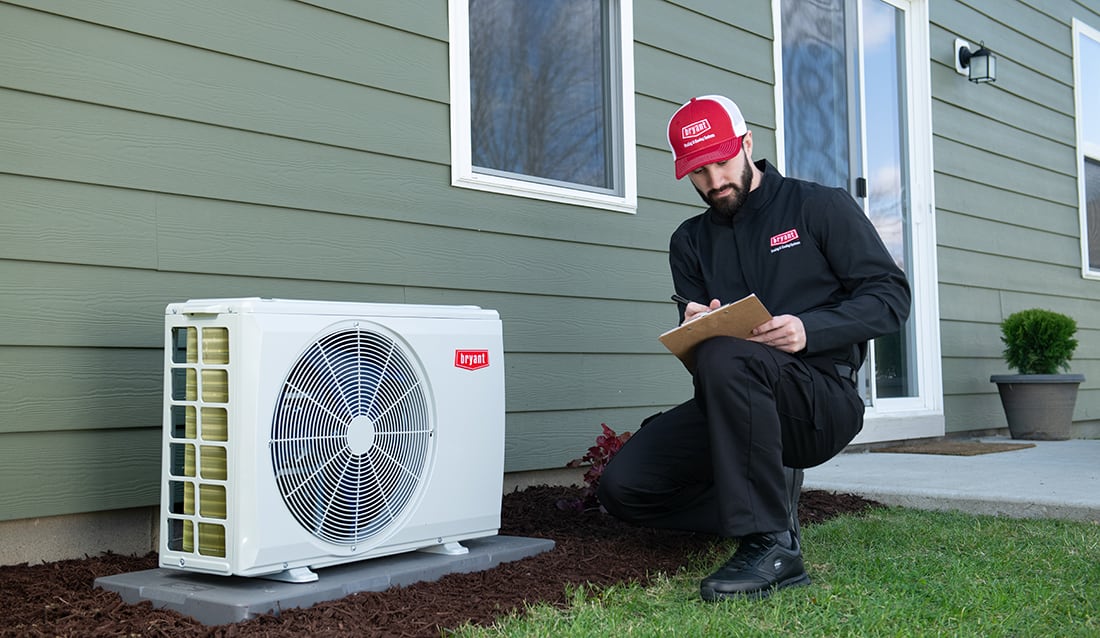
When your central air conditioner isn't cooling, partnering with a Bryant dealer can provide access to professionals familiar with Bryant HVAC equipment and its service requirements. Our dealers can help diagnose and fix the root cause of any cooling issue, from AC refrigerant leaks to compressor failures.
With their specialized tools and experience, a qualified HVAC professional can diagnose the problem and determine the appropriate repair, minimizing the risk of further damage. Many Bryant dealers also offer AC maintenance plans to help prevent future problems, support system performance, extend the lifespan of your AC, and help keep the system operating efficiently.
Schedule an appointment with your local Bryant dealer today to get your AC up and running again. Sometimes a repair isn't cost-effective; learn about our AC installation services.
FAQs on AC Not Blowing Cold Air
If your AC is running but not blowing cold air, it could be due to low refrigerant levels, a dirty air filter, frozen evaporator coils, or a faulty compressor.
To reset your AC, turn off the thermostat, switch the breaker off for 1–2 minutes, then turn both back on and wait a few minutes for the system to reboot.
Check and replace the air filter, ensure the thermostat is set correctly, and inspect for frozen coils or a tripped breaker—if issues persist, call a technician to inspect refrigerant and internal components.
Yes, turning it off prevents system strain and possible damage, especially if coils are frozen or refrigerant is low—schedule service before running it again.
Common causes include refrigerant leaks, clogged filters, thermostat malfunctions, or issues with the evaporator or condenser coils.
Sometimes. If your system isn’t cooling, try turning off the thermostat for a few minutes, setting it to “Cool,” and lowering the temperature a few degrees. If it still blows warm air, there may be an issue with refrigerant, airflow, or sensors.
Absolutely. A clogged filter restricts airflow, which can cause the system to overheat or the coils to freeze, preventing the unit from blowing cold air.
Not necessarily. While severe compressor failures might require replacing the unit, many common causes—like dirty filters, electrical trips, or minor refrigerant leaks—can be repaired by an HVAC professional to restore long-term comfort.
Learn More About Air Conditioners
- Learn about and how does air conditioning work
- Explore AC replacement
- Get help with an AC not working, mold in air conditioner or an AC leaking water
- Find out how long do AC units last?


