About The Author: Travis Baugh is a Digital Brand Marketing Manager for Bryant, where he creates clear, helpful content to guide homeowners through heating, cooling, and indoor air quality decisions. His goal is to empower readers with the knowledge they need to choose the right comfort solutions for their home—confidently and comfortably.
Air Conditioner Cost (2026): Central AC Prices, Installation & Factors
By Travis Baugh
The average price for an installed residential central air conditioner typically ranges from $3,000 to $15,000. This wide range depends on critical factors including the unit's tonnage (size), SEER2 energy efficiency rating, your home's ductwork condition, and regional labor costs.
At Bryant, we create solutions that matter for people and our planet. Our range of central air units installed by your local Bryant dealer are designed to provide efficient, reliable cooling and performance you can trust.
Air Conditioner Cost Factors Explained
Several key factors influence the final central AC cost. Understanding these elements will help you select best air conditioner for your home and budget.
1. Unit Size and Capacity
The size and capacity of the central air conditioner measured in tons, are one of the most significant cost factors. A unit must be correctly sized for your home to cool it efficiently. As a general rule of thumb, installed costs often range from roughly $3,500 to $12,000, depending on efficiency, brand, and installation complexity. That works out to an average price of about $2,500–$3,000 per ton installed, though higher-efficiency systems or complex installs can push that higher.
“The tonnage of the unit is important,” Mike Lea, co-owner of Lea Heating & Air Conditioning in East Dundee, IL explained. “A 2-ton air conditioner can come at a significantly lower price point than a 5-ton air conditioner.”
2. Energy Efficiency Ratings (SEER2 and EER2)
A unit's energy efficiency, measured by its SEER2 (Seasonal Energy Efficiency Ratio) and EER2 (Energy Efficiency Ratio) ratings, also impacts the price.
- Higher SEER2/EER2 ratings mean greater energy efficiency.
- While these units may have a higher initial central AC price, they deliver long-term savings on your energy bills.
“The efficiency of the unit is a big deal,” Lea said. “The more efficient the unit is, the higher the price point goes.”
3. Advanced Features and Technology
Modern central air systems offer advanced features that enhance comfort and convenience but also add to the cost.
- Variable-speed motors deliver more consistent temperatures throughout the home, reducing hot and cold spots and creating a smoother, more comfortable cooling experience.
- Enhanced humidity control helps maintain a healthier indoor environment by keeping moisture levels balanced, improving comfort and indoor air quality.
- Smart thermostat connectivity allows you to monitor and adjust your system from anywhere, giving you greater control over comfort whether you’re home or away.
- Insulated compressor blankets reduce operating noise, helping your system run whisper-quiet and keeping outdoor areas more peaceful.
“The more bells and whistles a unit has – such as time-delayed starts, an insulated compressor blanket, or a better guard grill – the more expensive that unit will be,” Mark Lea, co-owner of Lea Heating & Air Conditioning in East Dundee, IL, said.
4. Installation and Infrastructure
Your specific home environment plays a role.
- Location: Labor rates and climate requirements vary by region.
- Ductwork: Resizing, repairing, or insulating existing ducts to accommodate a new system will affect AC installation costs.
- Upgrades: Adding smart thermostats, zoning systems, or air purifiers increases the total project cost but maximizes home health.
Central Air Conditioner Prices by Type
There are two primary types of central air conditioners, and the choice between them depends on your home's structure and your specific needs.
Split System Air Conditioners
A split system is the most common type of central AC. It includes an outdoor unit (with the compressor and condenser) and an indoor unit (with the evaporator coil and air handler). This split air system efficiently circulates cool air through your home's ductwork.
Packaged Air Conditioners
Packaged units combines all components into a single outdoor unit cabinet. These are often installed on the roof or a concrete slab and are an excellent solution for homes with limited indoor space.
Compare New AC Unit Options from Bryant
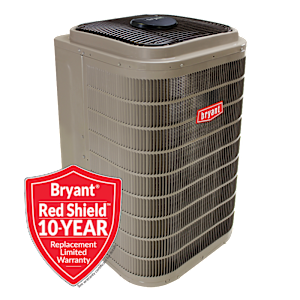
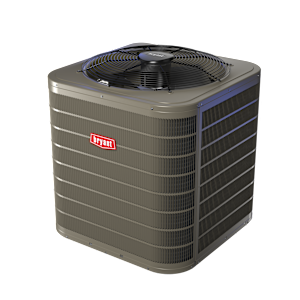
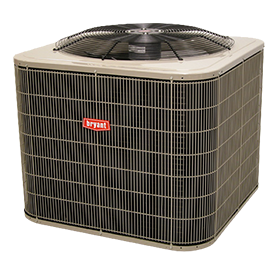
| Category | BEST – Evolution™ System | BETTER – Preferred™ Series | GOOD – Legacy™ Line |
| Energy Management | Extreme variable-speed operation. Our highest efficiency model makes adjustments and decisions each second to deliver comfort with much higher efficiency than standard or two-stage models. | Two-stage operation automatically chooses between low and high stages to maintain more consistent temperatures. Single-stage operation switches on each time the temperature rises above the thermostat set point. | Single-stage operation switches on each time the temperature rises above the thermostat set point. |
| Durability | Protection features galvanized steel cabinets, baked-on powder paint and louvered coil guard. | DuraGuard™ Plus Protection features galvanized steel cabinets, baked-on powder paint and louvered coil guard. | DuraGuard Protection features galvanized steel cabinets, baked-on powder paint. |
| Humidity Management | Perfect Humidity Technology™. This feature leverages multi-stage systems to maximize humidity removal without over-cooling. | Enhanced Humidity Management provides enhanced humidity removal during cooling operation. | Basic humidity management provides basic humidity removal during cooling operation. |
What Does a Cost of New AC System Quote Include?
Commonly included in a new AC system quote:
- Primary equipment, such as the outdoor condensing unit, evaporator coil, and air handler or furnace interface
- Refrigerant line set, including replacement or reuse when appropriate
- Equipment pad to properly support and level the outdoor unit
- Permits and inspections required by local codes
- Thermostat, which may include smart thermostat options depending on the system selected
- Professional installation and system startup, including testing and calibration
- Removal and haul-away of existing equipment
- Manufacturer and contractor warranties covering parts and workmanship
Items often not included unless specifically noted:
- Major ductwork modifications or full duct redesigns
- Electrical panel upgrades or significant electrical work beyond standard connections
- Structural modifications, such as carpentry or concrete work
- Optional upgrades, including advanced air quality products or premium smart thermostats
Because every home is different, it’s important to review your quote carefully and ask your contractor to clarify what’s included—and what may be additional—before moving forward.
What Are the Benefits of a Central Air Conditioner?
Investing in a central air conditioner provides several key advantages for your home.- Even Cooling: Delivers consistent temperature control to every room, eliminating hot and cold spots.
- Improved Indoor Air Quality: Uses filters to capture dust, pollen, and other airborne particles, creating a healthier living environment.
- Energy Efficiency: Modern Bryant systems use advanced technologies like inverter-driven compressors, variable-speed motors, and smart thermostat integration to reduce energy consumption and help lower cooling bills.
How to Choose the Best Central Air Conditioner
When selecting a central air unit, consider these six crucial factors:
- Energy Efficiency: Look for high SEER2 and EER2 ratings to save on energy costs.
- Environmental Impact: Bryant systems use Puron Advance™ refrigerant, which has a low global warming potential.
- Quiet Operation: The Evolution™ Extreme Variable Speed Air Conditioner operates as low as 55 decibels for a peaceful home environment.
- Humidity Control: Our Evolution™ Series systems can remove much more moisture than standard systems, enhancing comfort.
- Smart Features: Control your system remotely with the Bryant SmartHome App for ultimate convenience.
- Warranty: All Bryant air conditioners come with a 10-year parts limited warranty upon timely registration, providing peace of mind.
To find the perfect central air conditioner for your home, connect with your local Bryant dealer. They can provide an accurate estimate and ensure your system is installed for optimal performance. Then, don't forget to schedule air conditioning service to keep your system running effectively.
Get a Personalized New AC Unit Cost Estimate
Every home is different, which is why the most accurate way to understand your new AC unit cost is with a personalized estimate from a local professional. Your local Bryant dealer can evaluate your home, discuss comfort preferences, and provide a detailed, written quote that clearly outlines equipment, labor, and available options—so there are no surprises. Ready to get started? Connect with a trusted local expert today.
Discover Bryant Air Conditioners
A Bryant air conditioner offers reliable performance, energy efficiency, and advanced cooling technology to keep your home comfortable year-round. With high SEER2 ratings, Bryant units provide cost-effective operation, reducing energy bills while delivering powerful cooling. Their durable construction ensures long-lasting performance, and quiet operation enhances home comfort. Plus, Bryant’s smart thermostat compatibility and industry-leading warranties make it a trusted choice for homeowners seeking efficient, dependable cooling solutions.
FAQs on Air Conditioner Cost & Ownership
A well-maintained central AC unit typically lasts 12 to 17 years, though factors like usage, maintenance, and climate can affect longevity.
The average cost of a new central air conditioning system ranges from $3,000 to $15,000 installed, depending on unit size, efficiency rating, and home layout.
For a typical 2,000-sq-ft home, installing central air usually costs between $3,000 and $15,000, with higher-efficiency Bryant systems offering long-term energy savings.
Qualifying high-efficiency central air conditioners and heat pumps may be eligible for rebates through local utility programs and other regional incentives. These programs often reward the installation of energy efficient equipment that meets specific performance criteria.
Available incentives can vary by location and model, so it’s a good idea to review current offers on Bryant’s rebate page and consult a local dealer. An experienced professional can help match qualifying systems, confirm eligibility, and identify opportunities to stack incentives where available.
A standard AC replacement that swaps an existing system for a similar central air unit typically takes 4–8 hours to complete in a single day. More complex projects—such as those involving ductwork changes, electrical upgrades, or permitting—may take 1–3 days.
Most installations follow these major steps:
- Removal of the existing system
- Setting and connecting the new indoor and outdoor units
- Refrigerant line connection and charging
- System testing, calibration, and final commissioning
Timelines can vary based on the season, ease of access, permitting requirements, and any optional add-ons or upgrades included in the project.
The new AC unit cost without installation varies widely based on system size (tonnage) and efficiency level (SEER2 rating) and represents only a portion of the total air conditioner cost. Unit-only pricing typically reflects the equipment itself—such as the outdoor condenser and matching indoor coil—without accounting for the work required to install and commission the system.
Unit-only pricing does not include labor, ductwork modifications, electrical upgrades, permits, accessories, or system startup. Because installation and home-specific requirements can significantly affect the final price, the best way to understand the difference between equipment-only and installed costs is to request a written quote that clearly breaks out both line items for comparison.
Learn More About Air Conditioners
- Understand the value of AC maintenance and AC tune ups
- Find out how long do AC units last?
- Discover the difference in a heat pump vs air conditioner
- Find out what temperature to set air conditioner in summer


