About The Author: Travis Baugh is a Digital Brand Marketing Manager for Bryant, where he creates clear, helpful content to guide homeowners through heating, cooling, and indoor air quality decisions. His goal is to empower readers with the knowledge they need to choose the right comfort solutions for their home—confidently and comfortably.
Your Guide to Finding and Maintaining AC Parts
By Travis Baugh
AC parts are the essential internal components—such as compressors, condensers, and evaporator coils—that work seamlessly together to cool your home efficiently. Identifying, maintaining, and replacing these specific parts with genuine Factory Authorized components ensures long-term comfort, protects your warranty, and lowers energy bills.
Keeping your air conditioner running at peak performance requires attention to detail. Whether you are troubleshooting a strange noise or looking for a replacement component, your local Bryant dealer offers a full range of Factory Authorized Parts and expert maintenance services to ensure your home remains a haven of comfort.

What are the Main Types of AC Parts?
The main types of AC parts include the compressor, condenser, evaporator coil, fan motor, and thermostat. Together, these key components circulate refrigerant and transfer heat to reliably cool your home.
Understanding the function of each AC part is the first step toward effective maintenance and troubleshooting. Knowing their roles helps you identify potential issues before they become major problems:
- Compressor: Often called the heart of the air conditioning system, the compressor circulates AC refrigerant and compresses it into a high-pressure gas, which is a critical step in the cooling cycle.
- Condenser: Located in the outdoor unit, the condenser releases heat from the refrigerant, transforming it from a gas back into a liquid.
- Evaporator Coil: This indoor coil absorbs heat from your home's air and transfers it to the refrigerant, cooling the air that is then circulated through your home.
- Fan Motor: The fan motor is responsible for blowing air across the evaporator and condenser coils, which is essential for heat exchange and air circulation.
- Thermostat: The thermostat acts as the intelligent control center, allowing you to set and maintain your desired indoor temperature for optimal comfort and energy savings.
How Do I Know if an AC Part is Faulty?
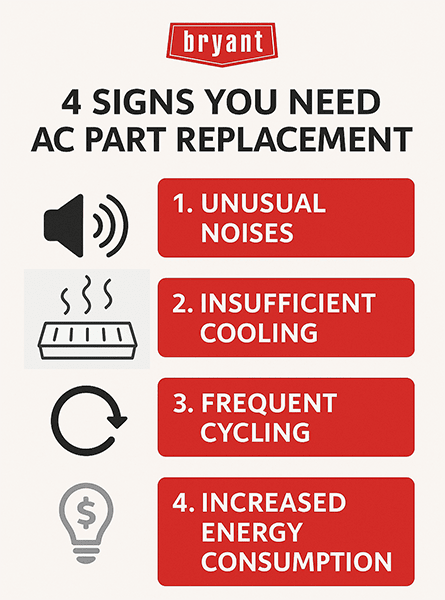
You can tell an AC part is faulty if you experience unusual noises, insufficient cooling, frequent system cycling, or sudden spikes in your energy bills. Recognizing these warning signs early can save you from costly breakdowns.
- Unusual Noises: Squealing, grinding, or banging sounds often signal a mechanical issue with a part like the fan motor or compressor.
- Insufficient Cooling: If your AC unit struggles to cool your home, it could be due to a faulty compressor, a refrigerant leak, or a dirty condenser coil.
- Frequent Cycling: An air conditioner that turns on and off more than usual may have a malfunctioning thermostat or an issue with its fan motor.
- Increased Energy Bills: A sudden, unexplained spike in your energy consumption can point to a failing AC part that is forcing the system to work harder
Expert Insight on Common Failures
Mike Lea, co-owner of Lea Heating & Air Conditioning in East Dundee, Illinois, outlines common problems homeowners may encounter with AC parts and equipment.
“The most common issues are dirty condenser coils, dirty air filters, failing electronic components such as AC capacitors and contactors, and clogged condensate AC drain lines,” Lea said.
If you suspect any faulty central air conditioner parts or experience any issues, it's recommended to consult a professional HVAC technician for accurate diagnosis and repair.
Where Can I Find the Right AC Parts?
You can find the correct AC parts by contacting a Bryant Factory Authorized Dealer. Using the correct, manufacturer-approved air conditioner parts is crucial for a reliable repair and long-term system health.
Why Use Factory Authorized Parts?
Factory Authorized Parts are engineered specifically for your Bryant equipment. Unlike generic aftermarket components, these genuine parts seamlessly restore your system to its original efficiency ratings and whisper-quiet sound levels. Crucially, using Factory Authorized Parts helps preserve your manufacturer's warranty, ensuring your investment in home comfort remains fully protected.
How to Maintain AC Parts for Longevity
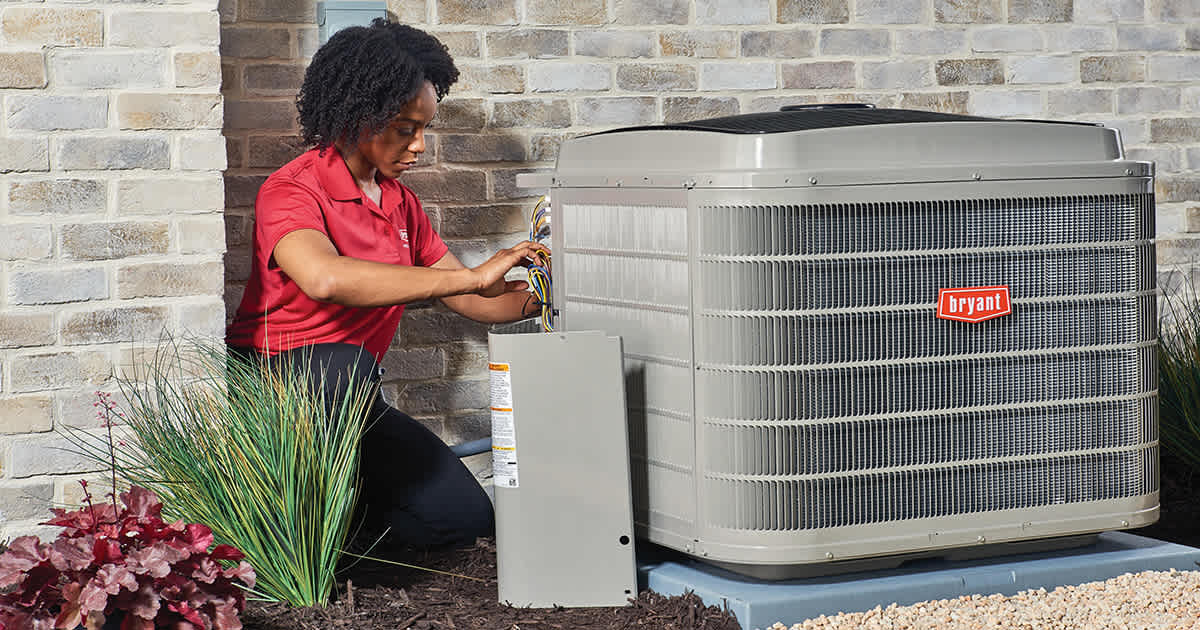
To maintain AC parts for maximum longevity, you should replace your air filters every 1 to 3 months, clear outdoor debris, and gently clean your coils. Proactive AC maintenance is the key to extending the life of your air conditioning parts and preventing costly breakdowns.
- Air Filter Replacement: Clogged filters restrict airflow and strain your system. Replace your air filter every 1-3 months. Learn more about air filter replacement and how often to change air filters.
- Clear Debris From Outdoor Unit: Keep the area around your outdoor condenser unit clear of leaves, grass, and dirt to ensure proper airflow and prevent overheating.
- Cleaning The Coils: The evaporator and condenser coils can accumulate dust over time, which hinders heat transfer. Gently clean them with a soft brush or vacuum. Learn more about how to clean AC coils and how to clean air conditioners.
Contact Your Local Bryant Dealer For AC Parts
You should contact your local Bryant dealer for professional air conditioning service whenever you need complex AC parts replaced. While regular maintenance prevents many issues, certified dealers have the specialized expertise and tools to diagnose and fix complex AC part problems safely.
FAQs on AC Parts
Key parts of an AC unit include the compressor, condenser coil, evaporator coil, expansion valve, blower fan, and thermostat, all working together to cool and circulate air.
The compressor is typically the most expensive part to replace, often costing $1,200 to $2,500 or more due to its central role and labor-intensive installation.
While simple tasks like changing an air filter can be done by homeowners, replacing complex parts like capacitors, compressors, or motors should be handled by a certified professional. Handling high-voltage electricity and refrigerants requires specific training and tools to ensure safety and prevent system damage.
AC capacitors generally last between 10 to 20 years, but heat exposure and voltage fluctuations can shorten their lifespan. If your AC unit is humming but the fan isn't spinning, or if the system struggles to start, the capacitor may need replacement.
Replacement AC parts typically last between 10 to 15 years, depending on the specific component and your routine maintenance habits. Regular professional tune-ups and proactive filter changes are the best ways to maximize the lifespan of your newly installed parts.
Learn More About Air Conditioners
- Learn how does air conditioning work
- Explore AC installation and AC replacement
- Get help with an AC not working or AC not blowing cold air
- Find out how long do AC units last?


