About The Author: Travis Baugh is a Digital Brand Marketing Manager for Bryant, where he creates clear, helpful content to guide homeowners through heating, cooling, and indoor air quality decisions. His goal is to empower readers with the knowledge they need to choose the right comfort solutions for their home—confidently and comfortably.
Understanding Furnace Humidifiers
By Travis Baugh
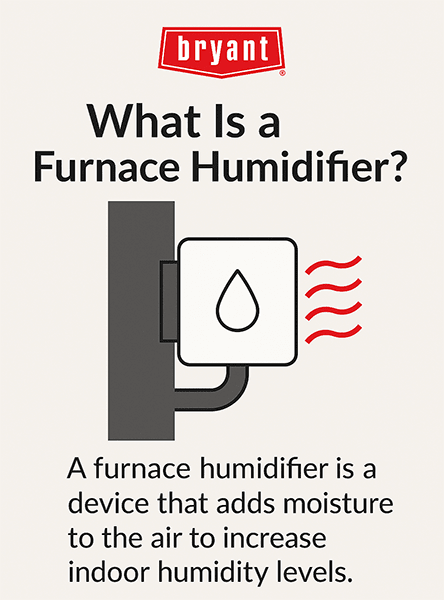
A furnace humidifier is a device that integrates with your home's heating system to add moisture into the air. This process helps maintain optimal indoor humidity levels, especially during dry winter months, improving comfort, health, and energy efficiency while protecting your home's interior.
How Does A Furnace Humidifier Work?
A furnace humidifier works in tandem with your existing heating system to deliver whole-home comfort. When your furnace cycles on, the humidifier draws warm air across a water-saturated panel (often called a water pad or evaporator pad). This process infuses the air with water vapor before the blower distributes it through your ductwork.
The result is seamless, invisible comfort. You avoid the hassle of refilling portable water tanks, and your home maintains a balanced humidity level (typically between 35% and 50%) automatically.
Why Invest in a Whole-Home Humidifier?
Dry winter air isn't just uncomfortable—it can be damaging to your home and your health. Installing a furnace humidifier offers six distinct advantages:
- Improves Comfort: Moistened air feels warmer, allowing you to lower your thermostat and still feel cozy. This helps create a more comfortable environment during the cold, dry winter months.
- Prevents Dry Skin and Irritation: By maintaining optimal humidity, a furnace humidifier helps alleviate dry skin, chapped lips, and irritated sinuses often caused by dry indoor air.
- Reduces Static Electricity: Balanced humidity levels significantly reduce the buildup of static electricity, so you can say goodbye to those annoying shocks from touching metal objects.
- Protects Wood Furnishings: Dry air can cause wooden floors, furniture, and musical instruments to crack or warp. A furnace humidifier helps preserve these items by adding necessary moisture to the air.
- Enhances Indoor Air Quality: Proper humidity levels can help reduce the airborne transmission of certain viruses and bacteria. It also eases respiratory issues like coughing and congestion caused by dry air.
- Increases Energy Efficiency: Because humidified air feels warmer, you can keep your thermostat at a lower setting without sacrificing comfort. This can lead to noticeable energy savings on your heating bills.
Learn more in our guide on humidifier benefits.
What Are the Different Types of Furnace Humidifiers?
There are three main types of furnace humidifiers: bypass, fan-powered, and steam. Each is designed to meet different needs and home sizes.
1. Bypass Humidifiers
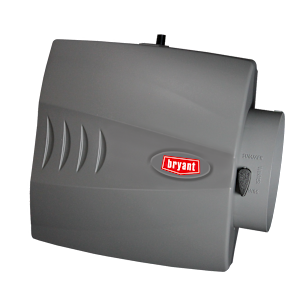
Bypass models use the airflow generated by your furnace's blower motor to push air through the water panel. They are cost-effective, energy-efficient, and quiet.
Fan-Powered Humidifiers
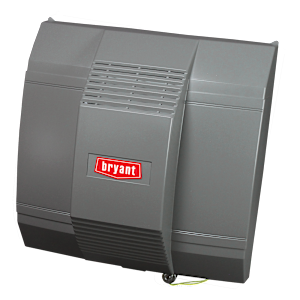
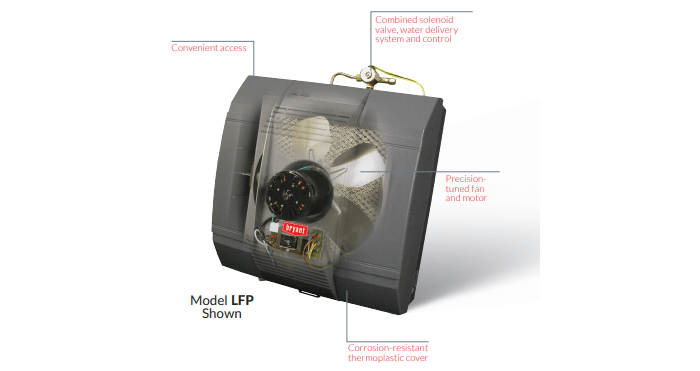
These units feature an internal fan that actively pushes air through the water panel. This allows them to generate more moisture independent of the furnace blower's speed.
- Best for: Larger homes requiring higher humidity output.
- Bryant Model: HUMCRLFP
Steam Humidifiers
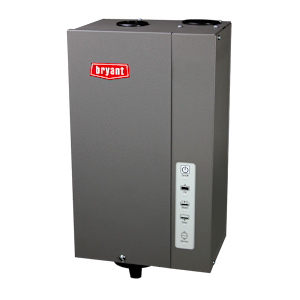
Steam humidifiers offer the highest level of performance by boiling water to create steam, which is injected directly into the airflow. They operate independently of your furnace's heat cycle, offering precise control regardless of the temperature.
- Best for: Large luxury homes, arid climates, or homeowners requiring exact humidity preservation (e.g., for artwork or wine collections).
- Bryant Model: HUMCRSTM (Outputs up to 34 gallons daily).
| Model | STM | LBP | SBP | WBP | LFP |
| Unit Type | Steam | Large bypass | Small bypass | Water saver bypass | Large fan-powered |
| Capacity (gallons/day) | 34* | 17 | 12 | 17 | 18 |
| Water Vapor Delivery | Dispersion tube in duct | Expanded aluminum evaporator pad | Expanded aluminum evaporator pad | Wicking paper evaporator pad | Expanded aluminum evaporator pad |
| Notes | Large homes, highest output | Large homes | Small homes | Efficient in water usage | Large homes |
How Do You Choose the Right Furnace Humidifier?
Selecting the right furnace humidifier depends on your home's specific needs. Consider these key factors to make an informed decision:
- Size of Your Home: The square footage of your home is the most important factor. Larger homes require a higher-capacity humidifier (like a fan-powered or steam model) to ensure moisture is distributed evenly.
- Type of Humidifier: As discussed, your choice between bypass, fan-powered, and steam models will depend on your budget, home size, and local climate.
- Maintenance Requirements: All humidifiers require some upkeep, such as cleaning and changing the water panel. Consider a model with humidifier maintenance needs that fit your lifestyle.
- Energy Efficiency: Look for an efficient model that works seamlessly with your furnace to minimize energy consumption. An efficient humidifier helps your home feel warmer at lower temperatures, leading to lower heating costs.
Scotty Peters, owner of CK Heating and Cooling in Seminole, Texas, explains how homeowners can choose the right whole-home humidifier based on their HVAC setup, maintenance preferences, and performance needs.
“It really depends on your air handler setup and the space you have to work with,” Peters said. “That’s why it’s important to have a professional evaluate the system, because installation options can vary quite a bit from home to home.”
Peters notes that bypass humidifiers are often the most affordable and simplest option.
“A bypass humidifier is inexpensive and has very few moving parts—just a damper, fill valve, and drain,” he said. “They work well, but they do require more maintenance because water is constantly flowing through the system.”
He explains that fan-powered humidifiers add more flexibility but also slightly more complexity.
“A fan humidifier can be used in a wider range of setups and doesn’t always have to be directly tied into the air handler,” Peters said. “But like bypass units, they still require regular maintenance to keep them operating properly.”
For long-term performance, Peters says steam humidifiers offer the highest level of control and efficiency.
“In my home, I use a steam humidifier,” he said. “It uses electrodes to boil water and inject steam directly into the airflow. It’s very low maintenance, and because the water is boiled, you don’t have to worry about mold or bacteria in the system.”
He adds that water quality is an important but often overlooked factor.
“One thing people don’t realize is that water type matters,” Peters said. “Steam humidifiers actually work best with harder water. If the water is too softened or filtered, like RO water, the system may not function correctly unless minerals are added back in.”
Find the Best Furnace Humidifier with a Bryant Dealer
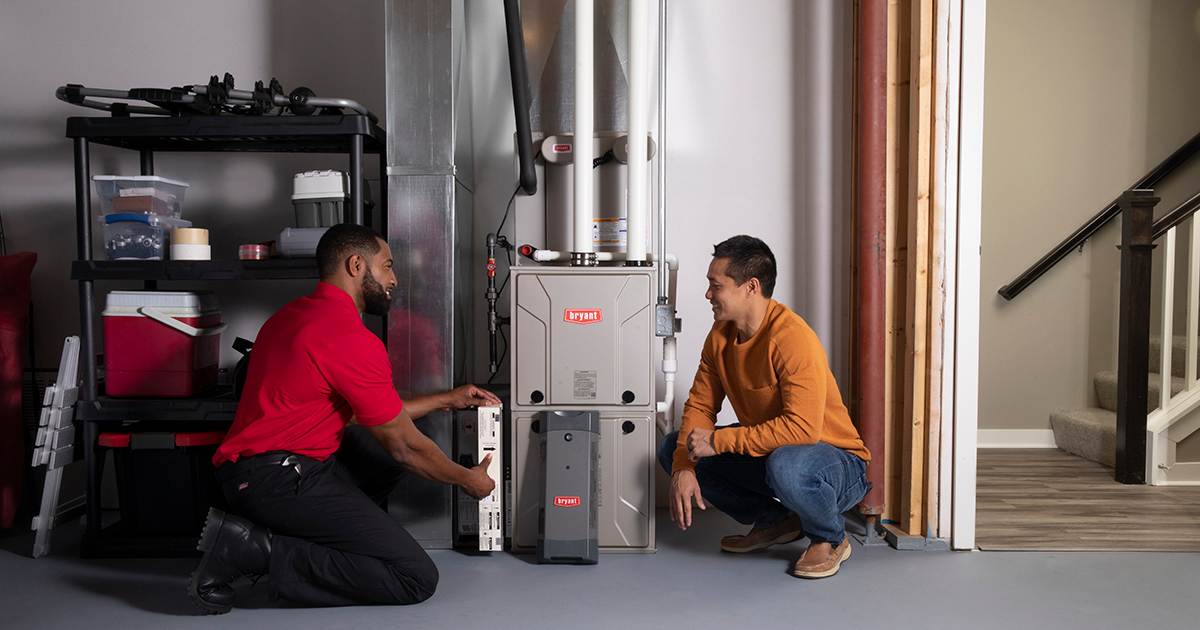
The best way to find the perfect furnace humidifier is to connect with a local Bryant dealer. An expert can evaluate your home's size, heating system, and climate to recommend the most suitable and efficient model for your needs. A Bryant dealer provides guidance on all your options and can also manage professional humidifier installation and maintenance, ensuring optimal indoor air quality year-round.
Schedule an appointment with your local Bryant dealer today to find the right comfort solution for your home and get a quote on humidifier cost.
Furnace Humidifier FAQs
Yes, adding a whole-home humidifier to your furnace can worth it if you experience dry indoor air in winter, as it can help improve comfort and indoor air quality in addition to helping protect wood furniture and floors.
A furnace-mounted humidifier adds moisture to the heated air as it travels through the ducts, helping maintain balanced humidity throughout your home.
The cost to install a furnace humidifier typically ranges from $400 to $1,200, depending on the type of unit (bypass, fan-powered, or steam) and installation complexity. Talk to your local Bryant dealer for a quote.
You can tell it's working by checking for consistent indoor humidity levels, feeling less dryness in the air, and inspecting the humidifier pad and water supply during operation.
Learn More About Humidifiers
- Discover the best humidifier for your home
- Learn what does a humidifier do?
- Find out what humidity should my house be at?
- Learn the ins and outs of humidifier installation
- Explore the factors of whole house humidifier cost
- Understand the best humidity level for sleeping


