About The Author: Travis Baugh is a Digital Brand Marketing Manager for Bryant, where he creates clear, helpful content to guide homeowners through heating, cooling, and indoor air quality decisions. His goal is to empower readers with the knowledge they need to choose the right comfort solutions for their home—confidently and comfortably.
Heat Pump Not Heating? Causes, Fixes & Troubleshooting
By Travis Baugh | Expert Review By Michelle Notaro - Product Manager, Heat Pumps
If your heat pump is not heating, the issue is often related to a thermostat setting, a clogged air filter, a frozen outdoor unit, or a refrigerant problem. Bryant's 4-Check Heat Pump Heating Diagnostic—Thermostat → Filter → Outdoor Unit → Breaker—provides a simple way to check these common issues before calling a professional.
Even the most advanced heat pumps occasionally need attention to maintain proper performance. When the winter chill sets in and your heat pump starts blowing cold air, it is important to know how to respond.
Bryant's 4-Check Heat Pump Heating Diagnostic focuses on four homeowner checks you can safely perform: thermostat settings, air filter condition, outdoor-unit airflow, and the electrical breaker. This guide also explains when a Bryant professional should diagnose the system.
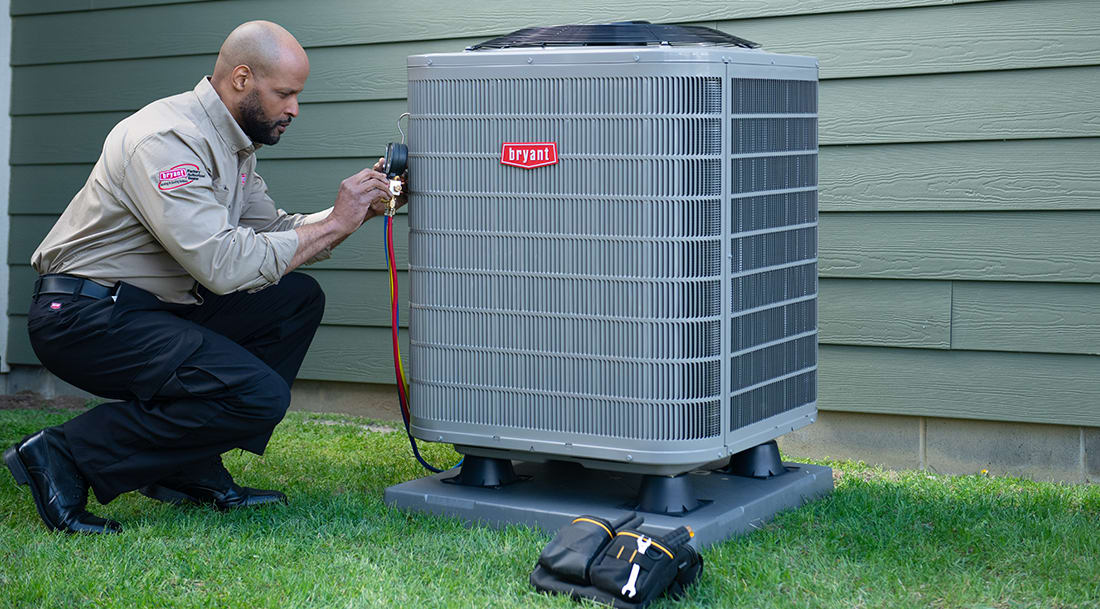
Why Is My Heat Pump Not Heating?
A Bryant heat pump may stop heating because of incorrect thermostat settings, restricted airflow from a dirty filter, excessive ice buildup on the outdoor unit, or a mechanical or refrigerant problem.
Bryant's 4-Check Heat Pump Heating Diagnostic helps separate basic homeowner checks from problems that require professional service. Do not attempt to measure refrigerant pressure or work on electrical components yourself; those measurements and repairs depend on the specific heat pump and refrigerant used.
1. Are my thermostat settings correct?
A Bryant heat pump should be checked first for the correct operating mode and fan setting when it is not heating. Make sure the thermostat is set to "Heat" and the fan is set to "Auto."
If the fan is set to "On," the blower can continue running when the heat pump is not actively heating, which may make the air from the vents feel cool.
Smart home integration makes managing your climate easier, but a thermostat communication problem or incorrect setting can still affect operation.
2. How do dirty air filters affect heating?
A dirty air filter can restrict airflow through a Bryant heat pump and make the system work harder to maintain indoor comfort. ENERGY STAR recommends checking heat-pump filters monthly and cleaning or replacing them when they are dirty. As a general guideline, filters may need to be replaced every 30–90 days, depending on the filter, home, pets, occupants, and system use.
Poor airflow can also reduce HVAC efficiency; ENERGY STAR notes that airflow problems can reduce system efficiency by up to 15%.1 That figure applies to airflow problems generally and should not be interpreted as a specific efficiency loss caused by every dirty filter.
What happens if the outdoor unit is frozen?
A Bryant heat pump can develop a light layer of frost during cold-weather operation, and its automatic defrost system periodically removes that frost. During defrost, the outdoor fan may temporarily stop and the system may temporarily deliver cooler air indoors.
A typical heat pump defrost cycle lasts about 5–15 minutes, although the exact duration varies by system and outdoor conditions.
If the outdoor unit remains covered in heavy ice after a defrost cycle, the system may have a defrost, airflow, or mechanical problem that requires professional diagnosis. Do not chip ice from the coil with a hard tool, because the coil can be damaged.
Can low refrigerant levels stop the heat?
Low refrigerant can prevent a Bryant heat pump from transferring heat effectively and may cause the system to produce insufficient heat. A low refrigerant charge can indicate a refrigerant leak or another system problem that requires professional diagnosis.
There is no single refrigerant-pressure range that applies to every Bryant heat pump, because operating pressures vary with the refrigerant, model, outdoor temperature, indoor conditions, and operating mode. For that reason, homeowners should not attempt to diagnose a refrigerant charge by pressure alone.
Properly charging an air conditioner or heat pump can help reduce energy consumption and the risk of system failure.
How can I troubleshoot a heat pump not heating?
You can troubleshoot a heat pump not heating by checking your thermostat, replacing the air filter, inspecting the outdoor unit for ice, and checking your electrical breaker. These four steps resolve the majority of common heating issues.
Joseph Braswell, owner of Guin Service Company in Birmingham, AL reminds homeowners to look at the current weather conditions if they notice their heat pump is not heating
“The first thing you need to figure out is what operating mode the heat pump is in, depending on the temperature outside,” Braswell said. “If it’s a fairly mild day and the system isn’t heating, it may not actually be in heating mode. If it’s extremely cold outside, the heat pump may have switched into emergency heat mode and could be using electric heat strips or, in a dual-fuel system, the furnace instead. Don’t hesitate to reach out to your local dealer, as they can diagnose the issue quickly.”
Taking swift action protects your long-term investment. Before you pick up the phone to call a technician for heat pump repair, run through this simple diagnostic checklist. It takes only a few minutes and can save you the cost of a heat pump service call.
Step 1: Check your smart thermostat
To troubleshoot your heating issue, navigate to your smart thermostat screen and confirm that it is set to "Heat" mode and the fan is set to "Auto." Setting the fan to "On" can cause it to blow air when the system is not actively heating.
Check for any error codes or low-battery warnings on the display. If you are using a Bryant smart thermostat, you can also check the Bryant Smart Home App for available diagnostic alerts.
Step 2: Replace the air filter
Locate your indoor air handler or furnace and inspect the air filter. If it is visibly dirty or clogged, replace it according to the manufacturer's recommendations. As a general guideline, check the filter every 30 days and replace it as needed, with many filters requiring replacement every 30–90 days. Bryant recommends checking filters monthly and replacing them when dirty.
Replacing your air filter helps maintain proper airflow through the system. Learn more about how often to change air filters.
Step 3: Inspect the outdoor unit
Walk outside and inspect the heat pump cabinet to ensure it is clear of snow, ice, leaves, and debris. Keep the area around the outdoor unit clear so air can move freely through the coil. ENERGY STAR recommends keeping indoor and outdoor HVAC equipment clean and clear of debris.
A light layer of frost can be normal during heating operation. Bryant heat pumps use an automatic defrost cycle to remove accumulated frost, and a typical cycle may last about 5–15 minutes.
If you see a thick layer of solid ice that does not clear during defrost, do not attempt to chip it away with a hard tool. A frozen HVAC unit can indicate a problem that requires professional attention.
Step 4: Verify the breaker box
Check your home's electrical panel to see whether the circuit breaker serving the heat pump or indoor air handler has tripped.
If a breaker has tripped, you can reset it once by moving it fully to the "Off" position and then back to "On." If the breaker trips again, leave it off and contact a qualified HVAC professional. Repeated breaker trips can indicate an electrical or equipment problem that should be professionally diagnosed.
When should I call a Bryant HVAC professional?
You should call your local Bryant dealer if your heat pump is leaking refrigerant, making unusual grinding noises, continually tripping the breaker, or failing to heat after basic troubleshooting. A certified technician can safely diagnose and repair complex mechanical failures.
A qualified technician can diagnose problems involving refrigerant, electrical components, controls, airflow, the reversing valve, compressor, or defrost system.
Do not attempt to open the refrigerant circuit or work on high-voltage electrical components yourself. Proper refrigerant charge and system airflow are important to heat-pump performance, and Bryant recommends professional evaluation of these system characteristics.
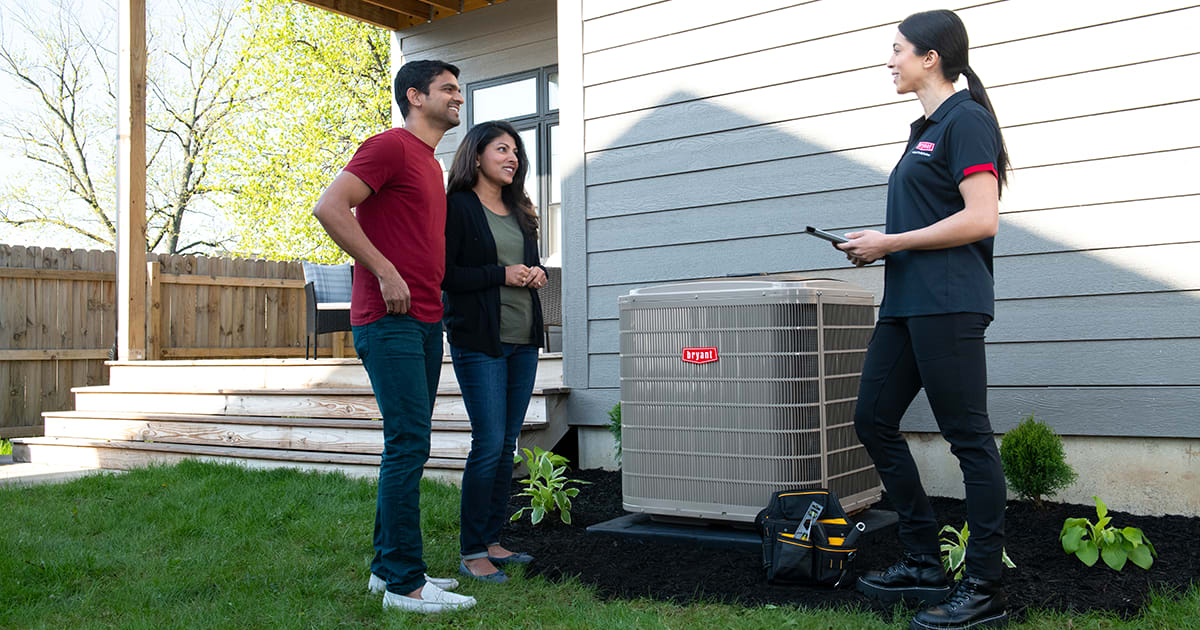
How To Prevent Your Heat Pump From Blowing Cold Air
Prevent your Bryant heat pump from blowing cold air by checking the filter monthly, replacing dirty filters as needed, keeping the outdoor unit clear, and scheduling annual professional heat pump maintenance. Bryant recommends monthly filter checks and annual HVAC tune-ups to help maintain system performance.
Investing in comfort means protecting the equipment that provides it. An annual HVAC tune-up allows technicians to clean the coils, check the refrigerant charge, and calibrate the smart controls. Regular HVAC maintenance can help identify developing problems before they result in a complete system breakdown requiring emergency HVAC repair.
1 https://www.energystar.gov/saveathome/heating-cooling/maintenance-checklist
Heat Pump Not Heating FAQs
During defrost mode, the outdoor fan will temporarily stop spinning, and you may see steam rising from the outdoor unit. The system may also temporarily blow cooler air inside until the defrost cycle completes, which usually takes 5 to 15 minutes.
If the heat pump is running but blowing cold air, it is likely due to a dirty air filter, a thermostat set to fan on instead of auto, or a low refrigerant charge. Checking the filter and thermostat settings should be your first step.
You should schedule professional maintenance for your heat pump at least once a year, ideally in the fall before the heating season begins. Regular maintenance ensures efficient operation, validates your warranty, and prevents unexpected breakdowns.
Yes, modern advanced cold climate heat pumps are designed to extract heat from the air even in sub-freezing temperatures. However, during extreme cold snaps, the system may automatically switch to its supplemental electric heat strip to maintain indoor comfort.
Common signs include reduced heating or cooling performance, unusual noises, frequent cycling, ice buildup on the outdoor unit, or rising energy bills. If the system struggles to maintain set temperatures, it may need service.
You can reset a heat pump by turning off the thermostat and shutting off power at the breaker for a few minutes, then restoring power and setting the thermostat back to your desired mode. If it doesn’t restart properly, a deeper electrical or mechanical issue may be present.
Start by checking thermostat settings, air filters, and breaker status, as these are common causes. If those are fine, the issue may involve low refrigerant, dirty coils, or a malfunctioning compressor that requires a professional technician.
A heat pump may run longer in winter than a furnace, often cycling or running for extended periods to maintain steady indoor temperatures. It’s normal for it to run several hours a day, especially in colder weather, as long as it’s maintaining comfort efficiently.
About The Expert Reviewer: Michelle Notaro is a Product Manager for Residential Air Conditioners at Bryant, helping guide the direction of residential cooling products. She considers changing homeowner priorities, emerging market developments, and regulatory requirements to support air conditioning solutions that address today's comfort and efficiency expectations.


