About The Author: Travis Baugh is a Digital Brand Marketing Manager for Bryant, where he creates clear, helpful content to guide homeowners through heating, cooling, and indoor air quality decisions. His goal is to empower readers with the knowledge they need to choose the right comfort solutions for their home—confidently and comfortably.
Coastal HVAC Systems: Best Solutions for Salt Air & Humidity
By Travis Baugh
Coastal HVAC units are heating and cooling systems designed to withstand the salt air, high humidity, and other corrosive conditions common in coastal environments.. For homeowners living near the ocean, the sea breeze is a daily luxury—but for a standard air conditioner, it can be challenging. Salt air and moisture can accelerate corrosion of outdoor HVAC components, potentially affecting system performance and service life. Bryant offers coastal-rated air conditioners and heat pumps with features specifically designed to help protect against these conditions.
What is a Coastal HVAC System?
A coastal HVAC system is a heating and cooling system designed to withstand the corrosive conditions associated with coastal environments. Bryant coastal models feature protective components and coatings designed to help resist airborne corrosives, while offering efficiency, comfort, and reliable operation. The right equipment for a coastal home depends on factors such as the home's location, system size, equipment combination, and exposure to salt air.
Why Do Coastal Homes Need Specialized HVAC Systems?
Bryant coastal HVAC systems are designed for homes where airborne salt and moisture can accelerate corrosion of outdoor equipment. Coastal conditions can expose outdoor condenser components to salt and moisture, which may contribute to corrosion over time.
Living near the coast can expose your outdoor HVAC equipment to salt carried by ocean air. Bryant addresses these conditions on its coastal models with features such as CoastGuard protection, coastal-coated fan guards and coil guards, and DuraGuard protection systems.
Bryant’s Preferred Series Coastal 2-Stage Air Conditioner With Intelisense Technology and Preferred Series Coastal 2-Stage Heat Pump With Intelisense Technology are centered on coastal customers’ needs. By utilizing specialized epoxies and advanced anti-corrosive treatments, Bryant's coastal HVAC units protect vital system components from the harsh marine environment. This can help prevent emergency HVAC repair calls, lower HVAC maintenance costs, and provide the peace of mind that your home will remain comfortable, even during the hottest, most humid coastal summers.
Key Features of the Best Coastal HVAC Units
Bryant coastal HVAC units combine corrosion-resistant protection with efficiency, comfort, and smart-control features. Available specifications vary by model, so homeowners should compare published SEER2, EER2, sound levels, compressor type, and warranty coverage when evaluating equipment.
When evaluating a coastal HVAC upgrade for your major renovation or new home purchase, look for these specific value propositions:
- Coastal Corrosion Protection: Bryant coastal models use features such as CoastGuard protection, coastal-coated fan guards and coil guards, and DuraGuard protection systems to help protect equipment from corrosive coastal conditions.
- High-Efficiency Compressors: Variable-speed or two-stage compressors adjust their output to meet the cooling demands of your home, helping reduce energy consumption and maintaining a consistent temperature. For example, Bryant's 148TAN---C uses a two-stage scroll compressor and offers up to 18 SEER2 and 13.5 EER2.
- Quiet Operation: Advanced fan blade designs and sound-dampening insulation ensure your system stays in the background, so the ocean waves remain the loudest thing you hear. Bryant publishes sound ratings for its coastal models, ranging from as low as 65 dB on the 248TAN---C to 71 dB on the 135SAN---C.
- Smart Integration: Seamlessly connect your coastal HVAC system to modern smart thermostats to monitor energy usage, adjust temperatures remotely, and receive maintenance alerts directly to your smartphone.
- Humidity Management: Bryant's two-stage coastal models can provide enhanced summer dehumidification through longer, lower-capacity cooling cycles. This can be particularly useful in humid coastal environments.
How Does Salt Air Damage Standard Air Conditioners?
Bryant designs its coastal HVAC equipment to help address the corrosive effects of salt air on outdoor HVAC components. Salt and moisture can accumulate on exposed metal components and contribute to corrosion, which can affect equipment performance over time.
When aluminum, copper, and other metal components are exposed to salt and moisture, corrosion can occur. As outdoor components deteriorate, corrosion can contribute to reduced heat-transfer performance, component damage, and the need for repairs.
Furthermore, as the system struggles to cool, it loses its ability to effectively dehumidify the air. The result: a clammy, uncomfortable indoor environment. Upgrading to a coastal-rated HVAC system bypasses these failure points entirely, ensuring reliable performance and long-term value over upfront cost.
How to Choose the Right Coastal HVAC System for Your Home
To choose the right coastal HVAC system, follow these steps:
- Consult a local Bryant dealer to assess your home's specific architectural and environmental needs.
- Verify the system size—an undersized or oversized unit will underperform regardless of its coastal-grade features.
- Compare energy efficiency ratings such as SEER2 and EER2 to maximize long-term savings.
- Review the model's specific coastal-protection features, such as CoastGuard protection, coated guards, and DuraGuard protection.
- Consider the system's compressor type, sound rating, efficiency, and warranty in addition to its coastal protection.
Bryant offers several air conditioners and heat pumps purpose-built for coastal environments:
- 248TAN---C: Preferred Series Coastal 2-Stage Heat Pump
- 235SAN---C: Coastal Heat Pump
- 148TAN---C: Preferred Series Coastal 2-Stage Air Conditioner
- 135SAN---C: Coastal Air Conditioner
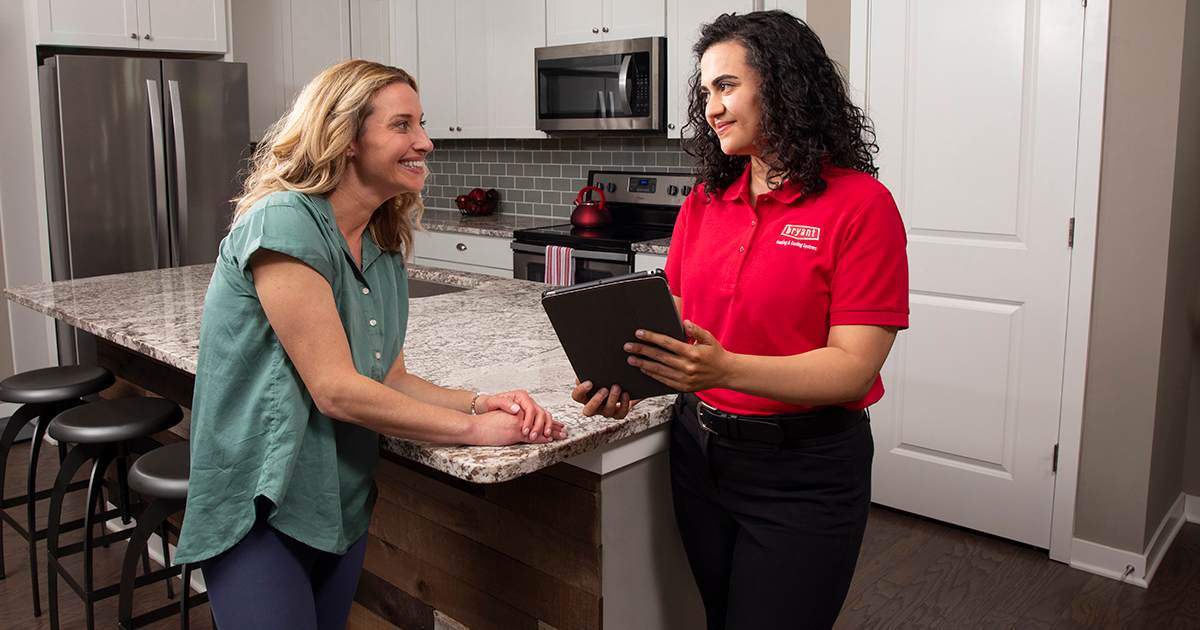
Partnering with your local Bryant dealer ensures your system is properly sized and matched to your home's specific needs and coastal environment.
Coastal HVAC Maintenance Tips
Bryant recommends paying attention to outdoor equipment maintenance in coastal environments, where salt air, humidity, and other environmental conditions can accelerate corrosion. If you live near the ocean, your HVAC system may require more frequent inspection and cleaning based on local conditions.
To help protect your equipment:
- Rinse the outdoor unit with fresh water periodically (when the system is off) to help remove salt buildup from the cabinet and coils.
- Keep the area around the unit free of sand, leaves, and other debris that can restrict airflow.
- Inspect the outdoor unit regularly for signs of rust, corrosion, or damaged coil fins.
- Replace air filters as recommended to maintain proper airflow and reduce strain on the system.
- Schedule professional HVAC maintenance at least twice a year—or more often if recommended by your local Bryant dealer based on your environment.
Regular inspections and cleaning can help minimize the effects of coastal conditions, maintain system performance, and support the longevity of your HVAC equipment. Your local Bryant dealer can recommend a maintenance schedule based on your climate, equipment, and level of coastal exposure.
Coastal HVAC FAQs
Yes. While initial costs might be higher, the potential for savings on energy bills, reduced repair costs, and extended lifespan often make a coastal HVAC system a smart long-term investment.
No. Aftermarket sprays cannot replicate the comprehensive, factory-applied epoxy coatings that penetrate the deep, complex layers of a purpose-built coastal HVAC system's coils and cabinetry.
Our smart systems integrate seamlessly with popular platforms, offering convenience and control. They allow you to monitor humidity levels and energy usage remotely, ensuring your home remains optimized and protected.
A standard HVAC unit exposed to marine conditions may fail in as little as three to five years. A purpose-built coastal HVAC unit, with proper maintenance, is designed to significantly outlast standard units in the same environment, delivering better long-term value.
Homes located within approximately 10 miles of the coast are considered to be in a high-risk corrosion zone and are typically recommended to use coastal-rated HVAC equipment.


