Air Purifier vs Humidifier: Which One is Right for You?

By Travis Baugh | Expert Review By Chrystal Jolliffe - Product Manager, Indoor Air Quality 

The Short Answer: Air Purifier vs. Humidifier

The main difference between an air purifier and a humidifier lies in their core function. An air purifier uses filtration to reduce airborne particles, while a humidifier adds moisture to dry indoor air. If you are primarily concerned with airborne particles such as dust and pollen, an air purifier may be appropriate. If dry indoor air is causing discomfort, a humidifier can help increase indoor humidity.

The right choice depends on what you are trying to address:

Feature Air Purifier Humidifier
Primary purpose Reduce airborne particles through filtration Add moisture to dry indoor air
What it changes Particle levels in the air Indoor relative humidity
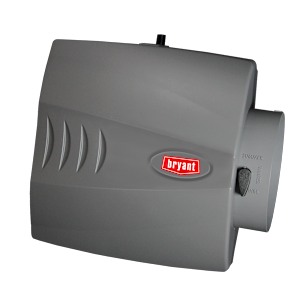
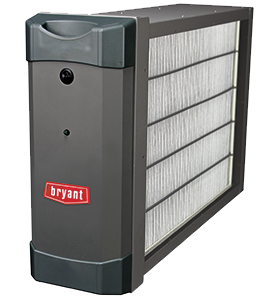
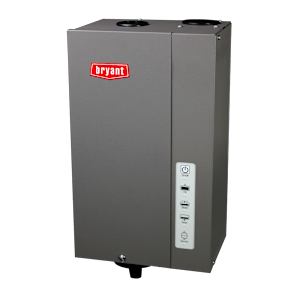
Bryant example Evolution™ Air Purifier DGAPA: MERV 15 filtration Preferred™ Series Steam Humidifier HUMCRSTM: up to 34 gal./day
Particle/humidity specification Captures 95% of particles 1.0–3.0 microns and 85% of particles 0.3–1.0 microns, based on third-party testing Up to 34 gallons of water vapor per day
Recommended indoor humidity Not applicable EPA recommends 30%–50% relative humidity for homes
Room/home coverage Whole-home when integrated with a compatible HVAC system Whole-home when integrated with a compatible HVAC system
Energy use Depends on the HVAC blower and system configuration; DGAPA does not publish a standalone wattage rating Varies by humidifier type; Bryant does not publish a single wattage figure for all humidifier models

The Bryant Evolution™ DGAPA air purifier uses MERV 15 filtration and is rated to capture 95% of particles from 1.0 to 3.0 microns and 85% of particles from 0.3 to 1.0 microns based on third-party testing. Bryant's HUMCRSTM steam humidifier can produce up to 34 gallons of water vapor per day.

What is the Difference Between an Air Purifier and a Humidifier?

An air purifier filters airborne particles, whereas a humidifier releases water vapor to increase the moisture level in a room or throughout a home. While both can contribute to home comfort, they address different indoor environmental conditions.

Air Purifiers: For Cleaning the Air

An air purifier is designed to reduce airborne contaminants by pulling air through filters. Bryant's Evolution™ Air Purifier DGAPA uses a MERV 15 filter and captures 95% of particles from 1.0 to 3.0 microns and 85% of particles from 0.3 to 1.0 microns, based on third-party testing. Common airborne particles include dust, pet dander, pollen, and other particulate matter. Learn more about what does an air purifier do?

Humidifiers: For Adding Moisture

Conversely, a humidifier adds moisture to dry indoor air. This can help address discomfort associated with dry air, including dry skin, dry throat and irritated nasal passages. Humidifiers can be particularly useful during winter when heating can contribute to lower indoor humidity.
 
The EPA recommends keeping indoor relative humidity between 30% and 50% to help control moisture and mold-related concerns.1 Learn more about what does a humidifier do?
 

How Do They Impact Indoor Air Quality?

Both systems can affect your home environment, but they target different aspects of indoor air quality. Air purifiers reduce airborne particles through filtration, while humidifiers increase moisture levels when indoor air is too dry.

Air Purifier Benefits

Air purifiers can help reduce airborne particles such as dust, pollen and pet dander. For example, the Bryant Evolution™ Air Purifier DGAPA uses MERV 15 filtration and has published particle-capture performance for particles in the 0.3–3.0 micron range.
 
Best for: Homes where reducing airborne particles is a priority, including dust, pollen and pet dander.
 
Learn more about air purifier benefits.

Humidifier Benefits

Humidifiers increase indoor moisture when relative humidity is low. Maintaining humidity within a reasonable range can help reduce the discomfort associated with excessively dry air.
 
Best for: Dry skin, dry throat, irritated nasal passages and static electricity associated with dry indoor air.
 
Learn more about humidifier benefits.

Comparison Guide: When to Use Which Device?

Choosing the right device depends on the specific symptoms or home conditions you are trying to address. Here is a quick breakdown to help you decide in the air purifier vs humidifier debate.
  • Airborne particles: A Bryant air purifier such as the Evolution™ DGAPA uses MERV 15 filtration to capture particles, including 95% of particles from 1.0 to 3.0 microns and 85% from 0.3 to 1.0 microns, based on third-party testing.
  • Dry indoor air: A Bryant humidifier can add moisture throughout the home when integrated with a compatible HVAC system.
  • Odors and gases: An air purifier's ability to address odors depends on the filtration technology used. Particle filtration alone does not remove every gas or odor.
  • Winter dryness: A humidifier can increase indoor humidity when heating contributes to dry conditions.

The Bryant 3-Step Air Quality Check

Not sure whether you need an air purifier, humidifier or both? Start with these three questions:
  1. Are airborne particles the primary concern? If dust, pollen or pet dander are a concern, consider an air-cleaning solution such as the Bryant Evolution™ DGAPA, which uses MERV 15 filtration.
  2. Is your indoor humidity too low? Use a hygrometer to check your home's relative humidity. The EPA recommends 30%–50% relative humidity for homes.
  3. Are you dealing with both conditions? An air purifier and humidifier address different needs, so a properly selected HVAC system can incorporate both technologies.
Scotty Peters, owner of CK Heating and Cooling in Seminole, Texas, explains how homeowners can determine whether they need an air purifier or a humidifier by focusing on overall indoor air quality and comfort.
 
“The end goal is to prevent dust and other airborne contaminants from getting into our lungs,” Peters said. “There are two primary ways to do that. One is improving air filtration so the air in the home is as clean as possible, and the other is making sure the filtration system is properly designed and not putting unnecessary strain on the HVAC system.”
 
Peters emphasizes that effective air filtration should work in harmony with the HVAC system. 
 
“The best way to clean the air in your home is to use high-efficiency filters that are matched correctly to your air handler,” he said. “That balance is important, because overly restrictive filters can reduce airflow and system performance if the system isn’t designed for them.”
 
He also explains the role humidity plays in respiratory comfort and overall indoor air quality. 
 
“A humidifier helps keep your body’s natural defenses working properly,” Peters said. “When humidity drops too low, your nose and throat can dry out, which reduces your natural ability to filter particles. Most people are comfortable around 45 to 50 percent indoor humidity, and maintaining that level can make a noticeable difference in comfort and respiratory health.”
 
Peters' 45%–50% comfort range is his professional observation; for a broader home-humidity recommendation, the EPA recommends 30%–50% relative humidity.

Can I Use Both an Air Purifier and Humidifier Together?

Yes, you can use both an air purifier and a humidifier in the same home. They address different conditions: an air purifier reduces airborne particles, while a humidifier increases moisture when indoor air is too dry.
 
For example, during a dry winter, a Bryant air purifier can provide particle filtration while a Bryant humidifier adds moisture to help maintain a more comfortable indoor humidity level.

Pro Tips for Using Both Devices

  • Use a hygrometer to monitor indoor relative humidity and generally keep it between 30% and 50%.
  • Follow the manufacturer's installation and maintenance instructions for both systems.
  • Have your HVAC professional verify that filtration is compatible with your system's airflow requirements.
  • Clean and maintain both systems regularly according to manufacturer recommendations.
graphic shows air purifier and humidifier side by side

How to Choose the Best Air Purifier or Humidifier for Your Needs

Selecting the right unit is an investment in your long-term comfort and property value. When evaluating systems in 2026, prioritize advanced technology, energy efficiency, and reliable performance.

Choosing an Air Purifier

  • Filtration efficiency: Look at the filter's MERV rating and published particle-capture performance. Bryant's Evolution™ DGAPA uses MERV 15 filtration and captures 95% of particles from 1.0 to 3.0 microns and 85% from 0.3 to 1.0 microns, based on third-party testing.
  • Airflow: For whole-home systems, consider the system's rated airflow and compatibility with your HVAC equipment. The DGAPA is available with rated airflow from 1,200 to 1,750 CFM depending on model.
  • System compatibility: A qualified HVAC professional can determine whether the filter and cabinet are appropriate for your furnace or fan coil.
  • Maintenance: Follow the manufacturer's filter replacement recommendations.

Choosing a Humidifier

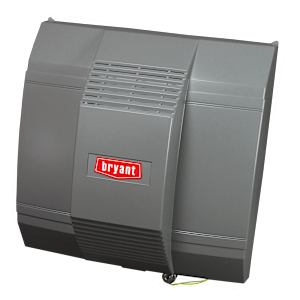
  • Coverage and capacity: Match the humidifier's output to the needs of your home and HVAC system. Bryant's whole-home humidifiers range from 12 to 34 gallons of water vapor per day, depending on model.
  • Type: Decide between steam, fan-powered, or bypass humidifiers based on your HVAC setup. Learn about humidifier types. 
  • Humidity control: Look for a humidistat or compatible control that can help maintain your target humidity level.
  • Maintenance: Look for features like automatic shut-off and easy-to-clean tanks to ease humidifier maintenance.
Because Bryant whole-home humidifiers have different output capacities and technologies, there is no single wattage figure that accurately represents every model. Your HVAC professional can explain expected electrical and water requirements for the specific system.
a bryant dealer shows air purifier vs humidifier benefits to homeowners

Explore Bryant Solutions

At Bryant, we offer visionary solutions tailored to your exact comfort needs. Our air purifiers use advanced filtration to capture even the smallest particles, while our whole-home humidifiers ensure precise humidity control for optimal comfort.

Popular Bryant Air Purifiers

Choose a Bryant air purifier for superior indoor air quality and a healthier home environment. With advanced filtration technology, Bryant air purifiers effectively capture dust, allergens, pet dander, and airborne particles. Easy to integrate with Bryant heating and cooling systems, these air purifiers ensure optimal comfort.

Popular Bryant Humidifiers

Choose a Bryant humidifier to maintain optimal humidity levels in your home, enhancing comfort and air quality. With quiet, energy-efficient operation, a Bryant humidifier integrates seamlessly with your HVAC system, providing consistent moisture control throughout your home.

Connect With A Bryant Dealer

When you are deciding between an air purifier, humidifier or both, a local Bryant dealer can evaluate your home's HVAC system and indoor air conditions. Your dealer can help determine whether your home would benefit from additional particle filtration, humidity control or a combination of both. They can also recommend the best air purifier or best humidifier for your home based on your home's HVAC equipment, size and comfort needs. Schedule an appointment with your local Bryant dealer today to start the process of improving your home’s indoor air quality. 

Explore Bryant Air Purifiers

Choose a Bryant air purifier for superior indoor air quality and a healthier home environment. With advanced filtration technology, Bryant air purifiers effectively capture dust, allergens, pet dander, and airborne particles, helping to reduce asthma and allergy symptoms. Their quiet operation and energy-efficient design make them an excellent choice for maintaining clean, fresh air year-round. Easy to integrate with Bryant heating and cooling systems, these air purifiers ensure optimal comfort and cleaner air for your family.

Explore Bryant Humidifiers

Choose a Bryant humidifier to maintain optimal humidity levels in your home, enhancing comfort and air quality. It helps prevent dry skin, static electricity, and respiratory issues by adding moisture to the air, especially during the colder months. With quiet, energy-efficient operation, a Bryant humidifier integrates seamlessly with your HVAC system, providing consistent moisture control throughout your home. Durable and reliable, it ensures a healthier living environment by promoting ideal humidity levels year-round.
Air Purifier vs Humidifier FAQs

It depends on your needs—humidifiers add moisture to dry indoor air, while air purifiers remove allergens, dust, and pollutants; many homes benefit from using both together.
A humidifier is typically better for relieving a stuffy nose caused by dry air, though an air purifier may help if the congestion is due to allergens or dust.
A humidifier helps soothe coughs caused by dry throats or irritated airways, while an air purifier is better for coughs triggered by allergens, smoke, or pollutants—again, both can be helpful depending on the cause.
It depends on your home’s needs. A whole-home humidifier helps maintain balanced moisture levels for comfort, while an air purifier targets airborne particles like dust and pollen. Many homeowners benefit from using both for cleaner, more comfortable indoor air.
Modern, advanced air purifiers and humidifiers are designed for high energy efficiency. While exact usage depends on the model, whole-home systems integrated into your HVAC are engineered to optimize energy use, helping to reduce overall energy bills compared to running multiple portable units.
High-quality HVAC-integrated air purifiers and humidifiers operate quietly in the background. Many of our advanced systems are designed to be quiet, ensuring a peaceful home environment without disruptive mechanical noise.

About The Author: Travis Baugh is a Digital Brand Marketing Manager for Bryant, where he creates clear, helpful content to guide homeowners through heating, cooling, and indoor air quality decisions. His goal is to empower readers with the knowledge they need to choose the right comfort solutions for their home—confidently and comfortably.

About The Expert Reviewer: Chrystal Jolliffe is a Product Manager specializing in Residential Indoor Air Quality at Bryant. Her work centers on advancing solutions that support cleaner indoor air and a more comfortable home environment. She helps homeowners understand the role indoor air quality products can play in their homes, empowering them to evaluate their options and make informed decisions about their indoor environment.
Learn More About Air Purifiers And Humidifiers
Chat-Icon