About The Author: Travis Baugh is a Digital Brand Marketing Manager for Bryant, where he creates clear, helpful content to guide homeowners through heating, cooling, and indoor air quality decisions. His goal is to empower readers with the knowledge they need to choose the right comfort solutions for their home—confidently and comfortably.
Why Does My AC Smell? Understanding the Causes and Solutions
By Travis Baugh
A strange air conditioner smell—whether musty, burning, or chemical—almost always signals an underlying issue that deserves prompt attention. Common causes include mold growth from excess moisture, a clogged air filter, or an electrical or refrigerant problem. Addressing these odors quickly is essential for protecting your home's air quality, comfort, and safety.
Unpleasant odors from your air conditioning system but understanding what they mean is the first step toward a solution. This guide identifies the most common AC smells, explains what causes them,
What Do Different AC Smells Mean?
When your air conditioner emits an unusual odor, it's sending a signal. Recognizing the specific type of smell is essential for diagnosing the problem correctly and maintaining a healthy indoor environment.
1. Why does my AC smell musty or moldy?
The short answer: A musty smell typically means excess moisture has led to mold or mildew growth inside the unit or ductwork.
This is the most common complaint homeowners face. Your AC naturally dehumidifies the air, but if that moisture cannot escape due to a clogged AC drain line or dirty air filters, it creates a breeding ground for mold in your air conditioner. This not only causes a "dirty sock" smell but can also circulate allergens, impacting your indoor air quality. Regular AC maintenance, including air filter replacement, is your best defense against moisture buildup.
2. Why does my AC smell like gas or rotten eggs?
The short answer: A rotten egg smell near your HVAC system is often a sign of a natural gas leak—a critical safety emergency requiring immediate action.
Natural gas is odorless, but utility companies add a sulfur-like scent (mercaptan) to alert you to leaks. If you detect this smell, turn off your AC immediately, evacuate your home, and call emergency services or your utility provider. Once safe, contact your local Bryant dealer to inspect the system. Do not attempt to fix this yourself.
3. Why does my AC smell like it's burning or has a chemical odor?
The short answer: A burning odor usually indicates an electrical issue, while a chemical scent may point to a refrigerant leak —both require immediate professional attention.
An electrical burning smell often comes from an overheating motor, worn bearings, or frayed wiring, and can pose a fire hazard. A sweet, chloroform-like chemical odor typically suggests an AC refrigerant leak, which reduces system efficiency and can be harmful to breathe. In either case, shut down the system at the thermostat and breaker immediately, then call a qualified HVAC technician.

What Are the Main Causes of a Bad Air Conditioner Smell?
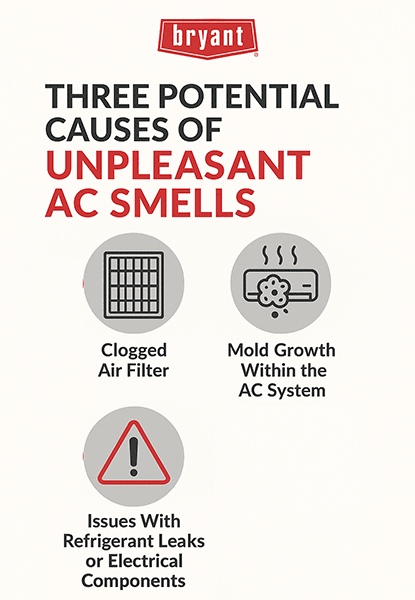
Unpleasant central air conditioner smells are usually caused by one of three main issues. Identifying the source is key to resolving the odor and restoring a healthy, comfortable home.
- Clogged Air Filter. When air filter replacement doesn't happen regularly, air filters become clogged with dust, dirt, and allergens. This buildup restricts airflow and can create a breeding ground for bacteria and mold, leading to a musty smell and poor indoor air quality.
- Mold and Mildew Growth: Your AC system naturally creates moisture. If the condensate drain line becomes blocked or the cooling coils are dirty, water can accumulate. This stagnant water creates the perfect environment for mold and mildew to grow, producing a pungent, musty odor that spreads through your home.
- Electrical or Refrigerant Issues: A burning smell is a clear sign of an electrical fault, such as an overheated motor or wiring. A sweet or chemical scent may indicate an AC refrigerant leak. Both situations are serious and require immediate attention from a professional HVAC technician to prevent system damage and protect your home's safety.
Can I Fix a Smelly AC Myself?
For musty or dusty odors, some DIY troubleshooting can help. Follow these steps to address common causes of a bad AC smell:
- Inspect and Replace the Air Filter: Start by checking your air filter. If it's dirty or clogged, replace it with a new one. This is often the simplest fix for musty smells.
- Check the Condensate Drain Pan and Line: Look for standing water in the drain pan beneath your indoor unit. A clogged drain line can cause water to back up, leading to mold. Carefully clear any visible blockages.
- Clean Around the Outdoor Unit: Ensure the area around your outdoor condenser unit is clear of leaves, dirt, and other debris that can obstruct airflow and contribute to odors.
Note: DIY steps are appropriate only for minor, musty odors. Burning smells, gas odors, or chemical scents are never safe to investigate on your own—these require professional diagnosis immediately.
How Can I Prevent My AC From Smelling in the Future?
Preventing AC odors is far easier than fixing them. Proactive, routine care keeps your split AC unit running cleanly and efficiently all season long.
- Schedule Routine Tune-Ups: An annual AC tune-up from a professional HVAC technician helps identify and correct potential issues—such as dirty coils or minor leaks—before they generate odors or escalate into costly repairs.
- Change Your Air Filter Regularly: Replace your air filter every one to three months. This simple step improves air quality, boosts efficiency, and prevents dust and allergens from accumulating in your HVAC system.
- Keep the AC Unit Clean: Regularly vacuum the vents and registers inside your home. Outside, keep the area around the condenser unit clear of debris to ensure proper airflow and reduce the risk of odor-causing buildup.
When Should I Call a Professional for an AC Smell?
While some issues can be addressed with DIY steps, certain AC smells demand professional expertise. Call a technician right away if you notice:
-
A persistent musty odor that doesn't resolve after cleaning and filter replacement
-
A rotten egg or sulfur odor that could signal a gas leak
-
A sweet or chemical scent that may indicate a refrigerant leak
-
A burning or electrical smell of any kind

Your local Bryant dealer has the tools and expertise to identify the root cause of any air conditioner smell and provide the right air conditioning service to restore clean, fresh air to your home.
FAQs on AC Smells
Clean or replace the air filter, clear the drain pan, and disinfect the coils and ducts to eliminate odor-causing bacteria, mold, or mildew buildup.
Yes, if your AC smells bad, turn it off to prevent circulating contaminated air and schedule an inspection with your local Bryant dealer to identify the source of the odor.
A foul smell at startup often comes from mold or mildew on the coils or in the ductwork that releases spores when air first flows through the system.
A body odor smell is usually caused by bacterial growth on the evaporator coil, often due to trapped moisture and poor system hygiene.
To improve the smell, regularly replace air filters and schedule annual AC tune-ups to disinfect components.
A musty or sour smell often means mold, mildew, or a clogged drain line inside your system. Cleaning coils, replacing filters, and clearing the drain line usually fix the issue.
Refrigerant leaks can smell faintly sweet, chloroform-like, or chemical, though not all leaks have an odor. If you suspect a leak, turn off the system and have an HVAC professional inspect it immediately.
Yes. A clogged air filter restricts airflow and traps moisture, bacteria, and allergens—all of which can generate musty or stale odors. Replacing the filter every one to three months is one of the most effective ways to prevent AC smells.
Refrigerant leaks typically produce a faint sweet, chloroform-like, or chemical odor—though not all leaks are detectable by smell alone. If you suspect a leak, turn off the system immediately and contact an HVAC professional.
Learn More About Air Conditioners
- Explore AC replacement
- Get help with an AC not working or an AC not blowing cold air
- Find out how long do AC units last?
- Learn how to clean AC coils and how to clean air conditioners


