About The Author: Travis Baugh is a Digital Brand Marketing Manager for Bryant, where he creates clear, helpful content to guide homeowners through heating, cooling, and indoor air quality decisions. His goal is to empower readers with the knowledge they need to choose the right comfort solutions for their home—confidently and comfortably.
What is AC Short Cycling and How Can You Fix It?
By Travis Baugh | Expert Review By Michelle Notaro - Product Manager, Air Conditioners
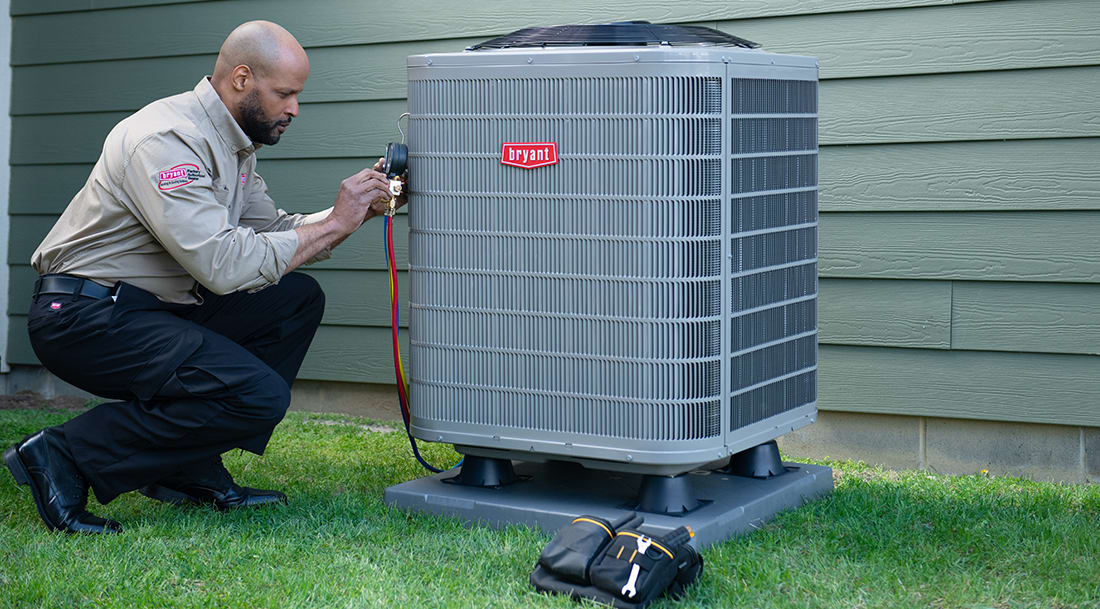
AC short cycling occurs when an air conditioning system turns on and off too frequently, with cooling cycles that are too short to provide consistent temperature and humidity control. AC short cycling can increase energy use, reduce comfort, and place additional wear on HVAC equipment. Short cycling is commonly associated with issues such as restricted airflow, improper system sizing, refrigerant problems, or thermostat issues.
For homeowners seeking long-term comfort and efficiency, understanding the root causes of AC short cycling is the first step toward a healthier home environment. When your system operates in short, incomplete bursts, it may not run long enough to remove humidity effectively or cool your space evenly. ENERGY STAR notes that oversized equipment may cycle too frequently, resulting in reduced comfort and a shortened equipment life. 1
By identifying the signs early, you can protect your investment and maintain a comfortable, energy-efficient living space. Bryant variable-speed systems are designed to adjust cooling output and maintain more consistent temperature, humidity and airflow.
What Does AC Short Cycling Mean?
AC short cycling occurs when your air conditioner repeatedly turns on and off before completing sufficiently long cooling cycles. A typical cooling cycle can vary based on outdoor temperature, indoor conditions, system capacity and thermostat settings, so there is no single runtime that defines a normal cycle for every home. Bryant's current guidance describes short cycling as frequent on-and-off operation rather than establishing a universal minute-based threshold.
As a practical homeowner warning sign, repeated cycles that last only a few minutes—especially when they occur several times within an hour—warrant investigation.
When a system short cycles, the compressor repeatedly starts and stops. Those repeated startup events can increase energy use compared with longer, steady operating periods, while also reducing the time available for moisture removal. Your home may consequently feel clammy or uncomfortable. Identifying this issue early is critical to extending the lifespan of your AC unit and protecting your long-term comfort.
Why is My AC Short Cycling?
According to Bryant, common causes of AC short cycling include restricted airflow, an oversized unit, refrigerant problems, and thermostat issues. Diagnosing the exact cause requires looking at both the history of the system's AC maintenance and the initial AC installation quality. Bryant also identifies improper sizing, airflow and refrigerant charge as important factors in HVAC performance.
Dirty Air Filters
A dirty air filter is a common and easily preventable cause of airflow problems that can contribute to AC short cycling. When filters are clogged with dust, pet dander, and debris, airflow can become restricted.
This restriction causes the system to work harder and can contribute to evaporator coil freezing or other operating problems. Replacing your air filter every one to three months is a simple way to help maintain airflow and system efficiency. Bryant recommends changing standard 1- to 2-inch residential filters every 30 to 90 days, although the appropriate interval varies based on the filter, pets, allergies, climate and system usage. Learn more about air filter replacement and how often to change air filters.
An Oversized AC Unit
According to Bryant, an oversized AC unit can cool your home too quickly, causing the system to shut off before it has run long enough to provide effective humidity control. While it might seem like a larger unit would provide better cooling, ENERGY STAR notes that oversized equipment may cycle too frequently, resulting in less comfort and a shortened equipment life.
HVAC systems are designed to provide sustained cooling to manage both temperature and humidity. An oversized system can satisfy the thermostat's temperature setting quickly, causing the system to shut off before sufficient moisture has been removed. If your system has short cycled since the day it was installed, improper sizing is one potential cause that a qualified HVAC professional should evaluate. Learn more about air conditioner size.
Low Refrigerant Levels
Low refrigerant levels can contribute to evaporator coil freezing and other cooling problems that may cause abnormal system operation. Refrigerant is responsible for absorbing heat from inside your home and releasing it outside.
When there is a leak in the refrigerant line, the system can operate with an improper refrigerant charge. A low charge can reduce cooling performance and contribute to coil freezing under certain conditions. If you suspect a refrigerant problem, have a qualified HVAC professional diagnose the system rather than attempting to add refrigerant yourself.
Frozen Evaporator Coils
Frozen evaporator coils prevent your air conditioner from absorbing heat, causing the system to overheat and short cycle. This condition is usually a secondary symptom of another underlying problem.
Restricted airflow from dirty filters or blocked vents and improper refrigerant charge can contribute to frozen coils. When the coils freeze, the system may not cool properly and can require a professional diagnosis. Routine maintenance from an HVAC expert can help keep your coils clean and airflow unobstructed.
Thermostat Issues
A malfunctioning or poorly placed thermostat can send incorrect signals to your AC, causing it to short cycle. The thermostat acts as the brain of your HVAC system, dictating when the cooling cycle should begin and end.
If the thermostat is located near a heat source, in direct sunlight, or directly beneath an air supply register, it may receive inaccurate temperature readings. For example, cold air blowing directly on the thermostat can cause it to reach the set temperature prematurely. Check the thermostat's placement, settings and batteries before assuming the AC has a mechanical problem.
Why is AC Short Cycling Bad for Your Home?
AC short cycling can increase energy use, reduce comfort, and cause unnecessary wear on your HVAC system. Instead of running in steady, efficient cycles, the system turns on and off too frequently, leading to performance issues over time.
Each time an air conditioner starts up, it draws more power than it does during steady operation. When short cycling happens repeatedly, efficiency drops and energy use can increase. It also prevents the system from running long enough to properly remove humidity from the air, which can affect indoor comfort and air quality.
Over time, the repeated starting and stopping places added strain on key components—especially the compressor, which is one of the most expensive parts of the system.
Joseph Braswell, owner of Guin Service Company in Birmingham, AL warns homeowners to take short cycling seriously.
“When your air conditioner is short cycling — meaning it’s turning on and off too frequently — it doesn’t run long enough to properly remove humidity from the home,” Braswell said. “Humidity control is a major part of what an air conditioner does. Frequent cycling can also put added wear on the system and potentially shorten the unit’s lifespan.”
Bryant's 5-Step Short Cycling Check
If your AC is turning on and off frequently, Bryant recommends starting with these basic homeowner checks before scheduling professional service:
- Check the air filter. Inspect the filter for visible dirt or clogging. Replace a disposable filter if needed. Bryant recommends checking filters regularly and replacing standard residential filters about every 30 to 90 days, depending on household conditions.
- Check your vents and airflow. Make sure supply and return vents are open and unobstructed by furniture, rugs or other items. Restricted airflow can affect system performance and comfort.
- Check the thermostat. Confirm that the thermostat is set to cooling mode, has adequate battery power if applicable, and is not installed where direct sunlight or supply air could affect its temperature reading.
- Look for signs of a larger system problem. If the AC continues to short cycle after the basic checks, possible causes include improper sizing, refrigerant problems, frozen coils, electrical issues or equipment faults. These conditions require professional diagnosis.
- Schedule professional service when the problem continues. A Bryant dealer can evaluate airflow, refrigerant charge, electrical components, thermostat operation, ductwork and equipment sizing to identify the underlying cause.
How to Stop AC Short Cycling
To stop AC short cycling, start by checking and replacing a dirty air filter, ensuring all air vents are open, and verifying your thermostat is functioning correctly. If these basic steps do not resolve the issue, professional intervention is required.
First, inspect your air filter and replace it if it is visibly dirty or clogged. Next, walk through your home and make sure all supply and return vents are open and unblocked by furniture or rugs. Check your thermostat to ensure it has fresh batteries and is set to the correct cooling mode. If the system continues to short cycle, you may be dealing with a refrigerant leak, a failing compressor, or an improperly sized unit. In these cases, it is time to call your local Bryant dealer and schedule an AC service appointment to diagnose the advanced mechanical issues.
How Variable Speed Technology Prevents Short Cycling
Bryant energy efficient air conditioners are designed to adjust cooling output rather than simply operating at full capacity or turning completely off. Bryant's Evolution™ System uses a fully variable-speed compressor that continuously adjusts operation to maintain a more consistent mix of temperature, humidity and airflow.
Traditional air conditioners operate on a single-stage system, meaning they run at 100% capacity until the room is cooled, then shut off. This often leads to the rapid on-and-off behavior associated with short cycling. Bryant’s Evolution™ inverter air conditioners, however, features variable-speed compressors can operate at lower capacities for longer periods, which can help maintain more consistent temperatures and humidity while reducing frequent starts and stops.
When to Call an Expert for AC Short Cycling
You should call your local Bryant dealer for AC short cycling if replacing the air filter and checking the thermostat do not fix the problem. Complex issues like refrigerant leaks or electrical failures require professional AC repair.
Attempting to fix advanced mechanical components yourself can be dangerous and may void your warranty. Your local Bryant dealer has the tools and expertise to accurately measure refrigerant levels, test electrical components, and evaluate the sizing of your ductwork and AC unit.
Relying on an expert ensures your system is repaired correctly, restoring your home's quiet comfort and protecting your long-term investment.
AC Short Cycling FAQs
While not typically dangerous to your health, AC short cycling is dangerous to the lifespan of your HVAC equipment and can lead to complete system failure and expensive repair bills.
You should replace your residential air filter every 1 to 3 months, depending on the filter type, the presence of pets, and your local air quality.
Yes, a weak or dying thermostat battery can cause intermittent communication failures between the thermostat and the AC unit, leading to rapid short cycling.
Costs can range from about $75–$300 for simple fixes like a thermostat or filter issue, up to $500–$1,500+ if the problem involves refrigerant leaks, electrical components, or compressor repairs.
Start by replacing a dirty air filter and checking thermostat placement and settings, as these are common causes. If the issue continues, a professional should inspect for refrigerant issues, electrical faults, or improper system sizing.
A new AC unit may short cycle due to improper sizing (often oversized), incorrect installation, thermostat issues, or airflow problems like blocked ducts or dirty filters.
About The Expert Reviewer: Michelle Notaro is a Product Manager for Residential Air Conditioners at Bryant, helping guide the direction of residential cooling products. She considers changing homeowner priorities, emerging market developments, and regulatory requirements to support air conditioning solutions that address today's comfort and efficiency expectations.


