About The Author: Travis Baugh is a Digital Brand Marketing Manager for Bryant, where he creates clear, helpful content to guide homeowners through heating, cooling, and indoor air quality decisions. His goal is to empower readers with the knowledge they need to choose the right comfort solutions for their home—confidently and comfortably.
Furnace Blower Motor Guide: What It Is, How It Works, and Types
By Travis Baugh
A furnace blower motor is the component that powers the blower wheel and circulates air through your home's HVAC system. It takes air from the return ductwork, moves it through the furnace or air handler and sends the conditioned air through the supply ducts and into your living spaces. The blower motor helps maintain consistent airflow and temperature throughout your home.
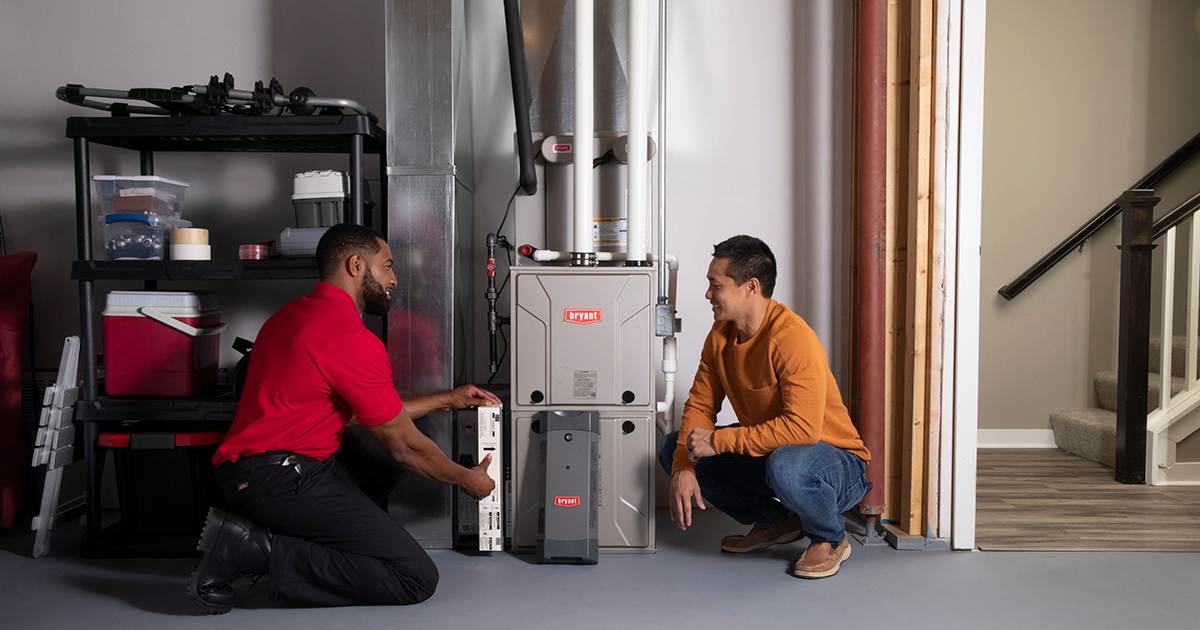
The blower motor is an important part of your home's heating and cooling system. Without a functioning motor, a furnace may generate heat but cannot properly distribute that conditioned air throughout the home. Bryant offers gas furnaces with different blower configurations, including multi-speed ECM, variable-speed ECM and constant-airflow ECM motors, depending on the model. Bryant's current furnace lineup includes models with variable-speed airflow designed to provide more consistent comfort and, with compatible equipment and controls, enhanced humidity management.
How Does a Furnace Blower Motor Work?
A furnace blower motor works by spinning a fan, or blower wheel, that draws return air from the house and moves it through the furnace’s heat exchanger, where the air is warmed. The blower then pushes the heated air through the supply ducts and into the home. When used with an air conditioner or heat pump, the same blower also circulates cooled air.
The process begins when your thermostat detects a need for heating and signals the furnace to operate. After the furnace has completed the appropriate startup sequence, the blower begins moving air through the heat exchanger and into the ductwork. This sequencing helps prevent the blower from distributing unheated air at the beginning of a heating cycle.
Modern systems have evolved significantly from basic fixed-speed blower designs. Bryant furnaces are available with multi-speed and variable-speed ECM blower motors that can adjust airflow to match system requirements. For example, the Bryant 820T uses a variable 25-speed, constant-torque ECM blower motor, while the Bryant 987M uses a variable-speed, constant-airflow, full-featured ECM blower motor.
Variable-speed airflow can help provide more consistent temperature control and quieter operation by allowing the system to adjust airflow instead of operating at only one fixed speed. Bryant also offers Perfect Humidity™ technology on compatible systems; certain Bryant furnaces are designed to work with compatible cooling equipment and controls to provide enhanced summertime dehumidification.
Signs Your Furnace Blower Motor Needs Replacement
You should consider having a qualified HVAC professional inspect your furnace blower motor if you experience weak airflow from your vents, unusual noises such as screeching or banging, higher-than-expected energy use, or a system that frequently overheats and shuts down. These symptoms can indicate a blower motor problem, airflow restriction, or another HVAC issue, so a professional diagnosis is important before replacing the motor.
Recognizing the warning signs early can save you from a complete system breakdown during the coldest days of winter. Here are the primary indicators that your furnace blower motor is struggling:
- Weak or Inconsistent Airflow: If airflow from your vents is noticeably weaker than normal, the blower motor or another component of the air-distribution system may be contributing to the problem.
- Strange and Unusual Noises: A furnace blower should operate without excessive noise. Grinding, squealing, rattling or other unusual sounds can indicate worn bearings, a damaged blower wheel, or a motor problem.
- Increased Energy Bills: A motor or blower system that is operating inefficiently can contribute to higher electricity use. However, increased energy costs can have many causes, including changes in weather, thermostat settings, airflow restrictions and other HVAC problems.
- Overheating and Short Cycling: A restricted or improperly operating blower can contribute to excessive furnace temperatures and cause safety controls to shut the system down. Repeated premature shutdowns can contribute to short cycling.
Addressing these issues proactively not only restores your home's comfort but also prevents a failing motor from damaging other expensive furnace parts.
Types of Furnace Blower Motors
Furnace blower motors can be classified by motor technology and airflow control. Common designs include fixed-speed PSC motors, multi-speed ECM motors, constant-torque ECM motors and variable-speed, constant-airflow ECM motors. The motor type is separate from the furnace's heating stages. For example, a furnace can have single-stage heating and still use a variable-speed blower motor.
Fixed-Speed Blower Motors
A fixed-speed blower motor operates at a predetermined speed or speed setting rather than continuously adjusting airflow to match changing conditions. Older furnace designs commonly use permanent split capacitor (PSC) motors.
Compared with ECM technology, fixed-speed PSC motors generally provide less ability to adjust airflow as system conditions change. The U.S. Department of Energy has found that upgrading furnace fans to ECM technology can provide substantial technical energy-savings potential, although actual savings vary by system design, operating conditions and airflow requirements. DOE's analysis estimated 30% site-energy savings for furnace fans when upgrading to ECM technology across the installed base.
Multi-Speed ECM Blower Motors
A multi-speed electronically commutated motor (ECM) provides multiple operating speeds rather than operating at only one fixed speed. Bryant uses multi-speed ECM motors in several furnace models.
For example, the Bryant 810S Gas Furnace uses a multi 18-speed ECM blower motor and offers 18 speed options for its constant-torque ECM blower. The Bryant 935SA Gas Furnace uses a multi-speed ECM blower motor, while the Bryant 830SA Gas Furnace uses a multi-speed ECM blower customized to the home.
Variable-Speed Blower Motors
A variable-speed ECM blower motor can adjust its operating speed across a range of settings to help match airflow to the system's heating or cooling requirements. This can provide more consistent airflow and temperature control than a basic fixed-speed design.
Bryant's variable-speed furnace lineup includes models with 25-speed constant-torque ECM motors as well as variable-speed, constant-airflow ECM designs. The Bryant 820T, for example, uses a variable 25-speed, constant-torque ECM motor, while the Bryant 926T uses a variable 25-speed, constant-torque high-efficiency ECM blower motor.
- More Consistent Comfort: Bryant variable-speed airflow is designed to provide more even-temperature comfort by adjusting airflow to changing system conditions.
- Potentially Lower Blower Energy Use: ECM technology can use less electricity than older PSC technology under many operating conditions. DOE's furnace-fan analysis estimated 30% technical energy-savings potential from upgrading to ECM motors, although actual savings vary by installation and operation.
- Improved Air Quality: Because the fan runs more frequently, indoor air is constantly being pulled through your HVAC filters. This continuous filtration captures more dust, allergens, and pollutants, ensuring you breathe cleaner air.
- Enhanced Humidity Control: In the summer months (when paired with an air conditioner or heat pump), a variable-speed motor removes humidity from the air much more effectively than a single-stage motor.

The Long-Term Energy Impact of an Upgraded Motor
Upgrading from an older PSC blower motor to an ECM design can reduce blower electricity use, but the actual savings depend on the motor, airflow requirements, duct system, operating hours and other system conditions. DOE's furnace-fan analysis estimated 30% site-energy savings as the technical potential for an ECM upgrade across the installed furnace-fan base; that figure should not be interpreted as a guaranteed savings percentage for an individual home.
Beyond electricity use, a properly operating blower motor helps the furnace maintain the airflow required for safe and effective operation. Airflow problems can affect comfort and system efficiency. ENERGY STAR notes that airflow problems in cooling systems can reduce efficiency by up to 15%, reinforcing the importance of proper airflow and regular blower maintenance.1
If your furnace blower motor is making unusual noises, producing weak airflow or causing the furnace to shut down unexpectedly, have a qualified HVAC professional diagnose the system before replacing the motor. A local Bryant dealer can help evaluate your furnace blower motor, furnace repair, or furnace replacement options.
Furnace Blower Motor FAQs
Variable-speed blower motors are designed to run continuously at a very low, energy-efficient speed. This keeps the air circulating, maintains a consistent indoor temperature, and continuously filters the air to improve your home's indoor air quality.
Most modern furnace blower motors offer seamless smart home integration and are fully compatible with leading smart thermostats on the market today.
A well-maintained Bryant furnace blower motor is highly durable and typically lasts between 15 to 20 years. Regular furnace maintenance, such as changing air filters and scheduling annual professional furnace inspections, is key to maximizing its lifespan.
Yes, you can replace just the furnace blower motor if the rest of your furnace is in good working condition. However, if your furnace is over 15 years old, investing in a new, advanced system may be more cost-effective in the long run.
Most homeowners pay about $300 to $900 total, though costs can range from $270 up to $2,800+ depending on motor type, labor, and system complexity.1
Common signs include weak or no airflow, unusual noises (squealing or grinding), overheating, frequent shutdowns, or a motor that hums but won’t start.
It’s usually worth replacing if the furnace is under 10–12 years old and otherwise in good condition. For older systems, the repair cost versus full replacement should be evaluated.
Most replacements take 1 to 2 hours for a straightforward job, though more complex systems may take longer.
No, you should not run it. Without the blower, heat can’t circulate and the system can overheat, potentially causing serious damage or safety issues.