About The Author: Travis Baugh is a Digital Brand Marketing Manager for Bryant, where he creates clear, helpful content to guide homeowners through heating, cooling, and indoor air quality decisions. His goal is to empower readers with the knowledge they need to choose the right comfort solutions for their home—confidently and comfortably.
Heat Pump Capacitor Replacement: Signs, Costs & What to Expect
By Travis Baugh | Expert Review By Michelle Notaro - Product Manager, Heat Pumps
A heat pump capacitor is a small, cylindrical component that stores and releases electrical energy to start and run the system's motors. When it fails, the heat pump may struggle to start, run inefficiently, or stop working entirely. Bryant recommends having capacitors inspected as part of professional heat pump maintenance, where technicians can check electrical components for safety and performance.
Capacitor replacement is one of the most common heat pump repairs—typically completed in under an hour by a licensed HVAC technician.

What Does a Heat Pump Capacitor Do?
A heat pump capacitor provides the electrical boost needed to start the compressor and fan motors, and to keep them running at proper speed. Heat pumps typically use two types:
- Start capacitor: Delivers a short burst of energy to get the motor running.
- Run capacitor: Maintains a steady flow of energy to keep the motor running efficiently.
Bryant heat pumps vary by model and system design, so the type and configuration of electrical components can differ. Bryant's current heat pump lineup includes Evolution™ models such as the variable-speed 293VAN and 291VAN. For this reason, a technician should identify the correct component and specifications for the specific heat pump rather than assuming all systems use the same capacitor.
What Are the Signs of a Failing Heat Pump Capacitor?
A failing capacitor usually presents clear warning signs before it fails completely. Common symptoms include:
- The heat pump hums but fails to start
- The system takes longer than usual to turn on
- The outdoor unit's fan spins slowly or not at all
- The heat pump shuts off randomly or short-cycles
- Higher-than-normal energy bills with no change in usage
- A visible bulge or oil leak on the capacitor itself
If you notice one or more of these signs, Bryant recommends having a qualified HVAC professional inspect the system rather than attempting to diagnose or replace the capacitor yourself. Similar symptoms can have other causes, so testing is important before replacing a component.
Bryant Heat Pump Capacitor Health Check
A professional inspection can help evaluate five areas when a heat pump shows possible capacitor symptoms:
- Startup: Does the compressor and outdoor fan start normally?
- Electrical performance: Is the capacitor operating within its rated specifications?
- Visual condition: Does the capacitor show bulging, leaking, or other visible damage?
- Motor operation: Are the compressor and fan motor operating normally?
- System performance: Does the heat pump operate properly in both heating and cooling modes?
This checklist is a homeowner-friendly way to understand the areas a Bryant dealer may evaluate; the actual diagnostic procedure varies by system and model. Bryant's heat pump maintenance guidance specifically includes checking capacitors and other electrical components.
How Much Does Heat Pump Capacitor Replacement Cost?
Heat pump capacitor replacement typically costs between $200 and $400, including parts and labor, according to Angi's 2026 national cost data1. Cost variables include:
| Factor | Typical Range |
|---|---|
| Heat pump capacitor part | $15–$25 |
| Professional capacitor replacement | $200–$400 total |
| Diagnostic fee | Varies by HVAC company |
| Emergency or after-hours call | Additional fees may apply |
Angi's 2026 data lists heat pump capacitor parts at approximately $15–$25 and notes that professional replacement costs can vary based on the system, capacitor type, diagnostic fees, and service timing.
The part itself is inexpensive, but labor and service costs make up much of the bill. Prices can vary based on your location, the HVAC company, and the specific make and model of your heat pump.
For Bryant systems, the correct replacement part can depend on the specific equipment and installation. Bryant says its Factory Authorized Parts are designed specifically for Bryant equipment and are available through Bryant dealers.
Can You Replace a Heat Pump Capacitor Yourself?
Capacitor replacement carries serious safety risks. Capacitors store high-voltage electrical charges—even when the system is powered off—and improper handling can cause severe electric shock or death.
For homeowners, hiring a licensed HVAC technician is the safer choice. Bryant recommends working with a qualified dealer for heat pump service, and its troubleshooting guidance directs homeowners to contact a Bryant dealer when professional service is needed.
A professional can also inspect the surrounding components to confirm the capacitor is the only issue.
How Is a Heat Pump Capacitor Replaced?
A trained HVAC technician typically follows these steps:
- Power off the heat pump at the thermostat and disconnect the power supply at the breaker.
- Access the electrical panel on the outdoor unit by removing the access panel.
- Discharge the old capacitor safely using an insulated resistor tool to release stored voltage.
- Test the capacitor with a multimeter to confirm it is out of spec.
- Note the wiring configuration before disconnecting leads.
- Install the replacement capacitor, matching the µF rating and voltage exactly.
- Reconnect the wiring and secure the new capacitor in place.
- Restore power and test the system for proper startup and operation.
The exact procedure varies by equipment, and homeowners should not attempt these steps because of the high-voltage electrical hazards involved. Bryant's heat pump service guidance recommends professional inspection of electrical components as part of system service.
The entire process may take about 30–60 minutes when capacitor replacement is the only repair required, although service time varies depending on the equipment and whether additional diagnostics or repairs are needed.
How Long Do Heat Pump Capacitors Last?
Heat pump capacitors have an average lifespan of about 5 to 20 years, depending on usage, climate, component quality, and operating conditions. Capacitors in regions with extreme heat can experience additional stress. Regular professional heat pump maintenance can help identify electrical components that need attention before they contribute to a system failure.
Annual heat pump maintenance can help identify a weakening capacitor before it fails completely. Bryant currently recommends professional heat pump maintenance twice a year—once in spring and once in fall—because heat pumps operate in both heating and cooling modes.
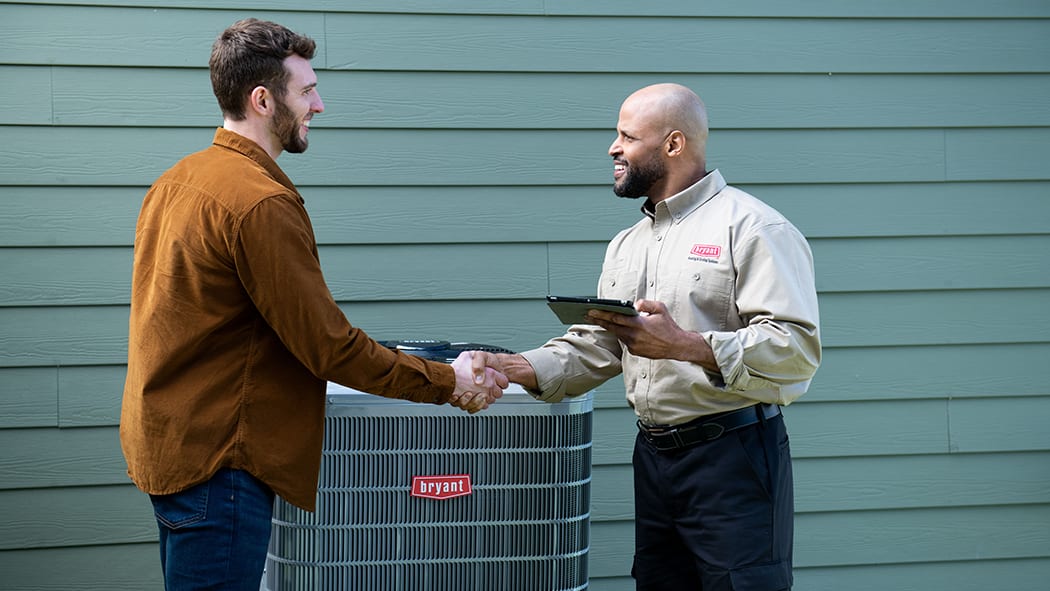
Connect With a Bryant Dealer For Heat Pump Capacitor Help
If you suspect your heat pump has a bad capacitor, your local Bryant dealer can help diagnose the problem and determine the right solution. Because capacitors store electrical energy even when the system is turned off, they should be inspected, tested, and replaced by a qualified HVAC professional.
Bryant dealers can also help identify the correct Factory Authorized Part for your specific Bryant system. Bryant says these parts are designed specifically for Bryant equipment and can help preserve the system's original performance and applicable warranty.
Find a Bryant dealer near you for professional heat pump service and capacitor replacement.
1https://www.angi.com/articles/how-much-does-it-cost-replace-ac-capacitor.htm
About The Author: Travis Baugh is a Digital Brand Marketing Manager for Bryant, where he creates clear, helpful content to guide homeowners through heating, cooling, and indoor air quality decisions. His goal is to empower readers with the knowledge they need to choose the right comfort solutions for their home—confidently and comfortably.
Frequently Asked Questions About Heat Pump Capacitor Replacement
The most common signs are a humming heat pump that won't fully start, a sluggish or non-spinning fan on the outdoor unit, and a system that trips its breaker repeatedly. While these symptoms strongly suggest a failed capacitor, a multimeter test is the only reliable way to confirm it.
Yes. A failing run capacitor forces the compressor to work harder than it is designed to, which generates excess heat and can permanently damage the compressor. Since compressor replacement can cost $1,000–$2,500 or more, addressing a suspect capacitor early is strongly advisable.
Many heat pumps contain two capacitors—one for the compressor and one for the fan motor—or a single dual-run capacitor that serves both. Some units also have a start capacitor in addition to the run capacitor. An HVAC technician can identify exactly which capacitors your unit uses.
It depends on your heat pump's warranty terms and age. Some manufacturers cover parts for 5–10 years. If your unit is within the warranty period, contact the manufacturer or your installing contractor before paying for a replacement out of pocket.
About The Expert Reviewer: Michelle Notaro is a Product Manager for Residential Air Conditioners at Bryant, helping guide the direction of residential cooling products. She considers changing homeowner priorities, emerging market developments, and regulatory requirements to support air conditioning solutions that address today's comfort and efficiency expectations.


