About The Author: Travis Baugh is a Digital Brand Marketing Manager for Bryant, where he creates clear, helpful content to guide homeowners through heating, cooling, and indoor air quality decisions. His goal is to empower readers with the knowledge they need to choose the right comfort solutions for their home—confidently and comfortably.
What Are the Benefits of a Dehumidifier?
By Travis Baugh | Expert Review By Chrystal Jolliffe - Product Manager, Indoor Air Quality
When indoor humidity is too high, a whole-home dehumidifier can help by removing excess moisture from your indoor air. The primary benefits include creating a more comfortable living environment, helping control moisture that can contribute to mold and dust mites, and maintaining a more consistent indoor humidity level.
Excess indoor moisture can negatively affect your air quality, comfort, and even your home's structural integrity. Bryant whole-home dehumidifiers are designed to help control excess moisture and maintain balanced indoor humidity, helping make your home feel more comfortable.

What Are the Main Benefits of a Dehumidifier?
A Bryant whole-home dehumidifier can provide these key benefits when excess indoor humidity is a concern:
Make Humid Rooms Feel More Comfortable
When indoor humidity is too high, your home can feel damp, sticky, or clammy even when the thermostat has reached its set temperature. A whole-home dehumidifier removes excess moisture from the air to help create a more comfortable indoor environment. While a dehumidifier can improve how the air feels, it does not cool your home like an air conditioner.
Help Limit Conditions That Support Mold and Dust Mites
Mold and dust mites tend to thrive in humid environments. By reducing excess indoor humidity, a whole-home dehumidifier can help make conditions less favorable for them. However, a dehumidifier does not remove existing mold or treat allergies, asthma, or other health conditions. Existing mold should be addressed separately along with the moisture source contributing to its growth.
Reduce Condensation Caused by Excess Humidity
Excess indoor humidity can contribute to condensation when moisture in the air comes into contact with cool surfaces, such as windows. Reducing humidity may help limit this condensation when excess indoor moisture is a contributing factor. However, condensation can also be related to cold surface temperatures, ventilation, insulation, or other building conditions, so condensation alone does not necessarily mean your home needs a whole-home dehumidifier.
Help Reduce Damp, Musty Conditions
High humidity can create damp conditions associated with musty odors, particularly in areas such as basements, closets, and other spaces with limited airflow. Controlling excess humidity can help address these conditions. If a musty odor persists, it is important to identify potential moisture sources, such as leaks or water intrusion, rather than relying on a dehumidifier to remove the odor itself.
Help Protect Moisture-Sensitive Belongings
Managing excess indoor humidity can also help protect moisture-sensitive materials and belongings. Wood furniture and flooring, books, clothing, and stored items can be affected by prolonged exposure to excessive moisture. Keeping indoor humidity under control can help reduce this exposure, but a dehumidifier cannot prevent every type of moisture-related damage or repair damage that has already occurred.
How Does a Dehumidifier Remove Moisture?
A typical refrigerant dehumidifier works by drawing in humid air and passing it over cold coils, where excess moisture condenses into water that is collected in a tank or drained away. The drier air is then returned to the indoor space, helping control excess humidity. Learn more about what a dehumidifier does.
How Do You Know If You Need a Dehumidifier?
Common warning signs that you may need a whole house dehumidifier include:
- Measure Humidity: Measure indoor humidity level using a hygrometer.
- Condensation: Water droplets forming on the inside of windows or glass doors. Condensation can be a sign of excessive indoor humidity.
- Musty Odors: Persistent "damp" smells in basements, closets, or laundry rooms.
- Clammy Surfaces: Skin feels sticky or countertops feel damp to the touch.
- Visible Damage: Peeling paint, bubbling wallpaper, or warping wood floors.
Learn more about when to use a dehumidifier. Leaks, water intrusion and ventilation problems may need to be corrected alongside humidity control.

Should You Choose a Portable or Whole-Home Dehumidifier?
The right type of dehumidifier depends on where and how often excess humidity is a problem. A portable dehumidifier may be appropriate for a single room or defined area, while recurring humidity concerns across several rooms may call for a whole-home solution.
| Comparison point | Portable dehumidifier | Whole-home dehumidifier |
| Area served | Typically one room or defined space | Multiple spaces through a professionally designed installation |
| Placement | Located in the space being treated | Installed in a location suited to the system and home |
| Water removal | Collection tank or continuous drainage, depending on the model | Drain connection arranged during installation |
| Upkeep | Filter care and tank or drain maintenance | Filter care, drain checks and model-specific maintenance |
| Selection | Match capacity to the room and moisture conditions | Have a dealer assess capacity, airflow, drainage and installation needs |
Can a Dehumidifier Lower Energy Bills?
A dehumidifier may help reduce cooling energy use in some homes, but the amount of savings varies based on climate, indoor humidity, thermostat settings, equipment efficiency, and how often the dehumidifier operates.
Because drier air can feel more comfortable, some homeowners may be able to raise their cooling thermostat setting while maintaining a similar level of comfort. However, there is not a single percentage of energy or cooling-cost savings that applies to every home. A whole-home dehumidifier also uses electricity, so the overall impact on energy costs depends on the specific home and HVAC system.
For this reason, Bryant does not recommend assuming a specific percentage reduction in cooling costs without evaluating the home and equipment.
What Should You Consider Before Buying a Dehumidifier?
Before choosing a dehumidifier, consider where excess moisture occurs and what may be causing it. Factor in the initial equipment and installation expense, ongoing electricity use, operating sound, filter care, and how collected water will be drained. Whole-home systems also require proper sizing and installation to work with the home and HVAC system. Learn more about whole house dehumidifier cost.
Get Started with Bryant Humidity Control
If your home feels muggy even when the AC is running, it's time to take control of your environment. Schedule an appointment with your local Bryant dealer to determine the best dehumidifier for your home and a quote for whole house dehumidifier cost.
Explore Bryant Dehumidifiers
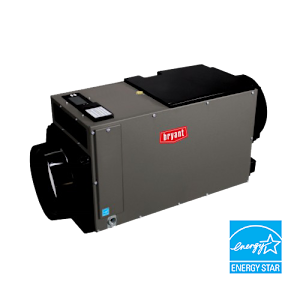
Choose a Bryant dehumidifier to effectively control excess moisture in your home, improving comfort and air quality. It helps prevent mold, mildew, and musty odors while reducing allergens, making it ideal for areas with high humidity. With energy-efficient operation and quiet performance, a Bryant dehumidifier works seamlessly with your HVAC system to maintain optimal humidity levels. Durable and reliable, it ensures a healthier and more comfortable living environment, providing year-round moisture control for your home.
FAQs on Dehumidifier Benefits
No. A dehumidifier does not remove existing mold, but reducing excess humidity can help make conditions less favorable for mold growth. Existing mold and the underlying moisture problem still need to be addressed.
How long a dehumidifier runs depends on indoor humidity, moisture sources, the system's capacity, and the selected humidity setting. Models with automatic humidity control can cycle as needed to maintain the set level. Follow the applicable owner's manual for operating instructions, and learn more about when to use a dehumidifier.
Not necessarily. If excess humidity persists while your air conditioner is operating normally, check your indoor humidity levels and consider having a Bryant dealer assess the cause. A whole-home dehumidifier may provide additional moisture control when needed. Learn more about how whole-house dehumidifiers work.
Yes, when excess humidity is the cause of discomfort. Reducing excess moisture can help a damp or clammy bedroom feel more comfortable, but it should not be expected to improve sleep quality or provide medical benefits. Consider operating sound and equipment placement when choosing a dehumidifier for or near a bedroom.
About The Expert Reviewer: Chrystal Jolliffe is a Product Manager specializing in Residential Indoor Air Quality at Bryant. Her work centers on advancing solutions that support cleaner indoor air and a more comfortable home environment. She helps homeowners understand the role indoor air quality products can play in their homes, empowering them to evaluate their options and make informed decisions about their indoor environment.
Learn More
- Discover the best dehumidifier for your home
- Explore whole house dehumidifier options
- Discover the benefits of a basement dehumidifier
- Learn the ins and outs of humidity control
- Understand when to use a dehumidifier
- Explore Bryant dehumidifiers


