About The Author: Travis Baugh is a Digital Brand Marketing Manager for Bryant, where he creates clear, helpful content to guide homeowners through heating, cooling, and indoor air quality decisions. His goal is to empower readers with the knowledge they need to choose the right comfort solutions for their home—confidently and comfortably.
What Temperature Should I Set My Thermostat for Maximum Comfort and Efficiency?
By Travis Baugh | Expert Review By Janet Shaw - Product Manager, Thermostats
If you are wondering, "what temperature should I set my thermostat," the Department of Energy recommends using 68°F (20°C) as a starting point during the winter and 78°F (26°C) during the summer when you are at home.1 Bryant recommends using these temperatures as a starting point and adjusting them based on your comfort, schedule, and heating and cooling system. Adjusting these base temperatures when you are asleep or away can help reduce energy use and heating and cooling costs.
Making a simple adjustment to your daily thermostat habits is the first step toward managing your home's energy use and comfort. In this guide, we will break down the ideal temperature settings for every season, including practical settings for when you're home, asleep, or away.
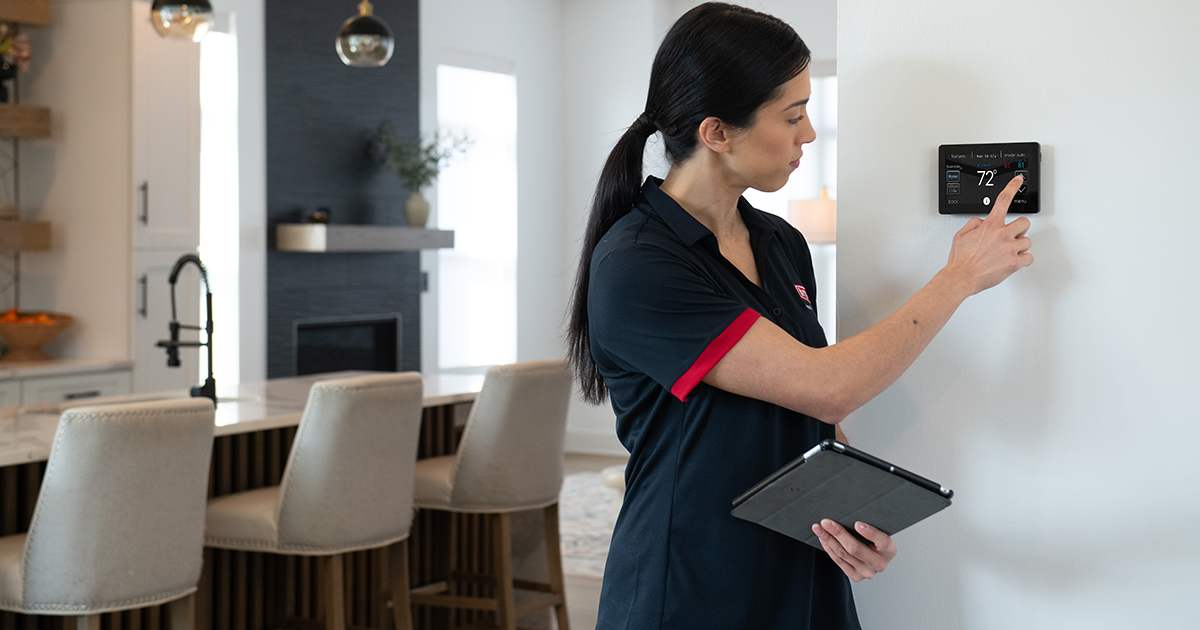
Recommended Thermostat Settings for Summer and Winter
Recommended thermostat settings can help you stay comfortable year-round while keeping energy use under control. In general, the ideal temperature depends on the season and whether you’re home, asleep, or away. Bryant recommends using the following schedule as a starting point, while adjusting the settings to fit your household's comfort preferences and HVAC system.
Bryant Recommended Thermostat Schedule
| Season | Time of Day | Recommended Temperature |
| Winter | Home and awake | 68°F |
| Winter | Asleep or away | 60–62°F |
| Summer | Home and awake | 78°F |
| Summer | Asleep or away | 82–85°F |
These temperatures are starting points rather than requirements. Your ideal setting may vary based on personal comfort, outdoor conditions, home insulation, humidity, occupancy, and HVAC equipment. DOE guidance supports setting back the thermostat 7–10°F for 8 hours a day to reduce heating and cooling energy use.
Recommended Thermostat Settings for Summer
During the summer months, the Department of Energy recommends setting your thermostat to 78°F (26°C) when you are home. When you are away from the house, raising the temperature by 7 to 10 degrees can help reduce energy use and cooling costs. 1
As outdoor temperatures soar, your home's HVAC system works overtime to keep your living spaces cool. Maintaining a consistent 78°F can provide a useful balance between comfort and energy efficiency for many homeowners.
To enhance your comfort at this temperature, consider utilizing ceiling fans to circulate the chilled air, making the room feel cooler than it actually is. Furthermore, investing in a high-efficiency Bryant HVAC system can help provide efficient cooling when outdoor temperatures are high.
Our high-efficiency air conditioners and energy-efficient heat pumps are designed to provide efficient heating and cooling while helping maintain indoor comfort.
Recommended Thermostat Settings for Winter
For winter heating, the Department of Energy recommends setting your thermostat to 68°F (20°C) while you are awake and at home. Lowering the temperature by 7 to 10 degrees when you are asleep or away can help reduce heating and cooling energy use.1
Winter brings the challenge of keeping your home cozy without causing a massive spike in your energy bills. Setting your thermostat to 68°F strikes a balance between personal comfort and system efficiency. At this temperature, your heating system can provide a comfortable indoor temperature while limiting energy use compared with maintaining a higher temperature.
If 68°F feels slightly brisk, you can easily supplement your warmth by wearing heavier clothing or using cozy throw blankets before adjusting the dial. It is also important to remember that your home's insulation, air leakage, humidity, and HVAC system can all affect how comfortable 68°F feels. A properly sized and maintained Bryant heating system can help provide consistent indoor temperatures throughout your home.
Is 72 a good temperature for heat in the winter?
Is 72 degrees a good temperature for heat in the winter? For many homeowners, 72°F feels comfortable, but it may be slightly higher than the thermostat setting recommended for maximizing energy savings. Bryant recommends starting around 68°F and adjusting the temperature based on your household's comfort needs and energy goals. Factors like your home’s insulation, humidity levels, and personal comfort can all influence the best indoor winter temperature.
How to Set Thermostat for Year-Round Savings
To set your thermostat for year-round savings, you should utilize a programmable or smart thermostat to automatically adjust temperatures based on your daily schedule. Programming your system to reduce heating and cooling efforts when the house is empty can help reduce energy use.Learn more about energy saving thermostats.
Understanding how to set thermostat for year-round savings is a cornerstone of intelligent home management. Manual adjustments are prone to human error—it is easy to forget to lower the heat before rushing out the door for work. A smart thermostat can automate temperature adjustments based on your schedule, occupancy, or preferences.
Here is a simple schedule you can implement for year-round efficiency:
- Morning (Awake): 68°F in Winter / 78°F in Summer
- Daytime (Away): 60°F in Winter / 85°F in Summer
- Evening (Home): 68°F in Winter / 78°F in Summer
- Night (Asleep): 62°F in Winter / 82°F in Summer
This Bryant thermostat schedule is a starting point; homeowners can adjust each setting to balance personal comfort, occupancy, and energy use. DOE guidance indicates that a 7–10°F setback for 8 hours a day can save as much as 10% on heating and cooling.1
Smart home integration takes this a step further. Bryant thermostats allow you to control your climate seamlessly from your smartphone using the Bryant Smart Home App, giving you greater control over your home's temperature when you're home or away. ENERGY STAR notes that smart thermostats can automatically adjust settings when occupants are asleep or away and can provide information about HVAC energy use.2
Joseph Braswell, owner of Guin Service Company in Birmingham, AL says that while thermostat settings ultimately come down to personal preference, a programmable thermostat should be considered essential for most homeowners.
“A programmable thermostat allows you to set a schedule once you find the temperatures that keep your home comfortable,” Braswell said. “After that, it’s best to avoid constantly adjusting the thermostat up and down. Keeping more consistent settings can help your system run more efficiently and maintain more even comfort throughout your home.”

What Temperature Should I Set My Thermostat When You Want to Save Energy?
When you want to save energy, you should set your thermostat back by 7 to 10 degrees Fahrenheit from your normal setting for at least 8 hours a day. In the summer, this means setting it to around 85°F when away, and in the winter, lowering it to 60°F. DOE says this type of setback can save as much as 10% annually on heating and cooling.
The secret to maximizing your energy savings lies in reducing the difference between the indoor and outdoor temperatures when your home does not need to be at your normal comfort setting. When you are away at work or on vacation, there is no need to keep your home at an optimal comfort level. By allowing your home's temperature to move closer to the outdoor temperature, you can reduce the workload on your HVAC system.
Many homeowners worry that it takes more energy to reheat or recool a house after leaving the thermostat set back. However, DOE guidance supports thermostat setbacks as an energy-saving strategy because a home loses heat more slowly when its indoor temperature is lower.1
If you have a heat pump, follow the thermostat manufacturer's recommendations before using large temperature setbacks. Some heat pump systems require specific controls or settings to avoid unnecessary auxiliary heat use.
Connect With A Bryant Dealer on Thermostat Settings
Consult your local Bryant dealer for guidance on the ideal thermostat settings for your home, as well as professional thermostat installation and thermostat replacement options tailored to your heating and cooling system. A Bryant dealer can also help determine whether your thermostat is compatible with your specific heating and cooling equipment and recommend settings for your system. Schedule an appointment today.
1https://www.energy.gov/energysaver/programmable-thermostats
2 https://www.energystar.gov/products/heating_cooling/smart_thermostats/smart_thermostat_faq
3 https://health.clevelandclinic.org/what-is-the-ideal-sleeping-temperature-for-my-bedroom
Temperature and Thermostat Setting FAQs
The best thermostat setting for sleeping is typically between 60°F and 67°F year-round3. Cooler temperatures help regulate your body's internal thermostat, promoting deeper, more restful sleep while simultaneously reducing your overnight energy consumption.
A properly programmed smart thermostat can save homeowners an average of 8% on their heating and cooling bills2. By seamlessly adjusting the climate based on your schedule, it prevents wasted energy when the home is unoccupied.
No, changing the temperature does not use more energy, provided you are using a programmable thermostat to schedule setbacks for 8 hours or more. Setting the temperature closer to the outside temperature when you are away saves energy by reducing the system's overall workload.
72°F is a common comfort setting in winter. However, it may be slightly higher than needed for energy savings; many households balance comfort and efficiency in the 68–72°F range.
A typical recommendation is around 68°F when you’re home and lower (60–65°F) when you’re sleeping or away to save energy while maintaining comfort.
No. Generally, it’s more efficient to lower the temperature when you’re away or asleep rather than keeping it steady all day, because your system uses less energy maintaining a lower temperature.
Keep your thermostat at least 55°F or higher to help prevent pipes from freezing, especially in colder climates or areas near exterior walls.
70°F is considered a comfortable indoor temperature for most people in winter, though comfort can vary based on humidity, airflow, and personal preference.
About The Expert Reviewer: Janet Shaw serves as Product Manager for Residential Thermostats at Bryant, where she helps guide the development of technologies that give homeowners greater control over their indoor comfort. She focuses on making thermostat features and smart home capabilities easier to understand so consumers can choose solutions that align with their comfort preferences and energy management goals.


