About The Author: Travis Baugh is a Digital Brand Marketing Manager for Bryant, where he creates clear, helpful content to guide homeowners through heating, cooling, and indoor air quality decisions. His goal is to empower readers with the knowledge they need to choose the right comfort solutions for their home—confidently and comfortably.
What Causes Carbon Monoxide In A House?
By Travis Baugh
Carbon monoxide (CO) in a house is primarily caused by the incomplete combustion of fuels like gas, oil, wood, and propane. Common sources include malfunctioning furnaces, blocked chimneys, and idling vehicles in attached garages. Because CO is colorless and odorless, installing detectors and scheduling annual maintenance are critical for safety.
How Carbon Monoxide Forms
What is the science behind carbon monoxide?
Carbon monoxide forms when carbon-based fuels (like natural gas or wood) don't burn completely. In an ideal "complete combustion" scenario, your appliances produce harmless carbon dioxide. However, if there is insufficient oxygen or a mechanical failure—such as a dirty burner or blocked vent—the process shifts to "incomplete combustion," releasing dangerous carbon monoxide instead.
Because this gas is invisible and has no smell, it earns the name "silent killer." Identifying potential sources is the first step toward confident, long-term safety for your home.
Common Household Sources of Carbon Monoxide
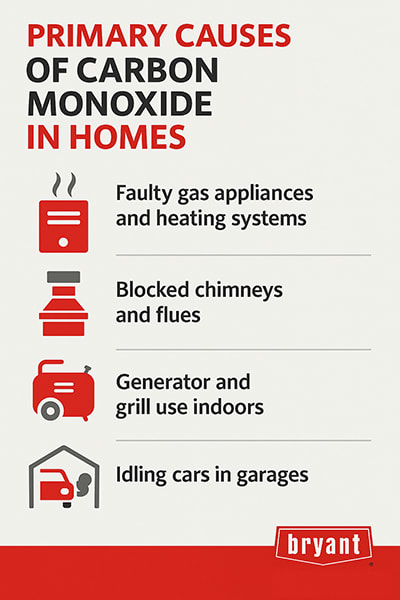
While any equipment that burns fuel can be a culprit, the most frequent causes of CO accumulation usually stem from issues with ventilation or maintenance.
1. Malfunctioning HVAC Systems
Your furnace or boiler is often the hardest-working appliance in your home. If a heat exchanger cracks or a flue becomes blocked, exhaust gases can leak into your living space rather than venting outdoors.
- The Risk: A cracked heat exchanger allows combustion gases to mix with the air circulating through your ducts.
2. Blocked Chimneys and Vents
Chimneys and flues are the exhaust pipes of your home. If they are obstructed by bird nests, debris, or soot buildup, the CO gas has nowhere to go but back inside.
- The Fix: Regular inspections ensure these pathways remain clear for safe ventilation.
3. Gas Water Heaters and Stoves
Like furnaces, gas water heaters need proper venting. Additionally, using a gas stove for heating—or using it with insufficient ventilation—can rapidly increase indoor CO levels.
4. Idling Vehicles in Garages
Never leave a car running in an attached garage, even if the garage door is open. Fumes can quickly seep into the main living areas through connecting doors or cracks in the wall.
5. Indoor Use of Outdoor Equipment
Grills, camp stoves, and portable generators are designed for open-air use only. Using these devices inside the home, basement, or garage is a primary cause of severe carbon monoxide poisoning.
Recognizing the Signs of CO Presence
How do I know if there is carbon monoxide in my house?
Since you cannot see or smell CO, you must rely on physical symptoms and environmental clues.
Physical Symptoms:
If everyone in the household (including pets) starts feeling ill at the same time, evacuate immediately. Symptoms often mimic the flu but without a fever:
- Dull headache
- Dizziness or confusion
- Nausea and vomiting
- Shortness of breath
Visual Clues on Appliances:
- Sooty or brownish/yellow stains around leaking appliances.
- Stale or stuffy air.
- A yellow or flickering pilot light flame (it should be crisp blue).
Proactive Prevention and Advanced Detection
The most effective way to address what causes carbon monoxide in a house is through a combination of smart prevention and reliable technology.
Prioritize Annual Maintenance
Preventative HVAC maintenance is an investment in your home's safety and efficiency. Schedule an annual inspection with a professional to check your furnace, water heater, and other fuel-burning appliances. This ensures they are burning fuel completely and venting correctly.
Ensure Proper Ventilation
Modern homes are built tightly for energy efficiency, which is great for your bills but requires careful ventilation management. Ensure exhaust fans are running when cooking, and never block air vents.
Install Advanced CO Detectors
Detection is your ultimate safety net. Install battery-operated or battery-backup carbon monoxide detectors on every level of your home, specifically near sleeping areas. For superior peace of mind, consider the Bryant Preferred™ Series Carbon Monoxide Alarm. It offers continuous monitoring and peak-level memory, ensuring you are alerted the moment unsafe levels are detected.
Connect With A Bryant Dealer On CO Alarms
Don't leave your safety to chance. For expert advice on maintaining your heating system or installing reliable detection devices, find a Bryant dealer near you today.

Carbon Monoxide Causes FAQs
Common household sources of carbon monoxide include gas furnaces, water heaters, stoves, fireplaces, wood-burning appliances, and idling vehicles in attached garages.
The most common causes are malfunctioning or improperly vented fuel-burning appliances, running vehicles in enclosed spaces, and using gas-powered generators indoors.
Opening a window may dilute carbon monoxide levels temporarily, but it is not a reliable or safe solution—you should evacuate immediately and seek professional assistance.


