About The Author: Travis Baugh is a Digital Brand Marketing Manager for Bryant, where he creates clear, helpful content to guide homeowners through heating, cooling, and indoor air quality decisions. His goal is to empower readers with the knowledge they need to choose the right comfort solutions for their home—confidently and comfortably.
What Does an Air Purifier Do?
By Travis Baugh
An air purifier is a device that enhances your home’s indoor air quality by capturing and removing contaminants such as dust, pollen, pet dander, and odors. It works by drawing in surrounding air, passing it through a series of filters that trap harmful particles, and then circulating the clean, fresh air back into your living space.
Understanding what an air purifier does is the first step toward creating a healthier home environment for your family. This guide explores how they work, the key benefits they offer, and what to consider when choosing the right model. We will also introduce you to Bryant’s advanced air purification solutions, designed to deliver superior indoor air quality.
How Does an Air Purifier Work?
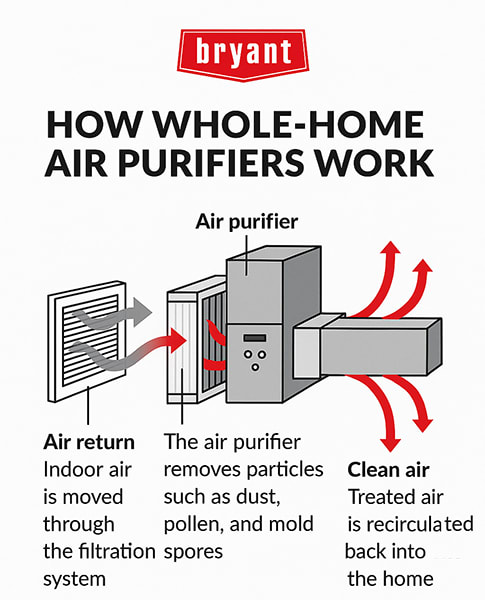
An air purifier functions by pulling in indoor air and directing it through a filtration system designed to capture airborne pollutants. Different purifiers use various technologies, but most rely on a combination of filters to achieve comprehensive air cleaning.
Key components and their functions include:
- HEPA Filters: High-Efficiency Particulate Air (HEPA) filters are the industry standard for trapping microscopic particles. They are highly effective at capturing dust, pollen, pet dander, mold spores, and other common allergens, making them especially beneficial for individuals with allergies or asthma.
- Activated Carbon Filters: These filters are designed to absorb and neutralize odors, smoke, and volatile organic compounds (VOCs). Purifiers like Bryant’s Carbon Air Purifier With UV excel at removing unpleasant smells from cooking or pets and harmful chemical gases from the air. Learn more about how air purifiers help with smell.
- Pre-filters: A pre-filter serves as the first line of defense, capturing larger particles like hair and dust bunnies. This helps extend the life and efficiency of the more advanced filters.
By capturing these pollutants, air purifiers can help improve the air you breathe. This can help lead to an overall more comfortable and healthier indoor environment.
Who Benefits from Using an Air Purifier?
Nearly everyone can benefit from cleaner indoor air, but air purifiers are particularly helpful for certain groups:
- Individuals with Allergies or Respiratory Conditions: By removing allergens and irritants, purifiers can help provide relief from symptoms.
- Families with Children or Pets: Purifiers help capture pet dander, odors, and airborne particles that can affect sensitive lungs.
- Smokers or Those Living with Smokers: Activated carbon filters are effective at reducing smoke and its lingering odors.
- Residents of Urban or High-Pollution Areas: An air purifier can create a sanctuary of clean air inside your home, even when outdoor air quality is poor.
“A whole-home air purifier is an excellent way to improve indoor air quality,” said Samantha Houchin, co-owner of The Weather Changers in Denver, Colorado. “Air purifiers capture airborne particles by clumping them together so they can be trapped in the HVAC system’s filter. The COVID-19 pandemic really opened people’s eyes to the value of whole-home air purification.”
Whole-home air purifiers are also highly beneficial in regions affected by wildfire smoke or when you want to reduce household odors. They can even help minimize dust, since airborne particles are captured before they settle on surfaces.
“When you’re cooking foods like salmon or bacon—where the smell tends to linger—an air purifier helps clear the odor much faster,” Houchin added.
Learn more about air purifier benefits.
9 Considerations For Choosing the Right Air Purifier
Now that you know what an air purifier does, how do you select the best air purifier for your home? Here are nine key factors to consider.
- Size and Coverage Area: Ensure the purifier is rated for the square footage of your room. Matching the unit's capacity to the room size ensures effective and efficient air cleaning.
- Clean Air Delivery Rate (CADR): CADR measures how quickly an air purifier removes dust, pollen, and smoke from the air, in cubic feet per minute (CFM). A higher CADR means faster air purification, which is crucial for larger spaces or areas with high pollutant levels.
- Specific Health Concerns: If you have allergies, prioritize models with high-efficiency MERV or HEPA filters. For pet owners or smokers, an activated carbon filter is essential for odor and dander control.
- Noise Level: Look for models with a low decibel (dB) rating or adjustable fan speeds for quiet operation, especially for bedrooms and living areas.
- Energy Efficiency: Since purifiers often run continuously, choose an ENERGY STAR certified model to minimize electricity consumption and reduce utility costs.
- Filter Maintenance and Cost: Consider how often filters need to be cleaned or replaced. Check the cost and availability of replacement filters to understand the long-term commitment.
- Smart Features: Wi-Fi connectivity and app control offer convenience, allowing you to monitor air quality and adjust settings remotely.
- Air Quality Sensors: Some units include sensors that automatically detect pollutants and adjust the fan speed accordingly, optimizing performance and energy use.
- Price and Warranty: A strong warranty often reflects a product's quality and reliability. Balance your budget with the features you need for long-term performance and peace of mind.
Why Choose a Bryant Whole-Home Air Purifier?
Bryant’s Evolution™ Air Purifier integrates directly with your home's HVAC system to purify the air throughout your entire house, not just a single room. It is third-party tested and proven to inactivate 99% of select captured viruses and germs, including coronavirus, human influenza, and the common cold surrogate.
Bryant air purifiers deliver an effective defense against the constant assault of indoor air pollutants, ensuring your system runs cleanly and your family breathes healthier air. Plus, they come with a 10-year parts limited warranty upon timely registration for added confidence.
Connect With A Bryant Dealer Today
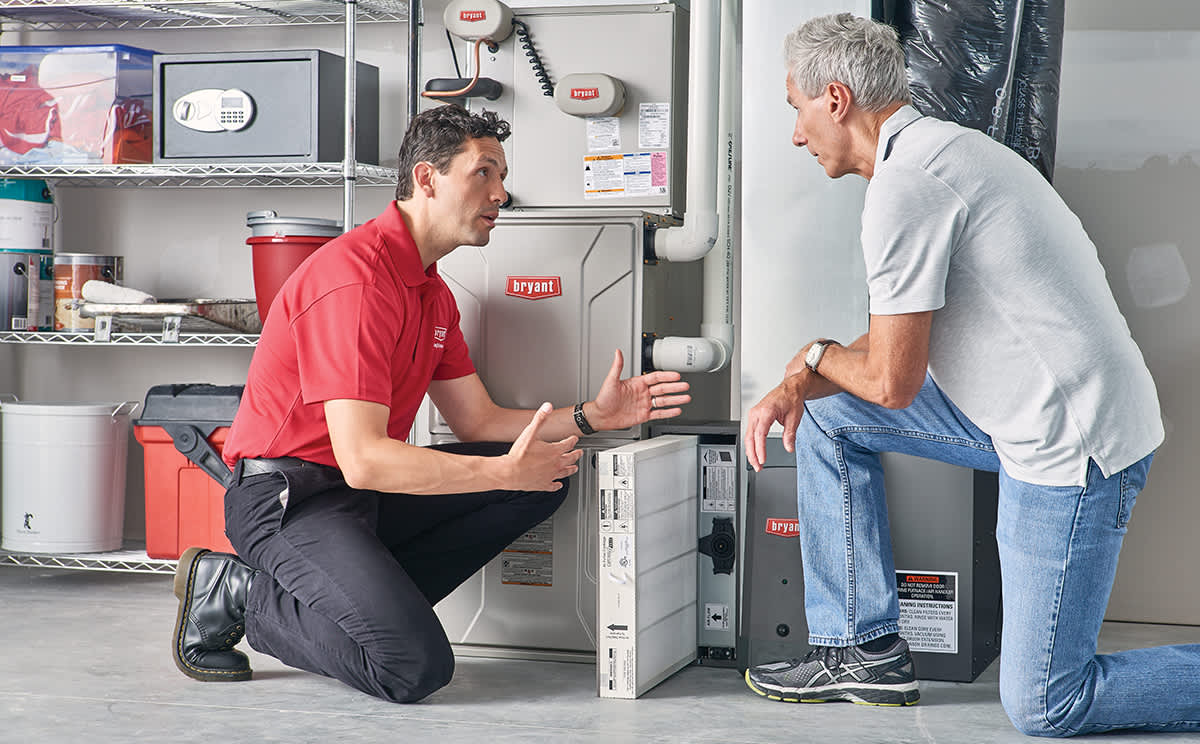
Still have questions about what an air purifier does? A local Bryant dealer can provide expert guidance on improving your home’s indoor air quality. Schedule an appointment with your local Bryant dealer to find the right air purification solution for your home today.
Air Purifier FAQs
A whole-home air purifier improves indoor air quality by removing dust, pollen, pet dander, mold spores, smoke, and other airborne pollutants, leading to improved indoor air quality throughout your home. Learn more about air purifier benefits.
You may need a whole-home air purifier if you experience allergies, asthma, frequent dust buildup, musty odors, or live in an area with poor outdoor air quality or wildfire smoke.
Learn More
- Explore air purifier for mold options
- Understand do air purifiers work?
- Find out how to choose an air purifier for dust
- Explore do air purifiers help with smell
- Explore air purifiers for wildfire smoke


