About The Author: Travis Baugh is a Digital Brand Marketing Manager for Bryant, where he creates clear, helpful content to guide homeowners through heating, cooling, and indoor air quality decisions. His goal is to empower readers with the knowledge they need to choose the right comfort solutions for their home—confidently and comfortably.
AC Capacitor Replacement: Signs, Costs & Repair Steps
By Travis Baugh
An AC capacitor replacement typically costs between $100 and $400, including parts and labor. A failing capacitor is the most common air conditioner repair—and catching it early can prevent far costlier damage to your compressor or fan motor.
If your system is humming but struggling to start, or your energy bills are climbing without explanation, your capacitor may be the culprit. This guide covers everything homeowners need to know: what a capacitor does, how to spot failure, what the fix costs, and why professional service is the smart choice.
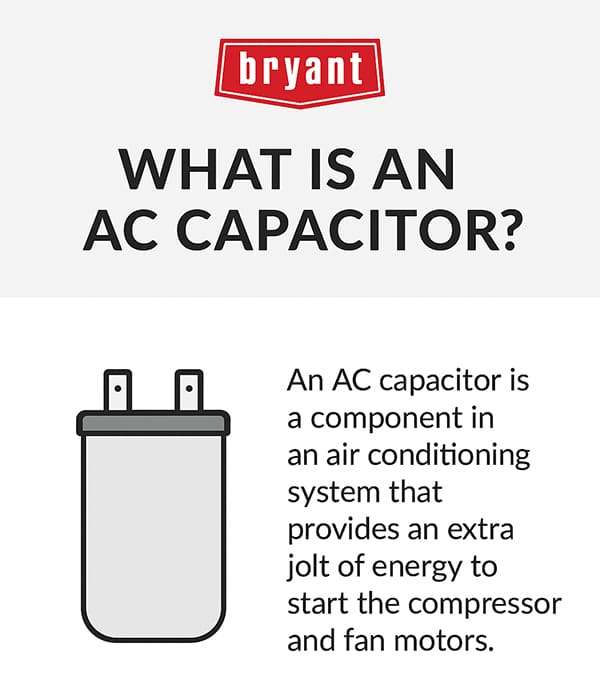
What is an AC Capacitor?
An AC capacitor is a small but critical electrical component that stores and releases energy to start and sustain your air conditioner's compressor and fan motors. Think of it as a high-powered battery pack: while your home's electrical supply delivers the steady current needed to run the system, the capacitor provides the intense burst of torque required to get the heavy internal motors spinning.
Mike Lea, co-owner of Lea Heating & Air Conditioning in East Dundee, Illinois, explains it best.
“The capacitor provides the initial energy needed to start the AC compressor and fan motor,” Lea explained. "A properly working capacitor not only keeps your unit running, but also can affect the efficiency of the unit."
Start vs. Run Capacitors
Most residential air conditioning systems use two types of capacitors, each serving a distinct function:
- Start Capacitor: Delivers a high-voltage jolt to get the motor running from a standstill.
- Run Capacitor: Provides a steady electrical current to keep the motor spinning smoothly and efficiently once it's started.
Understanding which type has failed helps a technician diagnose your system faster and more accurately.
5 Signs You Need an Air Conditioner Capacitor Replacement
Recognizing the symptoms of a failing capacitor early can save you from more expensive repairs—including a failed compressor. Watch for these common warning signs:
- Humming Noises: The outdoor unit hums but the fan isn't spinning. The capacitor can't deliver the energy needed to start the motor.
- Hard Starting: The AC struggles or takes noticeably longer than usual to turn on.
- Warm Air: The fan runs, but the compressor—which actually cools the air—fails to engage.
- Circuit Breaker Tripping: A weakening capacitor forces the motor to draw excess amperage, repeatedly tripping the breaker.
- Random Shutoffs: The system shuts down unexpectedly or cycles off before reaching your set temperature.
“Failed capacitors are the most common AC repair we see — probably 7 out of 10,” Lea said. “If a capacitor is failing but still has some energy, it can seriously impact the unit’s efficiency. When the compressor uses too much energy to start, it can drive up your energy bills.”
What Causes AC Capacitor Failure?
Capacitors are built for durability, but they're sensitive to environmental stress. The three most common causes of failure are:
- Heat Exposure: Prolonged operation in high temperatures can degrade the capacitor’s ability to hold a charge.
- Voltage Fluctuations: Power surges or lightning strikes can overload and damage the internal components.
- Age: Like batteries, capacitors have a finite lifespan and naturally lose their ability to store energy over time (typically 10–20 years).
Routine annual maintenance—such as a professional AC tune-up—can catch early-stage capacitor degradation before it causes a system failure.
AC Capacitor Replacement Cost
For most homeowners, the cost of a professional AC capacitor replacement ranges from $100 to $400.
Here's how that breaks down:
| Cost Component | Typical Range |
| Capacitor (part only) | $20 - $100 |
| Labor | $75 - $300 |
| Total (parts + labor) | $100 - $400 |
Part costs vary based on voltage rating, brand, and whether a start, run, or dual-run capacitor is needed. Labor costs depend on your region and the complexity of accessing the unit.
A note on DIY: While the AC part itself is inexpensive, an improper installation can destroy your compressor—a repair that can cost thousands of dollars. Working with a Bryant Factory Authorized Dealer ensures you receive the correct OEM part, warranty protection, and a thorough system diagnostic that a parts store cannot provide.
Step-by-Step Air Conditioner Capacitor Replacement Guide
Understanding the air conditioner capacitor replacement process helps homeowners appreciate the precision—and the risks—involved. Bryant strongly recommends professional service for this AC.
Safety Warning: Capacitors store lethal amounts of electrical energy even when the power is off. Only trained HVAC technicians or homeowners with advanced electrical knowledge should attempt this procedure.
- Power Down: Turn off the system at the thermostat and at the breaker panel. Confirm zero voltage using a multimeter before touching any components.
- Access the Unit: Open the access panel on the outdoor condenser unit.
- Discharge Stored Energy: Using an insulated tool, a technician safely shorts the capacitor terminals (C, Fan, and Herm) to release stored energy. This is the most critical safety step.
- Verify & Label: Confirm the microfarad (µF) rating on the existing capacitor. Label each wire to ensure correct reconnection.
- Swap the Capacitor: Remove the old capacitor and mount the new, matching OEM replacement part.
- Reconnect & Test: Reattach all wires to the correct terminals. Restore power and test the system for correct amperage draw and cooling performance.
Why Trust a Professional for Your HVAC Capacitor Fix?
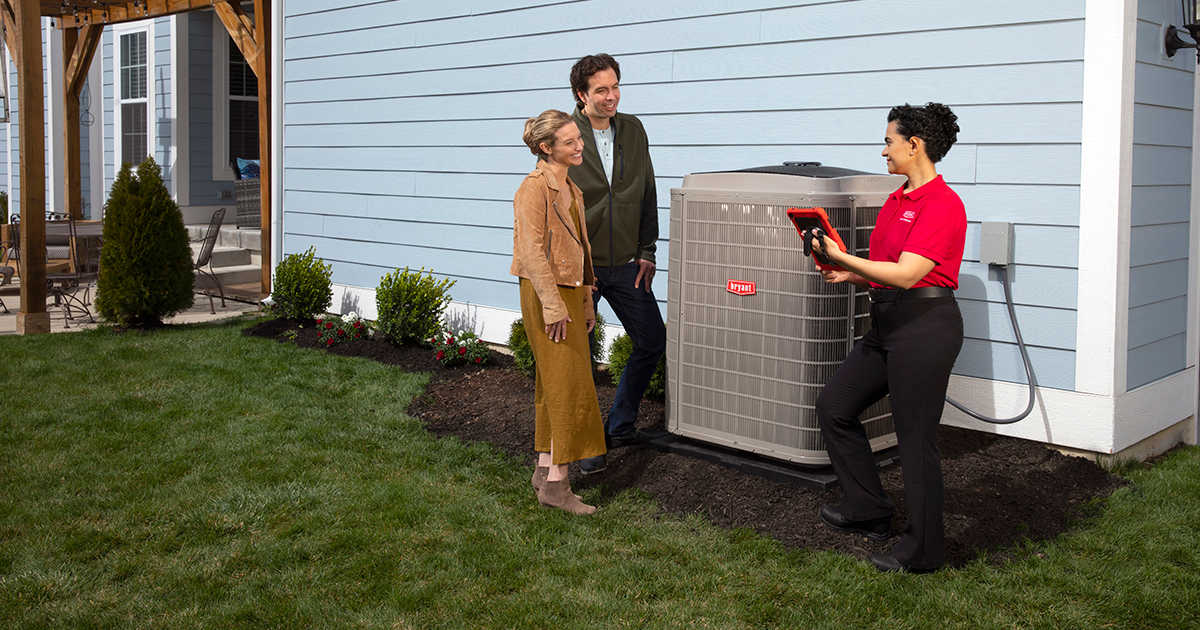
Modern air conditioning systems are complex, smart technologies. are sophisticated, integrated technologies. Professional service doesn't just fix the immediate problem—it protects your entire investment. Working with a Bryant Factory Authorized Dealer delivers:
- Safety: Eliminates the risk of high-voltage shock from improperly discharged capacitors.
- Accurate Diagnosis: A technician can identify whether another component—such as the fan motor—caused the capacitor to fail, preventing repeat failures.
- Warranty Protection: DIY repairs can void manufacturer warranties, leaving future repairs unprotected.
- Longevity: Genuine Bryant OEM parts are matched to your system's exact specifications, ensuring reliable, efficient performance for years ahead.
Connect With Your Local Bryant Dealer for AC Capacitor Replacement
Partnering with a Bryant dealer for your AC capacitor replacement means expert service, quality parts, and lasting peace of mind. Schedule an appointment with your local Bryant dealer for AC service today.
FAQs on AC Capacitors
An AC capacitor stores and releases electrical energy to help start and run the compressor and fan motors, ensuring your air conditioner operates smoothly and efficiently.
Replacing an AC capacitor typically costs between $100 and $300, including parts and labor, depending on the type and unit size.
Replacing a capacitor is not recommended unless you're a trained HVAC technician, as it involves high-voltage components that can be dangerous if handled improperly.
Signs of a bad capacitor include clicking sounds, warm air blowing, the AC not starting, or the fan running without the compressor.
No, running an AC with a bad capacitor can cause serious damage to the compressor or fan motors and may lead to complete system failure
An AC capacitor generally lasts 5 to 10 years, but heat exposure and frequent cycling can shorten its life.
A trained technician can usually replace an AC capacitor in 30 to 60 minutes, including testing and system restart.
If your AC capacitor blows, turn off the system and call a qualified HVAC technician. Running the unit with a bad capacitor can damage the compressor or fan motor.
The most common causes are heat exposure, power surges, and normal aging. Over time, the internal components wear out, reducing the capacitor’s ability to hold a charge.
Yes. A weakening capacitor forces the compressor to draw more energy during startup, driving up electricity bills. Replacing a degraded capacitor restores normal energy draw and can lower operating cost
Learn More About Air Conditioners
- Learn about and how does air conditioning work
- Find out what is an inverter air conditioner
- Understand AC tune ups
- Find out how long do AC units last?
- Learn how to clean air conditioners
- Find out what temperature to set air conditioner in summer


