Air Handler vs Furnace: What’s the Difference?
By Travis Baugh
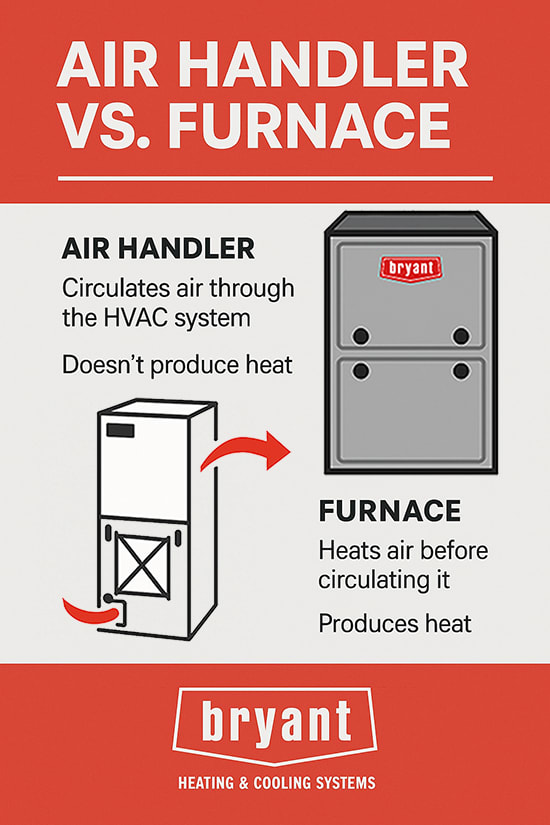
The main difference between an air handler and a furnace is how they deliver heat. A furnace generates its own heat by burning fuel (gas, oil) or using electricity, making it a standalone powerhouse for cold climates. An air handler circulates air that has been heated or cooled by an external unit, like a heat pump, making it an efficient partner for milder regions.
Understanding this distinction is key to choosing the right system for your home’s long-term comfort and efficiency.
What is a Furnace?
A furnace is a standalone heating unit that generates warmth directly. It typically utilizes natural gas, oil, propane, or electricity to create heat within a combustion chamber or heating elements. A built-in blower motor then pushes this warm air through your home’s ductwork to raise the indoor temperature.
Why choose a furnace?
Because they generate high temperatures quickly, furnaces are the reliable choice for regions with harsh, freezing winters (like the Northeast or Midwest), ensuring your home stays comfortable even in extreme cold.
What is an Air Handler
An air handler acts as the "lungs" or circulation hub of your HVAC system. Unlike a furnace, it does not generate heat on its own. Instead, it houses a blower fan and an indoor coil that works in tandem with an outdoor unit—typically a central air conditioner or a heat pump.
How does it work?
- In Winter: When paired with a heat pump, the outdoor unit transfers heat to the indoor coil. The air handler blows air over this warm coil to heat your home.
- In Summer: The process reverses, and the air handler circulates cool air.
Comparison: Furnace vs Air Handler
While both systems move air through your home, their heating methods, ideal climates, and energy sources are distinct. Choosing between them depends on your specific needs.
| Feature | Furnace | Air handler (with heat pump) |
| Primary Function | Generates heat directly | Circulates air (heated/cooled by outdoor unit) |
| Heat Source | Gas, oil, propane, or electricity | Heat pump (refrigerant transfer) |
| Best Climate | Cold winters (North/Midwest) | Mild to moderate winters (south/coastal) |
| Efficiency | Measured in AFUE | Extremely efficient in mild weather |
| Cooling Capability | Requires a separate AC unit | Works with heat pump for both heating & cooling |
Which System is Right for My Home?
Choosing between an air handler and a furnace often comes down to your climate and existing energy sources.
Choose a Furnace If...
You live in a region with severe winters where temperatures frequently drop below freezing. Furnaces provide powerful, consistent heat regardless of how cold it is outside. If your home is already fitted with a natural gas line, a modern gas furnace is often the most cost-effective and powerful heating solution available.
Choose an Air Handler If...
You live in a climate with mild to moderate winters. An air handler paired with a heat pump is a visionary solution for energy efficiency. Because heat pumps transfer heat rather than creating it from scratch, they operate with remarkable efficiency, leading to potentially lower energy bills.
The Hybrid Option: Dual Fuel
Can't decide? You might not have to. A dual fuel heating system combines a gas furnace with an electric heat pump. The heat pump handles the heating during mild weather (maximizing efficiency), and the furnace takes over when temperatures plummet (maximizing comfort)
Connect With A Bryant Dealer on Air Handler vs Furnace
Schedule an appointment with your local Bryant dealer to get personalized guidance on whether an air handler or a furnace is the right fit for your home. Your local Bryant dealer can assess your comfort needs and recommend the best solution for efficient, year-round performance.

Air Handler vs Furnace FAQs
The cost of the unit itself varies, but an air handler is generally less expensive than a furnace because it is a simpler machine. However, an air handler must be paired with a heat pump or AC, so you must consider the total system cost.
No, the furnace is not part of the air handler. Furnaces have their own blower built in, while air handlers are standalone units that circulate air for heat pumps or central AC systems.
Check your indoor unit. If it is connected to a gas line and has a flue pipe venting exhaust gases, it is a furnace. If it runs solely on electricity and is paired with a heat pump outside, it is likely an air handler.
Technically, no, because a furnace essentially includes an air handler's components (blower motor). However, you can have a dual fuel system, which combines a furnace with a heat pump. The furnace takes over heating duties only when it gets too cold for the heat pump to operate efficiently.
An air handler isn’t necessarily better than a furnace—they serve different purposes. Air handlers move air for heat pumps or AC systems, while furnaces create heat, so the “better” option depends on your home’s climate and equipment setup.
An air handler can replace a furnace only if you’re using a heat pump as your heating source. Without a heat pump, an air handler cannot generate heat on its own.
No, air handlers run on electricity. They rely on the outdoor unit (heat pump or AC) to condition the air. However, some air handlers can have electric heat strips added for auxiliary heating during extreme cold snaps.


