About The Author: Travis Baugh is a Digital Brand Marketing Manager for Bryant, where he creates clear, helpful content to guide homeowners through heating, cooling, and indoor air quality decisions. His goal is to empower readers with the knowledge they need to choose the right comfort solutions for their home—confidently and comfortably.
Boiler Installation Guide
By Travis Baugh
A boiler installation is the professional process of fitting a new boiler into a home's heating system. It involves removing the old unit, connecting gas, water, and electrical lines, and rigorously testing safety features. This complex task requires a licensed technician to ensure the system operates efficiently and meets all safety codes.
What is a boiler installation?
Boiler installation is the complete setup of a hydronic heating unit, covering everything from sizing the unit to the final safety checks. It is not a DIY job; it requires specialized knowledge of plumbing, gas fitting, and electrical wiring by your local Bryant dealer to ensure your home stays warm safely and reliably.
Why Should I Choose a Bryant Boiler Installer?
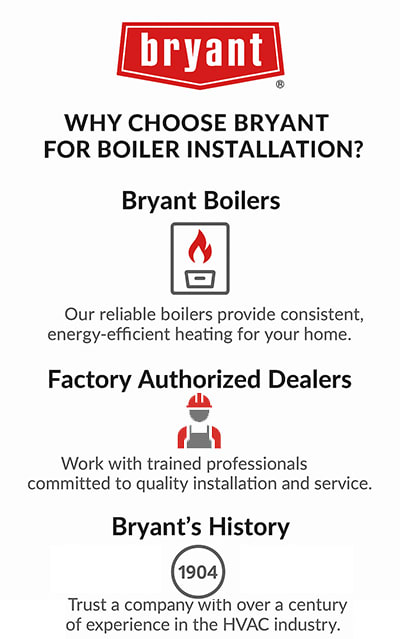
When winter arrives, you need a heating system that won't let you down. Choosing a professional Bryant dealer for your boiler installation ensures you receive outstanding service and high-quality products from a trusted name in home comfort.
The Bryant Difference
Bryant boilers are engineered for exceptional efficiency and quiet performance. Whether you need a gas-fired or oil-fired model, or a hydronic or steam unit, Bryant offers a solution for nearly every home. Our systems provide the consistent, whole-home comfort of radiant heat without the noise and drafts often associated with forced-air systems. Learn more about what is a boiler.
Factory Authorized Dealers
Bryant Factory Authorized Dealers are a select group of professionals dedicated to providing best-in-class boiler installation. They adhere to a strict set of standards, including:
- Maintaining all necessary local licenses.
- Carrying appropriate insurance and liability coverage.
- Honoring warranty commitments promptly.
- Using genuine Bryant parts whenever possible to ensure your system performs as expected.
- Offer a 100% Satisfaction Guarantee on equipment within one year of installation.

Why Trust Bryant’s History?
Since 1904, Bryant has built on a foundation of quality and reliability. We continue to innovate, even developing the first 80% efficiency boiler. Our mission is to go the extra mile to deliver heating and cooling solutions you can depend on, backed by service you can trust. It’s not just about heating—it’s about delivering comfort and peace of mind. Learn more about the history of Bryant.
Boiler Installation Process
A professional boiler installation typically takes 1–3 days, depending on the complexity of the system. Your local Bryant dealer will manage the entire process to ensure safety and peak efficiency.
- Planning and Preparation: The technician first evaluates your home’s heating needs to determine the correct boiler size and type. They then select a location that meets all safety and clearance requirements.
- Removing the Old Boiler: If replacing an existing unit, the installer will turn off the gas, water, and electricity. They will then drain the system before safely disconnecting and removing the old boiler and its components.
- Positioning the New Boiler: The new boiler is carefully placed in the designated location, ensuring it has proper clearance for ventilation and future servicing.
- Connecting Plumbing and Gas: The technician connects the gas line according to strict safety protocols. They also connect the boiler to the heating system's flow and return pipes, as well as the hot and cold water supply lines.
- Installing the Flue: The flue, or vent, is installed to safely exhaust gases outside. Its position must comply with all building regulations.
- Making Electrical Connections: The boiler is connected to the electrical supply, along with controls like thermostats and any smart features.
- Testing System Pressure and Safety: The technician tests the entire system for leaks to ensure it holds the correct pressure. They also verify that all safety valves and features are functioning properly.
- Filling the System and Bleeding Radiators: The heating system is refilled with water, and the boiler is set to the correct pressure (usually 1-1.5 bar). The installer then bleeds any trapped air from the radiators.
- Configuring and Testing the Boiler: Your dealer sets up the boiler’s controls, including temperature settings and timers. They run the boiler to confirm that both heating and hot water are working correctly.
- Commissioning the Boiler: Final safety checks are performed. The technician will also explain how to operate and maintain your new system.
- Cleaning Up: The installation area is thoroughly cleaned, and all debris and packaging materials are removed.
- Ongoing Maintenance: Your dealer will recommend a regular service schedule to keep your boiler operating efficiently and reliably for years to come.
How Do I Schedule a Boiler Installation?
Scheduling your boiler installation is simple. Bryant dealers are highly trained professionals who can help you select the ideal system based on your home's size, heating needs, and budget. Their expertise ensures the installation is done right and up to code, giving you peace of mind.
Ready to invest in reliable comfort?. Schedule an appointment with your local Bryant dealer.
Boiler Installation FAQs
No. Installing a boiler is not a DIY project, as it involves gas lines, water piping, electrical wiring, and compliance with local codes and permits.
Yes, many HVAC companies install and service boilers as part of their heating system offerings, especially if they specialize in hydronic heating or radiant systems. It's best to confirm that the contractor is licensed and experienced in boiler installation specifically.
You don’t necessary need a plumber for boiler installation, but you will need an HVAC technician with boiler experience, as installation requires specialized knowledge of hydronic systems and safety protocols.
A standard boiler swap typically takes 1 to 3 days. However, if you are switching fuel types or moving the boiler to a new location, the process may take longer.


