Understanding The Importance of Heat Exchangers
By Travis Baugh
A heat exchanger is a critical HVAC component that transfers thermal energy from a hot fluid to a cold fluid to heat or cool your home. It acts as a safety barrier, ensuring the air you breathe never mixes with toxic combustion gases or chemical refrigerants.
Think of the heat exchanger as the heart of your home's climate control. Just as your heart pumps blood to keep you alive, the heat exchanger cycles energy to keep your living space comfortable and quiet. Understanding how this component works helps you optimize your home for advanced energy efficiency and safeguards your family against potential hazards like carbon monoxide leaks.
What is a Heat Exchanger?
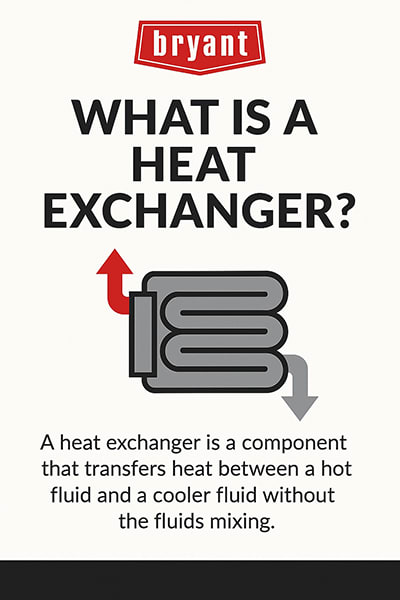
A heat exchanger is a device constructed from conductive materials, such as metal shells or tubes, that allows heat to pass from a warm fluid to a cool fluid without direct contact. In residential HVAC systems, it is the primary mechanism for regulating indoor temperature efficiently and reliably.
The Science of Comfort
Heat exchangers operate on the principles of thermodynamics, where heat naturally flows from a warmer object to a cooler one. A heat exchanger facilitates this flow using conductive materials—typically metal tubes or shells—to move energy seamlessly.
- In heating mode: It transfers heat from combustion gases (in a furnace) to the air circulating through your ductwork.
- In cooling mode: It transfers heat from your indoor air to a refrigerant (in an air conditioner or heat pump), which then carries the heat outside.
Whether your system uses a plate, shell and tube, or finned-tube design, the integrity of this component is vital for maintaining lower energy bills and long-term system reliability.
How Heat Exchangers Work in HVAC systems
Heat exchangers work by creating a thermal bridge across a solid metal barrier, which allows energy to transfer while keeping the clean indoor air and toxic exhaust or refrigerant completely separate.
Heating Mode
In a furnace, the heat exchanger is the barrier between the fire and your fresh air.
- Combustion: The furnace burns fuel to create hot combustion gases inside the heat exchanger.
- Transfer: The metal walls of the exchanger absorb this intense heat.
- Circulation: Your blower fan pushes cool household air over the outside of the hot metal walls. The air absorbs the heat and circulates through your home, while the toxic combustion gases are safely vented outside.
Learn more about how a furnace works.
Cooling Mode
In an air conditioner or heat pump, the process reverses to remove heat.
- Absorption: The indoor heat exchanger (evaporator coil) absorbs heat from the warm indoor air into the refrigerant.
- Transport: The refrigerant pumps this heat to the outdoor unit.
- Release: The outdoor heat exchanger (condenser coil) releases the trapped heat into the outside air.
Learn more about how a heat pump works and how an air conditioner works.
Cracked Heat Exchangers
A cracked heat exchanger is a serious furnace issue that involves damage to the component responsible for safely separating combustion gases from the air circulated inside the home. When this barrier is compromised, it can impact system performance and create unsafe operating conditions. Because the heat exchanger plays a critical role in both heating efficiency and safety, any suspected damage should be evaluated promptly by a qualified HVAC professional. In most cases, a cracked heat exchanger is not repairable and may require replacement of the furnace or major system components.
Signs of a Cracked or Failing Heat Exchanger
Signs of a cracked heat exchanger include soot buildup, unusual odors, visible metal corrosion, pools of water, and physical symptoms of carbon monoxide poisoning like headaches and nausea.
A cracked heat exchanger is a severe safety hazard that can allow invisible, odorless carbon monoxide to leak into your living space. If you observe any of the following signs, shut down your system and contact a professional immediately:
- Soot Buildup: Black soot inside the furnace cabinet.
- Strange Smells: Unpleasant odors often described as formaldehyde or sulfur.
- Physical Damage: Visible cracks or corrosion on the metal components.
- Health Symptoms: Headaches, nausea, or flu-like symptoms when the heat is running (signs of CO poisoning).
- Water Leaks: Pools of water around the base of the furnace. Learn more about a furnace leaking water.
Common Types of Heat Exchangers
The most common types of heat exchangers include air-to-air, fin-and-tube, shell and tube, and water-to-air designs. HVAC systems utilize these specific designs to maximize surface area and thermal transfer efficiency.
- Air-to-Air: The most common residential type. It transfers heat between two air streams—one inside your ducts and one external.
- Fin-and-Tube: Often found in air conditioners, these feature metal fins attached to tubes carrying refrigerant. The fins increase the surface area, allowing air to absorb or release heat more rapidly.
- Shell and Tube: A robust design typically used in larger or industrial applications. One fluid flows through a set of tubes enclosed within a large shell containing the second fluid.
- Water-to-Air: Common in boiler systems or hydronic heat pumps, transferring energy between heated water and circulating air.
Heat Exchanger Maintenance and Troubleshooting
To maintain a heat exchanger, you must keep airflow unrestricted by changing filters regularly and schedule annual professional inspections to spot early signs of wear. Proactive furnace maintenance is the most effective way to extend the lifespan of your heat exchanger and ensure your investment in energy efficiency pays off.
Keep Airflow Unrestricted
The leading cause of premature failure is overheating caused by restricted airflow. When filters are clogged, the heat exchanger overheats, causing the metal to expand and contract aggressively, eventually leading to cracks.
- Action: Change your air filters every 1-3 months.
Schedule Annual Inspections
Regular HVAC maintenance by a certified technician is non-negotiable for safety. Professionals can spot hairline cracks or early rust that an untrained eye might miss.
Monitor Efficiency
If your energy bills are spiking without a change in weather or usage, your heat exchanger may be struggling to transfer energy effectively due to dirt or debris buildup.
How Do You Choose the Right Heat Exchanger Replacement?
Choosing the right heat exchanger replacement involves selecting highly durable materials like stainless steel and ensuring the unit is correctly sized for your home by an HVAC professional. If your heat exchanger has failed, selecting the right replacement balances upfront investment with long-term performance
- Material Matters: Stainless steel exchangers generally offer superior resistance to corrosion compared to aluminized steel, making them a smart investment for longevity.
- Correct Sizing: Precision is key. A unit that is too large will cycle frequently, causing wear, while an undersized unit cannot maintain comfort. Trust a professional to perform a load calculation.
Schedule an appointment with a Bryant dealer today to discuss the best options for your home.
Heat Exchanger FAQs
Replacing a heat exchanger typically costs between $1,500 and $3,000, including parts and labor, depending on the furnace model and complexity of the job. It’s best to get an exact quote from your local Bryant dealer.
When a heat exchanger goes bad, it can crack or corrode, potentially leaking carbon monoxide and causing the furnace to shut down for safety.
Common symptoms include strange odors, soot buildup, visible cracks, increased carbon monoxide levels, and inconsistent or reduced heating performance.
In most cases, repairing a heat exchanger is not cost-effective, especially if the furnace is older—replacing the entire furnace may be a better long-term investment.
A heat exchanger is a metal component inside a furnace that transfers heat from combustion gases to indoor air while keeping the air and exhaust separate.
Most heat exchangers last around 15 to 20 years, depending on furnace maintenance and usage.
It should be replaced if cracked, corroded, or leaking, as damage can affect safety and efficiency. A qualified HVAC technician can confirm if replacement is necessary
Yes, but it is a last line of defense, not a diagnostic tool. If your carbon monoxide detector goes off, it means the leak is already severe enough to be dangerous. Regular maintenance should identify cracks before they trigger an alarm.
Restricted airflow is the most common cause of damage. Dirty air filters block air from moving over the heat exchanger, causing it to overheat. This repeated overheating stresses the metal, leading to cracks and failure.
Yes, modern advanced HVAC systems often feature secondary heat exchangers that capture additional condensing heat, which can help boost your energy savings and help lower your monthly heating and cooling bills.


